Pet video marketplace Camlist eyes UK growth after raising $1.3 million pre-seed funding

Camlist, a video marketplace for pets, has raised $1.3 million in a pre-seed round, funding that the startup plans to use to develop its platform and grow its workforce — as it looks to expand its reach in the UK, its second market (after the U.A.E.), which it entered earlier this year.

Unlike other marketplaces, Camlist (derived from camera listing) allows sellers to list videos of the pets they wish to sell, and once contact is made, the buyer and seller can engage through both video and text-chat within the app.

The marketplace currently only allows the listing of pets, but it is set to diversify to other items in the near future.

“Classifieds, or peer to peer commerce in general, has been stuck in the same old way of operation since eBay showed up. There has not been real significant innovation ever since; it’s just listings, maybe some images and phone numbers,” said Camlist co-founder and chief executive officer, Moustafa Mahmoud.

“But at Camlist we are changing that. We are turning the marketplace into a video experience because every pre-owned item has a story.”

Mahmoud said that they are building the safest way for anyone to find a pet by also ensuring verified health checks and interest free financing, in partnership with third parties, for those unable to make one-off payments. Camlist has rehomed over 6,000 pets to date.

“Our in-app GMV (Gross Merchandise Value) has been growing 100% every two quarters, so we’re doubling every quarter, and our total GMV is around $2 million a month,” said Mahmoud.

The Y Combinator company was founded and launched in Dubai, U.A.E, last year, just before Covid pandemic hit. The launch turned out to be timely and the site grew popular as people, forced to stay home, bought their own pets — partly to deal with boredom, but also because they had the time to nurture them.

“We’re building the marketplace category by category, and we just feel that the pets listing is so huge, and also very underserved. We plan to expand into different items as we grow,” said Mahmoud, who is also a computer scientist.

Other co-founders include Maha Refai, also the startup’s chief product officer, who has 16 years’ experience building and scaling digital products. She is also the creator of MBC’s (Middle East’s largest free-to-air broadcaster) premier video platform as well as other multiple video streaming products.

Alsayed Gamal, who is Camlist chief technical officer, has 15 years software engineering experience. He has knowledge and experience in mobile platforms, data engineering, DevOps, API design, microservices and serverless architecture.

Mahmoud said the idea to start Camlist was inspired by the need to counter the bad experiences he went through while making purchases on classified sites in Dubai, U.A.E, where items were often misrepresented and scams high.
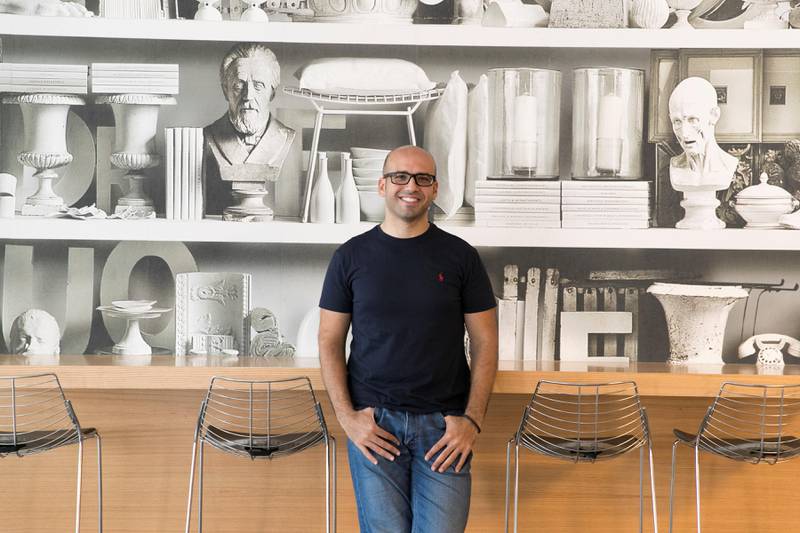
Moustafa Mahmoud; Camlist chief executive officer, he co-founded the video marketplace with Maha Refai; the startup’s chief product officer and Alsayed Gamal; chief technical officer.

Classifieds are popular in Dubai, an expat city, as people use them to dispose of their items, but they have also provided an opportunity for scammers to target unsuspecting people. To counter this, Camlist has an option for in-app payments — with funds released once the buyers confirm receipt of the pets. This feature ensures that buyers are not defrauded by deterring cons masquerading as vendors.

Mahmoud and his other co-founders provide a marketplace that allows buyers to first experience items of interest, through video, before making a purchase. This is besides ensuring that buyers were protected against fraud and guaranteeing high quality services.

The company also follows up with the sellers on its platform to ensure that they are breeding or keeping the pets in healthy environments, as well as vaccinating, deworming, and microchipping them.

“We also support our buyers and sellers by providing them with free vaccinations, microchipping, deworming, insurance, and pet food. We try to provide the best experience for our buyers and our sellers,” he said.

The startup raised the new funding from Y-Combinator; the technology startup accelerator, Act One Ventures; an early-stage venture fund and a number of angel investors from Houseparty, Mux and Facebook.

“We really looked forward to investors who believe in our vision of building the marketplace of the future. And we are really fortunate to get people who believe in this vision, and who actually work and build applications in the video industry,” said Mahmoud.

After achieving traction in the UK, Camlist is planning to enter the US market, which it believes is going to be a huge and important market for them.

“So, the current state for us is expansion within the UK because it’s a pretty big market. And we can see the impact of what we’re doing here. But as soon as we reach a certain stage where we have the majority of the market, then we will start to expand into the United States,” said Mahmoud, who was born in Egypt, with his family moving to Dubai when he was six years old.



from eCommerce – TechCrunch https://ift.tt/30UB7io
via IFTTT

Forest bags $8M seed round to acquire Japanese e-commerce brands 

Japan has been the birthplace of traditional arts and crafts since ancient times. Craftmanship, meticulous attention to detail and balance of design and functionality have contributed to creating unique Japanese products like pottery, traditional fabrics, washi (paper), woodwork, glasses, bento-boxes and more. 

This craftsmanship continues to be passed along from generation to generation and live on in modern Japan. However, the craftsmen and women, who do not always have the skills or tools to be influential merchants, have often been left behind in the rapidly evolving business environment in the 21st century.

In recent years, a growing number of e-commerce entrepreneurs have started to develop their own products and brands in response to a shift in consumer demand from cheap, mass-produced goods to diversified products that meet one’s unique needs and lifestyle. 

Forest, a Japanese e-commerce aggregator, seeks to identify sustainable, high-quality products and brands that embrace the spirit of Japan and help them grow and enter the global market by using the power of technology.

Forest announced today it has raised approximately $8 million (900 million yen) of seed round led by The University of Tokyo Edge Capital Partners (UTEC) and Nordstar Partners.

The startup will use the new capital to acquire more than 300 Japanese e-commerce brands that have been carefully crafted and curated by entrepreneurs. Forest will apply digital marketing strategies at scale, optimize sales and inventory planning through data analytics and support cross-border e-commerce expansion. 

Forest is currently in the process of finalizing its first acquisition. It will continue to look for brands that generate sales between $1million and $5million and target to acquire companies with more than $10million of sales next year, said CEO of Forest Shingo Yuhara told TechCrunch. 

It also plans to raise around $20M – $30M debt and equity capital of Series A, aiming in the first half of 2022, Yuhara said.  

Forest looks at marketplaces, including Amazon, Rakuten, Zozotown, Yahoo Japan sellers, Shopify and more. 

Forest, founded in July by Yuhara and COO Masa Mishizawa, will compete with other e-commerce aggregators like Rainforest, Una Brands and Thrasio in the global market. Forest said it is the first pure aggregator dedicated to the Japanese market. Given that Forest initially focuses on the Japanese market, it does not see Rainforest and Thrasio as its pure competitors, Yuhara said. 

Thrasio has set up a Japanese office in March to acquire Japanese brands and products sold on Amazon Japan and other e-commerce platforms.  

Japanese e-commerce market was estimated at $165 billion (19 trillion yen) as of 2020, according to a report by Japan’s Ministry of Economy, Trade and Industry. 

“[The] investment into Forest is one of our largest seed round investments within the IT sector. In my previous life, I managed my family-owned apparel business and personally experienced the pains and limitations of a small business. I strongly believe that Forest can solve these problems and capitalize on the potential of these businesses through the power of technology,” said partner of UTEC Hiroyuki Sakamoto. “We look forward to working with the experienced Founders who seek to challenge this attractive market opportunity and we feel privileged to participate as co-lead investor.”   

“We are excited to be investing in Forest that is well-positioned to take advantage of the large opportunity in acquiring and scaling niche brands in Japan,” said managing partner Ole Ruch of Nordstar. 


from eCommerce – TechCrunch https://ift.tt/3FFjhPs
via IFTTT

Afterpay unveils BNPL subscription offering for US customers

“Buy now, pay later” company Afterpay announced Wednesday that it was going after the $1.5 trillion global subscription payments market by offering to its U.S. customers payment installments for subscriptions, like gym memberships, entertainment subscriptions and online services.

The service will launch in both the U.S. and Australia beginning early in 2022 and will be free for customers who pay on time. IPSY, BoxyCharm, Savage X Fenty and Fabletics are among the initial list of merchants that will offer the feature. The company plans to expand the feature in-store and into other regions later, including Canada, New Zealand, the U.K. and Europe.

In addition to paying for subscriptions in installments, Afterpay is also enabling its offering to be used on preordered items, where users can pay in four installments over time once the item ships. Another feature coming soon will allow merchants to accept deposits on custom items.

“By offering customers the option to pay for subscriptions with Afterpay, we’re not only giving consumers flexibility to pay for more expensive monthly costs, but we’re also helping our merchant partners capture a wider consumer base through this convenient experience,” said Zahir Khoja, general manager of North America for Afterpay, in a written statement.

Klarna, Afterpay’s competitor in the BNPL space, also announced news this week for its U.S. customers that it was offering its “Pay Now” option.

Meanwhile, in August, Square announced that it was buying Afterpay in an all-stock deal valued at $29 billion. Afterpay has also been on a roll with feature debuts recently, launching both Afterpay Ads, a suite of advertising products for brands to engage with shoppers within the ecosystem, and merchant analytics tool Afterpay IQ, in August.

Afterpay works with 100,000 retailers and has approximately 10.5 million active customers in North America as of June 30, up from 5.6 million the year prior. North America is the company’s “largest region in terms of underlying sales,” which grew 145% year over year, or from $4 billion in fiscal year 2020 to $9.8 billion in fiscal year 2021, according to the company.


from eCommerce – TechCrunch https://ift.tt/30Yj9vQ
via IFTTT

India’s Spinny valued at over $1.75 billion in $280 million funding

Spinny, a Gurgaon-based startup that operates a platform to facilitate purchase and sale of used cars, is the latest firm to become a unicorn in the world’s second largest internet market.

Spinny has raised over $280 million in its Series E financing round, a source familiar with the matter told TechCrunch. The round, which is co-led by Tiger Global and Abu Dhabi Growth Fund, values Spinny at over $1.75 billion post-money, the source said.

This is the third funding round raised by Spinny this year. The startup was valued at about $700 million in July this year and $350 million in April.

The new round follows quarters of strong growth that saw Spinny expand to 15 Indian cities, up from fewer than half a dozen last year. The startup has grown its business by four times in the current calendar year, the source said, requesting anonymity as the figures are not public.

Spinny, which counts Elevation Capital and Accel among its existing backers, did not immediately respond to a request for comment.

Hundreds of thousands of used cars are sold in India each month. But buying them through the offline and traditional channel could prove to be a painstakingly long and high-risk process.

One of the biggest challenges people face in buying a used car is the trust factor, Niraj Singh, co-founder and chief executive of Spinny told TechCrunch in an interview earlier this year.

Spinny is addressing this by removing the traditional middlemen from the equation, thereby making it more affordable and reliable for customers to buy a used car. The startup buys cars from the owners, performs thorough and transparent inspection and then makes it available for customers to purchase.

Niraj Singh, a former teacher, co-founded Spinny. (Image credits: Spinny)

If a customer is not satisfied with the car that they have purchased from Spinny, they get a full refund, the startup says on the website.

The growth potential for Spinny and some other startups operating in this space is massive. The market for auto e-commerce currently has less than 1% penetration in India, according to analysts at Bernstein.

“This is largely because the auto market still requires physical inspections and the target market skews towards used vehicles — an unorganized market,” they wrote in a report earlier this year.

“The total addressable market in India is around $220 billion, which includes used vehicle purchase by consumers, auctions and remarketing, growth potential for the new vehicles market, and financing and advertisements. The total addressable market for only the used car market in US is over $800 billion,” they wrote in a report earlier this year.

Spinny is the second Indian startup to become a unicorn this week. India has produced over three dozen unicorns this year — more than all other years put together — after several high-profile global investors, including Tiger Global, SoftBank and Falcon Edge Capital, began to double down on the world’s second-largest internet market earlier this year at the height of the ravaging pandemic.

In a letter to shareholders earlier this year, Tiger Global identified India as one of the few markets where it was planning to deploy billions of dollars. SoftBank Group chief executive Rajeev Misra said earlier this month that the Japanese firm has invested more than $3 billion in India this year and can invest up to $10 billion in the country next year.


from eCommerce – TechCrunch https://ift.tt/3oVuch9
via IFTTT

Vollebak, which makes “clothes for the future,” is closing its Series A round

If you’ve ever visited the site of the six-year-old, London-based direct-to-consumer clothing company Vollebak, you’ve likely marveled at the exaggerated descriptions of clothing it sells, including a jacket “designed for a world of megastorms, where ‘waterproof’ is not enough,” a hoodie that promises to repel rain, wind, snow and fire; and and an “ice age” fleece “designed to recreate the feeling and performance of the soft hides worn by prehistoric man.”

That marketing genius comes directly from CEO Steve Tidball, who cofounded the outfit with his twin, Nick Tidball — both of whom worked in advertising previously and both of whom are active outdoorsmen, though their families and the growth of Vollebak have kept them closer to home in recent years. Indeed, Steve Tidball writes the copy himself, he revealed last week in an interview about Vollebak, a brand that prides itself on making “clothes for the future.”

During that chat, he also answered our questions about how much tech is actually involved in the clothing’s production. And he let us know that Vollebak has so far raised around $10 million in outside funding, including through a Series A round that is about to close, led by the London-based venture firm Venrex, with participation from Airbnb cofounder Joe Gebbia, and Headspace CFO Sean Brecker, among others. Our chat has been edited for length and clarity.

TC: You started this company with your twin, Nick. So much of its genius seems to be in how your clothing is marketed. Tell us a bit about how it came together.

ST: We launched the company five years ago. Before that, we’d been working together in advertising for 15 years, so I think one of the reasons the marketing is more fun than it might otherwise be is that was our job.

We’ve operated by an incredibly simple rule from a marketing perspective, which is basically: spend as little money as humanly possible. So, for instance, a couple years ago, we created our first piece of clothing for space, which was a deep sleep cocoon. And in marketing, you’re always [asking] who’s your audience, and really, our audience was one person here, which was Elon [Musk], so we found a billboard [space] opposite SpaceX, and we just took out a poster there, and it said, “Our jackets are ready. How’s your rocket going?” It doesn’t cost much money, but it was really great fun, and NASA called the next week, and then we got [to] chatting to them.

Your clothing is a reflection of the stuff that you think is going to happen to people over the next century, from space travel to sustainability.  You have a solar charge jacket that you say can glow like a firefly in the dark, for example. You have a “black squid” jacket that you say recreates one of nature’s most brilliant solutions to high visibility, the adaptive camouflage of the squid. How much tech is really involved here?

Over the last five years, the angle of tech we focused on is material science. That’s the one thing that, as a startup, we’ve had access to, because if you’re going to look at much [complex] technologies like AI or exoskeletons, you need a really huge amount of funding to go tackle those, whereas any startup can really go and look at material science. So that’s the angle we’re really fascinated with . ..[because]  that’s typically not been explored, how much material science could go into a product.

One of the most interesting things we ever launched was the world’s first graphene jacket. Even the scientists who isolated graphene for the first time can’t actually tell you what graphene is going to do.  . . .[So] we said, well, one side has graphene and the other side doesn’t. Why don’t you go out and test it and tell us what it does? We had a theory that it could store and redistribute heat because graphene behaves in a very surprising way and there’s no limit to how much heat it can store. What came back were two particularly amazing stories, one of a U.S. doctor who’d been freezing at night in the Gobi Desert and who wrapped his graphene jacket around a camel, and after it absorbed the heat of the camel, he put his jacket back on and stayed warm through the night.

Another friend of ours, a Russian guy who was out in the Nepalese mountains and was in danger of freezing to death, used the graphene jacket to absorb the last rays of sun. It warmed up, and he put it on as his inner layer and credits it with keeping him warm through the night.

How do you manufacture a graphene shirt or ceramic shirt? Do you have a special loom? Do you make it out of a 3d printer? What’s the process?

You manufacture it with great difficulty is the answer, which is why our stuff costs more than regular clothing. What you really end up with is very specialist factories, typically in Europe, with really high tech machinery that very few people have access to.

Do you typically do short production runs for your merchandise?

Yes, and at the start, that was really just a function of capital, meaning we didn’t have much, so we just made as many clothes as we could, they sold out really quickly, and we tried to make some more as the business has grown. There’s definitely stuff where it’s so complicated or so experimental, it would be reckless to make 10,000 of them. So yeah, we’ve made short runs of some of our most experimental stuff, just to see: does it work? Could it be improved?

One of those experimental new products is the Mars jacket and pants. Where does one wear that?

Of the funny things about making anything for Mars is that the irony, of course, that you have to test it on Earth. But the reality of going to Mars or any space travel is there’s going to be an exponential increase in the number of people going there and the number of jobs they need to do when they go there. You’re going to need scientists, biologists, builders, engineers, architects, they’re gonna have to wear something. And so the reality is, we want to start working on it early, so what we’re doing is we’re starting to think about some of the tasks that need to be carried out, whether it’s on the moon or Mars or lower orbit stuff, and about: what are the jobs? What are some of the challenges that we’re going to face? This is why the jacket comes with a vomit pocket, because your vestibular system is thrown into disarray as soon as you encounter a lack of gravity.

How do you know about the vestibular system? You’re a marketing genius. Are you also a scientist?

I’m a pretend scientist [laughs]. But we have a lot of really interesting people around us, whether it’s people who think about the future of warfare, or people who think about the future of space travel, we often joke that our business is run on WhatsApp.

Where do you receive most of your customer feedback? Certain D2C brands that are very active on social and Instagram and have Slack channels. How do things work over there?

I had this really early thought that if you could combine really cool innovative technology with really friendly people on the end of email, that could be a really cool thing.

You only sell directly through the Vollebak site. Will that ever change?

Not in the near term future. One of the things that’s been absolutely central to the brand is getting that feedback, and I really worry about losing that connection to the customers. Let’s say someone has a cool experience with one of our shirts or one of our jackets, and they bought it at some wholesale store, and they have no real connection to us. I feel that’s lost information.

We will be doing more stuff in the metaverse space very, very soon, because I just find it so exciting, the idea that there’s going to be this competition or integration between the virtual world and real world. So we’re currently building some fairly crazy stuff in that space. We’re currently on the hunt for some supercomputers powerful enough to process some of the stuff we’re working on. But yet basically, anything that we think is going to define the future, we’ll plow pretty heavily into.

(You can hear this conversation in its entirety, including about Vollebak’s plans to eventually launch a women’s line and its funding situation, here.)


from eCommerce – TechCrunch https://ift.tt/3CKxqJd
via IFTTT

France asks search engines and app stores to remove Wish

Several French ministers have issued a common statement announcing that they have asked the main search engines and mobile app stores operating in France to hide Wish’s website and mobile app altogether. Wish is a popular e-commerce platform that mostly references products from China-based merchants. It doesn’t hold inventory as products are shipped directly from merchants to customers.

Last year, the French administration in charge of consumer rights and fraud started investigating Wish. At the time, the direction générale de la concurrence, de la consommation et de la répression des fraudes (DGCCRF) suspected that it was a bit too easy to mislead consumers and sell counterfeit goods on Wish, such as sneakers and perfumes with images incorrectly showing the logos of famous brands.

The French administration then ordered 140 different goods on Wish — most of them were imported products. This time, they wanted to find out whether those products were safe or not.

95% of toys that they acquired on the platform didn’t comply with European regulation — 45% of them were deemed dangerous. When it comes to electronics goods, 95% of them also shouldn’t be available in Europe, and 90% of them were dangerous in one way or another.

And even cheap costume jewelry sold on the platform presented a risk — 62% of those that they ordered are considered as dangerous. Again, these metrics are based on a very small sample of 140 products.

When Wish is notified that it is selling a dangerous good, those products are removed from the marketplace within 24 hours as expected. And yet, “in most cases, those products remain available under a different name, and sometimes even from the same seller. The company doesn’t keep any log related to transactions of non-compliant and dangerous products,” France’s Ministry of the Economy says in its statement.

According to the same investigation, when Wish notifies customers that they have purchased a dangerous product, it doesn’t mention the reason of the product recall.

In July 2021, the French administration in charge of consumer rights and fraud notified Wish and asked them to comply with European regulation on e-commerce and product safety. The administration gave them a two-month notice before further action.

Four months later, the French government is taking advantage of recent changes in European regulation to dereference or block problematic websites and apps. It’s a convoluted process, but the Ministry of the Economy asked the French administration in charge to ask search engines and app stores to dereference Wish. It’s going to take a bit of time — at the time of writing, Wish is still available in the App Store and you can still find Wish’s website in Google search results.

After that, Wish will be shadowbanned in France. The website will still be available and the app will still work if you already have it on your phone. But you won’t see it in search results in the App Store, the Play Store or Google.

If the French administration thinks Wish has implemented proper changes to comply with French regulation, it could lift the shadowban. With this radical decision, France is setting a precedent and shows once again that the web is becoming more and more fragmented. In that case, it says it is acting in the consumers’ best interests.

It’s also going to be interesting to see whether Europe’s upcoming Digital Services Act will have a bigger impact on drop shipping as a whole. Europe is expected to overhaul the e-commerce directive from 2000 with the Digital Services Act.


from eCommerce – TechCrunch https://ift.tt/30XuUCb
via IFTTT

Citizens Advice parcel company league table

parcel company league table

Citizens Advice is warning urgent action is needed across the parcel delivery industry after today publishing their first annual parcel company league table. They say that they have found consistent problems across the sector. It makes for pretty poor reading if you’re expecting your Christmas presents to be delivered this year, with all companies classified as average at best.

The Citizens Advice parcel company league table lists the top five delivery companies by parcel volume, who were measured against four criteria using data from Citizens Advice Consumer Service, consumer polling and social media complaints. The annual parcel company league table compares the top parcel firms against criteria like customer service, problems and accessibility and found that no delivery company received more than three out of five stars overall.

Some of the more incendiary complaints which Citizens Advice want to highlight include:

  • One man got in touch after he received confirmation a pair of headphones he ordered had been delivered to Australia, despite him living in and ordering them to his address in Hertfordshire
  • Another man reached out after he was forced to repeat his problem to almost 30 different customer service agents when his parcel worth £150 was stolen
  • A woman contacted the charity after one driver claimed her son’s £350 birthday present had been delivered, even though her CCTV showed them leaving with it in their hand

Parcel company league table highlights

According to Citizens Advice:

  • Hermes and Yodel performed the worst, scoring 1.5 and 1.75 stars respectively. Amazon Logistics scored highest, but with just 2.75 stars overall
  • DPD scored lowest when consumers were asked if they’d had a problem with their last delivery. 41% of DPD customers polled by Citizens Advice reported a problem with their last delivery, whereas at the top end 32% of Amazon Logistics customers reported an issue
  • When trying to resolve issues, 48% of people polled weren’t able to get the help they wanted. This rose to 56% for Yodel and 43% for Amazon Logistics

Though online sales have increased 56% from pre-pandemic levels, the charity warns parcel problems have exploded during that time. Citizens Advice online advice ‘If something you ordered hasn’t arrived’ has been viewed almost 160,000 times so far this year, a 69% increase on the same period before the pandemic in 2019.

Exactly what is a parcel problem?

The one thing that we’d have liked more clarity on is exactly what a ‘problem’ is classified as. For some this will be the fact that they decided to order stuff online and then go out for the day and were surprised that their order couldn’t be delivered or was left in what they considered to be an inconvenient neighbour or safe place. Others will be genuine issues such as lost parcels or questionable such as damage which could be as a result of unsuitable packaging or could be considered to be the carrier’s fault.

As ecommerce professionals, the dire league tables probably leave you wondering which carrier you should entrust to deliver your sales?

We suspect that the reality is that just about all carriers offer what might be considered a reasonable level of service and the only way consumers are going to get a service they won’t complain about is if they were willing to pay for purchases to be hand delivered by a liveried footman, at a precise time selected by them, which they could change at a moments notice when something more interesting comes up which is more exciting than waiting in for a parcel.

In the mean time if consumers aren’t willing to pay for this type of service then minor inconveniences like waiting in for a parcel are going to have to be accepted.

Call for regulation and fines

Things can and do go wrong though and Citizens Advices are calling for stricter rules for parcel companies, better complaints processes, and fines from the regulator, Ofcom, if company negligence leads to parcels getting lost or stolen.

“Parcel deliveries became a lockdown lifeline for us all, but the scale of the problems experienced by many of us shows huge cracks in the sector.
 
Even though Amazon Logistics and Royal Mail top the table there’s still significant room for improvement. And Hermes and Yodel need to improve in leaps and bounds to make sure they’re providing a solid service to their customers.
 
While this should be a wake up call for firms to strive to deliver a five-star service for consumers, we have serious reservations about how far companies will improve if left to their own devices. Our findings show it’s time for Ofcom to come forward and introduce tougher rules across the board for delivery companies.”

– Dame Clare Moriarty, Chief Executive, Citizens Advice

Citizens Advice Consumer Expert Jane Parsons offers her top tips to help combat parcel delivery issues:

  1. Check delivery information

    Before you place an order find out the delivery times, costs and returns policies for the items you want

  2. If you’re out of the house during delivery

    Consider asking a neighbour or friend if it can be delivered to their address if you think it may be a time or date you’re not home. But beware, if you do provide details of a safe space or nominated neighbour and something goes wrong it’s not the seller or courier’s responsibility

  3. Online trader or online marketplace?

    Make sure you know if you are dealing with a trader or a private seller on an online marketplace as dispute processes may vary. If you have an issue with a trader, a dispute can be raised directly with them, but if it’s a private individual it may be easier to go through a marketplace’s dispute process

  4. Check reviews

    It’s always worth taking a careful look at reviews to gain an insight as to how reliable the company is and how well they deal with missing parcel complaints and refunds

  5. Who to deal with when a parcel goes missing

    Your purchase and contract is with the seller. If your parcel goes missing you should speak to them to deal with the problem, not the courier company

The post Citizens Advice parcel company league table appeared first on Tamebay.


from Ecommerce – Tamebay https://ift.tt/3cGFPTp
via IFTTT

New Government – Labour Small Business Agenda

We’ve are all waking up to a new Government today, with the Labour party about to take control of the country and what should be top of your...