Showing posts with label Volusion Ecommerce Blog | SMB Marketing. Show all posts

How to Audit Your Ecommerce Store’s SEO in 10 Easy Steps

How to Audit Your Ecommerce Store’s SEO in 10 Easy Steps

When it’s time to decide where to spend your marketing budget, understanding the state of your store’s on-site SEO is critical. But professional SEO audits are both technical and time-intensive, with many of them taking up to 40 hours or more. What if you just need a basic awareness of your site’s organic strengths and weaknesses so you can make better decisions about the strategies to adopt next?

Enter the “SEO audit lite:” all the decision-making power of a regular SEO audit with none of the time-absorbing digging. This 10-step audit will help you form a baseline understanding of your site’s usability, content, crawlability, and appearance in the search results. From there, you can begin to prioritize the strategies needed to define your high-priority keywords and help your site rank for them. Best of all, you’ll be able to put your site right where it needs to be: in front of shoppers who need exactly what you sell.

Before You Begin…

...Make sure Google Analytics and Search Console are connected to your site and running properly. If you’ve had these running well before you started your SEO audit, you’re in an ideal place—these tools provide their best insights when there’s plenty of historical data. If you’re just getting around to installing these tools now, don’t worry—they’ll still help you with your audit, and it’s a meaningful way to take charge of your data moving forward.

1. Check For Your “Tickets to Ride”

You can consider a few critical elements your “Ticket to Ride” factors: having them won’t necessarily boost your SEO, but not having them will keep you off the map completely. These are the first things to check for in an SEO audit; without them, none of your other SEO efforts will make much of a dent.

The easiest way to check for critical crawling components is to run a crawl using a tool like Screaming Frog (if your site is on the smaller end, you get away with the free version). Using this or your preferred crawling tool, check for the following tickets to ride:

  • HTTPS: Google strongly favors secure HTTPS-hosted websites over their HTTP counterparts. In fact, ecommerce sites will have a difficult time ranking at all if they don’t use HTTPS. This makes perfect sense when you think about it; would you want to give your credit card information to an unencrypted website? Fortunately, most platforms (including Volusion) make using HTTPS simple. Just purchase your SSL certificate, open your config variables, and search for “URL.” Then, add an s to your Full Store URL if it doesn’t already include it.
  • Crawling and Indexing: Your Screaming Frog crawl will show you a list of pages that can’t be crawled because they’re blocked by a noindex tag. Take a look at the list and make sure every blocked page is one you actually want hidden from the search engines. You certainly don’t want transactional pages or sensitive information to rank in search, so many pages will be blocked for a good reason. But sometimes a rogue mistake can add noindex tags to pages you actually want people to find. Once you’re done with that, go to www.yoursite.com/robots.txt and make sure you don’t have pages blocked in your robots.txt file that should be crawled.
  • Mobile responsiveness check: Google heavily favors sites that render well and function properly on mobile devices. Run a free mobile-friendly test to make sure your site has a clean bill of health. If there are errors, the test will tell you how to fix them.

2. Test Your Site Speed

A website’s loading/rendering time is an increasingly critical metric Google uses to gauge the usability of the website. Three great places to check your site speed are Google’s Page Speed Insights, Pingdom, and GTMetrix. Pingdom and GTMetrix are better tools, but it’s never a bad idea to get your recommendations straight from the source with Google’s tool.

For any of the above three testing platforms, you’ll be given a score on desktop and mobile along with site-specific tips for improving your score. You can take that list of recommendations and hand it off to a developer, or you can make the easier adjustments yourself. Image compression, which you can do yourself, typically has a huge impact on site speed.

3. Learn About Your Keyword Landscape

First, use Search Console or a paid SEO tool like Ahrefs to find the keywords your site is currently ranking for. This is an important way to understand not just how competitive your site is in the SERPs, but also how Google “understands” the content on your website. Worry less about the individual keyword here and more about the general “categories” those keywords point to. If you’re not pulling in keyword traffic for a particular high-level topic and that surprises you, optimizing for that type of keyword will become an important part of your strategy.

Performing keyword research and planning your content, link building, and social strategies will all require you to know what your competitors are up to so you can benchmark your strategy relative to your closest competition. You can either do your competitor research all at once before your audit begins or work it into your audit as the need arises. Here we see your first instance of this need arising: understanding the keywords your competitor ranks for will help you spot weaknesses and opportunities your keyword strategy can target. We like to use SpyFu for competitor research, but any paid SEO tool that explores keywords and content—like Ahrefs—will also work.

Now that you know your keywords and can see how they stack up against the competition, assess the following:

  • Are they relevant?
  • Are they competitive?
  • Do a lot of people search for that keyword?
  • Search for your keyword on Google Trends—is it trending up or down over time?

Your observations here will directly inform your keyword strategy when it’s time to put one together.

4. Assess Your Search Appearance

Getting your website ranked in the SERPs doesn’t mean your job is done—you actually have to get people to click through. Check on the factors that influence your site’s appearance and clickthrough rate in the SERPs:

  • Schema Markup: Schema markup helps your website display extra information (reviews, internal sitelinks, and more) directly in the SERPs. While there are hundreds of different markup types you can use, aiming for all of them isn’t the right idea—it will actually get you flagged for spamminess. Instead, pick the markup types that make sense for your vertical. You can also Google individual keywords you’re targeting to see if your top SERP competitors use markup. If they do, use the same type of markup the competition is using.
  • Title Tags and Meta Descriptions: It’s important to remember that your title tags and meta descriptions aren’t just about getting keywords ranked (in fact, Google doesn’t even consider meta description keywords a direct ranking factor)—they’re also your chance to reel in the user. Your title tag is a critical place for keywords, but it’s just as critical to make sure you have a title tag that actively reflects the page and captures the user’s attention. Make sure your meta descriptions do the same, and consider adding a call to action with an incentive to your last sentence.
  • Check Your Competitors: Do your competitors use schema markup? Are they included in answer boxes? Do they rank on vertical search engines like Google Images, Google Shopping, and comparison engines? How much SERP real estate do they take up—just the organic results, or ads too? Aim to be visible in all the same ways as your competition.

5. Run Additional Checks On Your Metadata

In step four, we mostly focused on the quality of your meta titles and descriptions. That’s priority #1, but quantity matters too. After all, you want to give every indexed page on your website the best possible shot at ranking, not just a few.

You can use Screaming Frog, a paid SEO tool, or even Search Console to find:

  • Duplicate titles/descriptions
  • Missing titles/descriptions
  • Titles/descriptions that are too short
  • Titles/descriptions that are too long
  • Whether H1s are properly used on every page

6. Take A Deep Dive Into Your Content

Now let’s take a look at your content.

  • First, run a crawl to check for duplicate content. If anything comes up, the fix will either be manual in nature (rewriting duplicate pages so they’re unique) or technical in nature (adding canonical or other tags to indicate page relationships, or correcting any glitches that are causing the problem).
  • Next, use Google Analytics or a paid SEO tool to explore your top pages and content. Note any surprises, like high-priority pages that aren’t in your top results. Then look at the blog posts or informational content that ranks—you may want to lean into that subject matter in the future.
  • Analyze your competitor content. We like to use Ahrefs for this. Note any weaknesses and opportunities.
  • Audit your content for quality and usefulness. Use a crawling tool to find instances of thin content by setting the parameters to <150 words. You can also manually assess the usefulness and quality of your content. Work updates and improvements into your content strategy.

You can use Search Console to see your own site’s inbound links, or a paid SEO tool like Ahrefs to get more information about how your site accrues or loses links over time. Either way, you’ll need a paid tool to check out your competitors’ backlinks. Knowing the latter will give you some benchmarks, and it can often point you to low-hanging-fruit linking opportunities by showing you which sites are interested in your subject matter.

Once you check for inbound links, check for problems like broken links. Then run a check on your internal links.

8. Track Your Brand Mentions and Reputation

Google’s party line is that it doesn’t consider links from social media a ranking factor. However, it does pay attention to “brand mentions,” which often amounts to the same thing. For Google, it’s a positive sign to see lots of people talking about a brand without linking to it because that signals true word-of-mouth buzz.

Use a social media listening tool to track your brand mentions and the sentiment behind them. As you go, address anything that needs a response.

Then assess your reputation overall. How many reviews do you have, and how positive is the sentiment? Do you have any bad press? Are there any brand-related keyword searches that yield unsavory results? Is there one particular bad review that won’t stop following you around? If yes, you’ll be building some reputation management into your strategy. If no, you’re not out of the woods until you can dominate the search results and control the narrative surrounding your brand.

9. Get Subjective

Your objective data pulls are done! As a final step, take a look at your site as subjectively as you can (we know it’s hard) to spot additional improvements that may be needed. Questions you can ask include:

  • Does your site look current and up to date?
  • Is its design in step with the competition?
  • Is it easy to navigate and use?
  • Is your content compelling and informative?
  • Does your brand express a clear identity?
  • Would you shop here?

If you’re having a hard time getting subjective about your own site, solicit feedback from other users.

10. Putting It All Together: Your Strategy

At this point, your audit is technically done; however, most audits include a final step so you can prioritize your findings, organize them into recommendations, and build out your SEO strategy. Otherwise, you just have an audit without a useful plan of action.

Build out your SEO strategy on a timeline you can work with, prioritizing your most important findings first. In a very general sense, with plenty of exceptions, your priorities will take this order:

  1. Critical technical issues and other technical fundamentals
  2. Keyword research, metadata updates and content, and Schema markup for your highest-priority pages (home page, top-level categories, priority products, etc.)
  3. Content strategy and production—ongoing after the first 2 steps
  4. Link building—ongoing after the first two steps
  5. Keyword research, metadata updates and content, and Schema markup for lower-priority pages
  6. The bells and whistles: lower-priority improvements in content, appearance, and functionality

There you have it: your hassle-free SEO audit that sets up the ingredients for a solid strategy moving forward. Using these steps, you are sure to see positive results in your organic rankings.



from Volusion Ecommerce Blog | SMB Marketing, Design, & Strategy https://ift.tt/38pmPrR
via IFTTT

How Amazon’s Late Prime Day Event Is Already Affecting Black Friday

How Amazon’s Late Prime Day Event Is Already Affecting Black Friday

Since its first occurrence on Amazon’s 20th birthday in 2015, Prime Day has become a lucrative annual sales event for the online retail giant. Originally founded to show appreciation to Prime members for their continued patronage, the event has since grown into a two-day revenue bonanza for Amazon and an eagerly-anticipated shopping holiday for deal-seeking customers.

While Prime Day typically occurs in July, 2020’s coronavirus pandemic forced Amazon to push their event back to October 13-14. According to the company, this change was implemented to give warehouses time to catch up on orders that had been delayed due to increased demand at the start of the pandemic, as well as to modify operations to make working during a pandemic safer for warehouse employees.

As a result, this year’s Prime Day occurred only a month and a half before Black Friday/Cyber Monday weekend—typically one of the biggest shopping holidays of the year. Launching holiday shopping earlier in the season has already caused a ripple effect within the major retail industry, which could negatively impact smaller retailers hoping to capitalize on Black Friday’s traditionally profitable sales holiday weekend.

Many Major Retailers Used Prime Day To Their Advantage

To take advantage of the shopping frenzy inspired by Prime Day, several major retailers scheduled their own sales events to compete with the ecommerce giant. Target continued its recent tradition of running a digital “Deal Days” event in tandem with Prime Day on October 13-14, and Best Buy followed suit with a “Black Friday Event” over the same days. Walmart went a step further by rolling out a “Big Save Event” online that spanned October 11-15. Smaller retailers, including Chewy, Old Navy, and Madewell, also ran competing sales.

Businesses Selling Through Amazon Benefited from Prime Day

Third-party sellers were also able to benefit from Prime Day by offering discounts on their Amazon listings during those days. Amazon reported that third-party sellers surpassed $3.5 billion in sales on Prime Day—a 60% increase over last year’s numbers. Amazon made an additional push for purchases through third-party sellers in the weeks leading up to Prime Day by offering a $10 Prime Day credit for every $10 spent. This allowed smaller businesses without the advertising budget of major retailers to gain sales around Prime Day as well.

Major Retailers Are Extending Sales Through November

The close proximity of the two sales events means that some retailers are using the six weeks in between to run continuous sales. Target has already announced that they will be offering Black Friday pricing for the entire month of November, with digital deals every day starting November 1. Walmart is also using all of November to offer Black Friday Deals for Days, and Home Depot has stated that they will offer 2 months of Black Friday pricing complete with homemade gift ideas to adapt to this year’s changes. Other retailers are depending on broader “fall sales” to maintain the momentum from the late Prime Day event.

Consumers Are Planning Their Holiday Shopping Earlier

With the coronavirus pandemic still a threat, many shoppers had already planned to start holiday shopping earlier this year to avoid large crowds. However, the earlier-than-usual sales held by many major retailers as a result of Prime Day’s delay will likely also encourage this behavior in consumers who were not planning to begin shopping earlier. While consumers can certainly still expect sales and deals in the weeks leading up to Christmas, November seems to be turning into the primary time for holiday shopping.

Black Friday Sales Weekend Outlook for Ecommerce

COVID-19 has thrown the 2020 holiday shopping season for a loop, with Amazon’s Prime Day postponement acting as the catalyst. Some shoppers will likely have completed their holiday shopping by the time Black Friday/Cyber Monday weekend occurs, while others will likely maintain their traditional holiday shopping routine. The major sales holiday weekend will undoubtedly continue its tradition of high sales volume; however, its year-over-year sales incline may lose some of the steep growth we’ve seen in previous years.

Regardless of what major retailers are doing, the overall holiday shopping outlook for small ecommerce businesses looks good. A recent study by Google indicated that 66% of US holiday shoppers say they will shop more at local small businesses this year, and 73% stated they plan to shop online more for the holidays during COVID-19. Whether small businesses see the majority of their holiday sales in November or December, they can look forward to robust sales this holiday season.


from Volusion Ecommerce Blog | SMB Marketing, Design, & Strategy https://ift.tt/360ITq1
via IFTTT
Merchant Stories: The Egg Carton Store

Merchant Stories: The Egg Carton Store

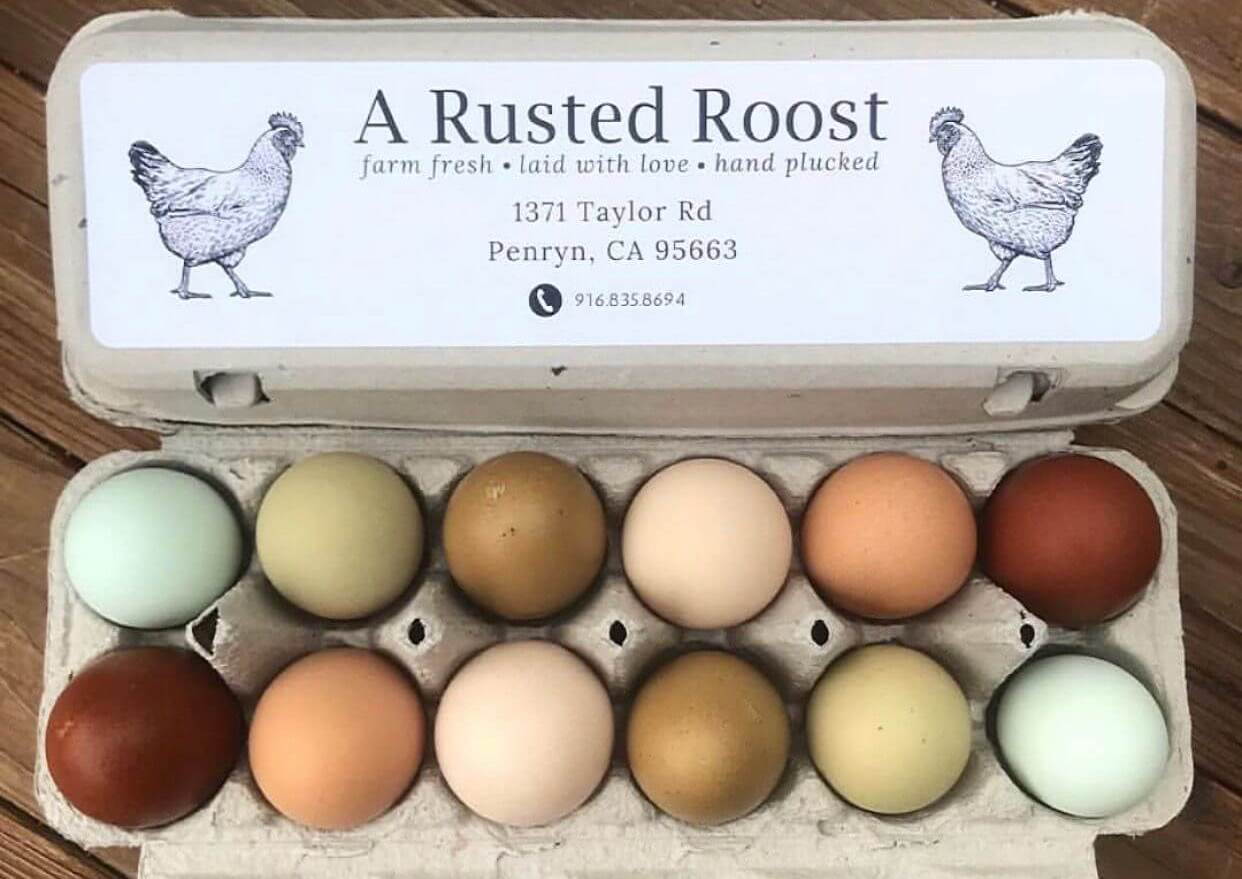
We love to hear stories about our merchants’ ecommerce journeys, so we’re sharing them for you to enjoy as well. Read on to learn about how Sheri Swanson of The Egg Carton Store has found success with her online store.

What inspired you to start your online store?

One of our founders worked on a farm growing up and saw a need for small to mid-sized farms to have access to high-quality egg packaging and marketing tools.

Merchant Stories: The Egg Carton Store

What is your favorite part of running an online business?

We love helping egg farmers, hearing their unique stories, and supplying them with products to meet their needs. After countless conversations with customers, we started noticing that many of them didn’t have access to affordable and effective marketing resources to help connect them with consumers. These conversations inspired us to develop a free marketing platform called Local Hens, which was made specifically to help farmers and customers connect.

Local Hens is a free farm directory and marketing resource for farmers of ALL types — not just egg farmers! Farmers can create a profile and list products they sell, where they sell them, and their contact information. It has been fun and rewarding to help people connect with farmers, so they know where their food comes from!

Merchant Stories: The Egg Carton Store

What do you like most about Volusion’s ecommerce solution?

We really like Volusion’s company culture. Whether we are speaking with a Volusion customer service representative, an SEO specialist, branding marketing team, or a developer; everyone is incredibly positive, responsive and knowledgeable.

Merchant Stories: The Egg Carton Store

What is the best piece of advice you’ve received about running your business?

Be tenacious and put both feet in right away.

Building a business from the ground up is incredibly difficult, but is also very rewarding. The best piece of advice to anyone trying to build their store from scratch is to understand your market and get a great team of developers and designers behind you. We were fortunate to have found Volusion. Their help has been critical throughout every stage of growth.

Merchant Stories: The Egg Carton Store

What does the future hold for your business?

Continued new products and innovation! We want to continue to have meaningful conversations with our customers and see how we can best serve them.


from Volusion Ecommerce Blog | SMB Marketing, Design, & Strategy https://ift.tt/37GtBJd
via IFTTT
Black Friday & Cyber Monday Strategies for Ecommerce Stores

Black Friday & Cyber Monday Strategies for Ecommerce Stores

The biggest shopping weekend of the year is approaching fast, which means it’s time for ecommerce businesses to prepare for increased traffic and—hopefully—sales. 2020’s lineup sees Black Friday falling on November 27th, with Small Business Saturday taking place on November 28th and Cyber Monday following on November 30th.

Online shopping has already seen unprecedented growth throughout 2020 due to the global pandemic limiting brick-and-mortar store operations. This growth trend—combined with a years-long upward trajectory in Black Friday ecommerce activity—means that online sales this holiday sales weekend are bound to shatter records. Online store owners can maximize their profits by planning their sales strategy in advance. Below, we walk through six strategies to ensure that your ecommerce business enjoys a successful Black Friday and Cyber Monday.

1. Analyze Last Year’s Performance

Before you start planning, examine the strategies you implemented last year to determine which were the most fruitful. Look closely at your conversion rates on those sales days, as well as for any email messaging, social media posts, pay-per click ads, and other methods you employed leading up to the holiday weekend. Then, compare your conversion rate(s) to your everyday averages, holiday averages within your industry for that weekend, and any goals you set for your store that weekend.

Analyzing these numbers will give you a clear idea of what strategies worked and should be repeated or expanded upon, as well as which ones should be abandoned altogether. From there, you can determine what new strategies, if any, you should try this year.

2. Plan Sales & Discounts Strategically

While it’s tempting to implement blanket discounts at high rates to attract as many shoppers as possible, it’s far more advantageous to plan your discounts with purpose. Consider setting up a separate discount strategy for each of these holidays to differentiate them from one another. For example, Black Friday could feature hourly discount codes valid for the first 10 buyers, Saturday could feature bundled discounts, and Cyber Monday could feature tiered discounts based on the dollar amount spent. You could also offer a separate perk available across the entire sales weekend to unify it, such as free shipping over a certain dollar amount.

Offering a variety of discount types spaced across the entire weekend will bring shoppers back again and again as they become excited about the variety of savings opportunities. It will also give you an opportunity to analyze each sales strategy’s effectiveness separately so you can easily see which types of sales should be reused in the future, and which should be retired or reworked.

3. Optimize Your Product Pages

Your product page is arguably the most important stop in the purchase process. If each page does not contain all the information a shopper needs to make an informed decision, they will look elsewhere until they find exactly what they’re looking for. However, if you inundate each page with too much information, shoppers will become overwhelmed and distracted from their main goal: purchasing a product that will meet their needs.

Before the sales holiday weekend begins, audit the product pages of as many of your most popular items as you can. Ensure that each page concisely conveys everything your shoppers may want to know before making a purchase. If you want more insight into the best ways to optimize your product pages, check out this recent post from our blog.

4. Notify Shoppers That You’re Participating

Holding a sales event is a futile endeavor if shoppers aren’t aware that it’s happening. Make sure you announce that you are participating in these sales events across as many of your available channels as possible. Social media campaigns and email campaigns are the easiest ways to get information about your sales out to fans and existing customers.

To attract online shoppers who aren’t already familiar with your store, ramp up your SEO strategy and implement pay-per click ads in the weeks preceding the sales. As a final touch, place a countdown widget on your online store so that site visitors who happen upon it leading up to the holiday weekend have an incentive to return.

5. Tell Customers What To Buy

While some shoppers prefer to search an online store for an item they already have in mind, others will want suggestions for what to purchase during your sales event. To help them hone in on the perfect products, create a Gift Guide ahead of time that highlights items that are among your most popular, seem most relevant to the season, or will be featured in your sales.

Additionally, if you don’t have it set up already, create a prominent “Suggested Items” category or carousel in your online store that includes the types of products mentioned above. This will give site visitors who have not previously viewed your Gift Guide a pool of relevant products to choose from, and will help site visitors who have already viewed your Gift Guide find featured items more quickly.

6. User-Test In Advance

Once you’ve put in the work for a successful sales event, you’ll need to user-test your site. This will help you verify that every visitor’s shopping experience is smooth and give you time to eliminate anything that will deter them from completing a purchase. Have employees, friends, and/or family navigate your site to ensure that products are easy to locate, product pages are informative, and the checkout process is painless.

On the back end, make any staffing, inventory, or shipping adjustments necessary to support the increase in demand. This will help you avoid shipping delays, maintaining a positive shopping experience for your customers.

In Conclusion

Black Friday may still be weeks away, but don’t wait too long to start planning for the sales holiday weekend. By considering the strategies above now, your store has a greater chance of meeting—or exceeding—your sales holiday goals.


from Volusion Ecommerce Blog | SMB Marketing, Design, & Strategy https://ift.tt/2H5YVqd
via IFTTT
Leadership Spotlight: Carlisha Robinson, VP of Product

Leadership Spotlight: Carlisha Robinson, VP of Product

Welcome to our Leadership Spotlight series, where we’re gaining insight to the people behind the company by interviewing members of Volusion’s leadership team. This month, we’re talking with Volusion’s VP of Product, Carlisha Robinson.

How did your background prepare you for joining Volusion?

I have a computer science degree and have spent 30 years working in high-tech software companies of all sizes, from startups to global enterprises. 20+ of those years have been spent learning, growing, and leading product management. My technical background, coupled with years of customer-facing consulting, is what enables my ability to create product innovations that align what will both delight customers and inspire engineers to build (kick-ass) products that catapult company success.

What were you most eager to work on when you came onboard?

VOLT, of course. But what was more important to me was the opportunity to take Volusion from an underdog position back to the top of the ecommerce industry. Also, the opportunity to shape our culture towards a product-centric and customer-engaged set of behaviors that guides our product roadmap and investments.

What is the best piece of professional advice you’ve ever received?

Wow! I have had (and still have) so many great mentors that it is hard to narrow it down to just one. So I will have to say that having many mentors is the advice. Surround yourself with advisors who are successful in the roles that you seek. Have mentors that champion and support your growth through your professional journey. Relationships are everything!

What do you think is the biggest challenge for ecommerce businesses at the moment?

Two things. First, the COVID-19 Pandemic is the biggest challenge for any business, but especially ecommerce because of the significant ways it has impacted not only how consumers shop online, but also what they shop for. Second, the warp-speed changes of technology and competitive landscape in our industry. Better technology is available to everyone, making it easy for new players to enter; therefore, we are all fighting for the same dollar, for the same customer! The biggest challenge is being the cream that rises to the top. I believe the winners will be the companies that can deliver the best customer experience and the most valuable capabilities to support online merchant’s growth and need for flexibility.

Does your team have anything exciting in the pipeline?

The land of Product is always exciting because we are the hub of innovation. It’s a creative space to problem solve and learn new things from customers and the market. Currently, my team is excited to work with engineering to deliver the next evolution of Volusion technologies, integrations, and storefront solutions for our flagship V1 and emerging VOLT platforms. No small feat, but we are here for it!


from Volusion Ecommerce Blog | SMB Marketing, Design, & Strategy https://ift.tt/2GXoGZ8
via IFTTT
Volusion Is Here to Stay: Clarification Regarding Our Chapter 11 Protection Filing

Volusion Is Here to Stay: Clarification Regarding Our Chapter 11 Protection Filing

Normally we focus on publishing content that provides valuable and actionable insights to those interested in ecommerce. However, when a company files for Chapter 11 bankruptcy protection, there tends to be a lot of misinformation and confusion about what that means. We want to take a minute to clear the air.

Did Volusion file for Chapter 11 protection?

Yes. We started the process on July 27 as an effort to recapitalize the company, fund future innovation, and strengthen our balance sheet. We believe that Chapter 11 is the fastest, most effective way to accomplish this while also ensuring that our business continues to operate as usual.

We want to be very clear—Volusion is open for business and is not going anywhere. We have sufficient cash on hand to continue to operate while we seek to recapitalize the company through the Chapter 11 process. Our level of services and support remain in place and unchanged. We are operating business as usual.

Why did Volusion file for Chapter 11 protection?

We took this action after exploring a number of different options to address an unstable capital structure involving matured debt. Through Chapter 11, we can continue to operate our business as usual while we negotiate a path forward that will ultimately lead to an even better, stronger Volusion.

What does this mean for ecommerce merchants on Volusion’s platforms?

Everything will continue to operate as usual for our merchants, from our services and support to our commitment to helping them grow their businesses. The company is on track for success, and merchants should see no change as a result of our financial restructuring.

We are aware of false rumors circulating online that our company is in trouble and that merchants should seek alternative ecommerce solutions. That is simply not true. In fact, this decision will help to strengthen our position, not weaken it. Any claims otherwise are marketing attempts from other businesses looking to capitalize on the confusion and alarm caused by the term “bankruptcy.”

How does this impact VOLT?

We remain committed to launching our new platform and feel that our business will be even better positioned to accomplish that after we emerge from the Chapter 11 process. VOLT, Volusion’s new flexible, scalable ecommerce platform that has been in research and development for the past few years, will solve the limitations of modern online stores. VOLT was built for the mobile-first index and offers the fastest sites available, improving organic search rankings and increasing conversions. We are excited to share even more as we take our next steps to introduce VOLT to the market.

Why didn’t Volusion formally announce this decision?

Our focus remains on doing what we do best: enabling ecommerce. While we have nothing to hide and the Chapter 11 process is a matter of public record, we also don’t want to bog our merchants and partners down with minute details about our company—we know and respect that they have far more important things to focus on.

That said, if any of our merchants or partners have questions, we want them to reach out to our support team. The simple answer is that this financial restructuring should not impact our operations, support, or services. However, we know that the term “bankruptcy” can cause alarm and concern, and we want to dispel any of those fears. We have confidence that Chapter 11 was the right step for our company to take so that we can address an issue and come out stronger. If we can answer any questions so that you share in this confidence, we will do so.


from Volusion Ecommerce Blog | SMB Marketing, Design, & Strategy https://ift.tt/3fDxTRZ
via IFTTT
How to Find Trending Products to Sell Online

How to Find Trending Products to Sell Online

Whether you already have an established ecommerce business or you’re looking to enter the space soon, you likely know that the biggest challenge you face in selling products online is knowing what to sell.

There is no shortage of ecommerce shopping options out there today, from behemoths like Amazon to niche sellers on sites like Etsy. Every seller is in competition to serve the needs of consumers, more of whom will flock to online shopping than ever before in a post-pandemic world. How can you know what products are trending so you can stay a step ahead of the sales curve?

Let’s assume that you’ve covered all the other steps required to carve out your space in this competitive industry. You have a website, brand materials, and shipping and fulfillment capabilities. If you don’t, you know how to spin these things up once you settle on a product line or lines. What you’re looking for now are products to sell.

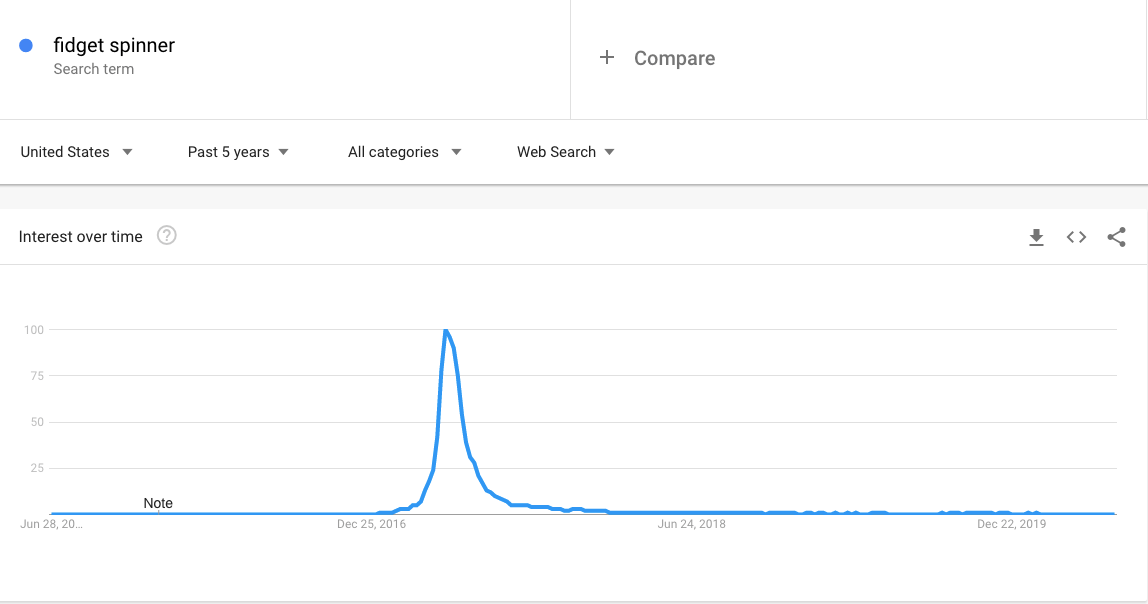
There are some useful tactics you can use to identify trending products before they reach their absolute peak and begin to lose demand. There was a time, for example, when everyone seemed to want a fidget spinner—but if you tried to jump on that wave now, you’d go nowhere.

With that in mind, let’s review the best ways to find trending products to sell online.

Search engines, and the tools associated with them, are a great way to see what people are searching for and how popular those searches are becoming.

As we all know, there is no more powerful search engine (and perhaps window to the rest of the internet) than Google. If enough people search for the same keywords on Google, that keyword will start trending. You can use the accompanying Google Trends tool to track those trends.

Let’s go back to the fidget spinner example. Here’s how Google Trends shows interest in this one search term over the past five years:

How to Find Trending Products to Sell Online

As we can see, there was a specific period of time during which interest in fidget spinners exploded. If you were searching for this term in March 2016, you might have seen the early uptick of interest in this product. Finding a supplier for fidget spinners and capitalizing on the trend could have been an easy way to score a quick ecommerce victory.

But, much like the stock market, if you only caught on to the fidget spinner trend by the time it was peaking, you may have been left holding onto excess inventory as interest dwindled.

Keeping that in mind, use Google Trends’ Explore and Trending pages to identify emerging trends before they reach their peak. An inventory management system that allows you to quickly pull necessary stock as needed (rather than try to predict the curve of the trend) is crucial here.

Another way to take advantage of spiking interest in trends without taking on too much risk is to start a dropshipping ecommerce business, where you ship goods directly to customers from third-party suppliers (rather than holding the inventory yourself).  

A less scientific but more interesting way to use search engines to your advantage is to use YouTube. Google owns YouTube, but the latter is a popular search engine for video content in its own right. Searching for the best new products in your niche or expected niche on YouTube, and filtering results for only, say, the previous month, will highlight new hot items that are starting to catch on among the influencer and online review crowd.

Social media: It’s not just for selfies. With a discerning eye toward what’s appearing most often on the posts of consumers and influencers alike, you can get ahead of the biggest trends before they go mainstream.

Jump on any of the major social media networks—such as Instagram, Twitter, or the resurgent Pinterest. Review their Explore or Trending pages to see what’s on the rise. You can also see which hashtags have the most overall posts on each platform, which can tell you whether a keyword has been saturated or is beginning to hit its stride.

A more targeted way to use social media is to follow specific accounts within your selling niche. For example, finding influencers in the world of men’s fashion and seeing what new products they’re promoting is a great way to gauge interest in a product. Is a particular post from that influencer seeing a ton of engagement? Is this product brand new, or even just a new take from an existing brand? (Everyone knows that Head & Shoulders makes shampoo, but did you know they recently unveiled styling products?)

Cross-referencing posts from a few different influencers, micro-influencers, and even posts that show up in the trending sections of these platforms will give you a sense of what’s becoming popular. Then it’s up to you to combine those findings with data from Google Trends or other market research to see if these products are on the upswing or if the time to capitalize on them has passed.

Another great way to get ahead of trending products is to consider what types of products are relevant to the larger news trends of the day.

The kinds of products and services we want change with the times and are a reflection of the culture we live in today. That’s certainly the case when a pandemic turns the world upside down, affecting the way people work, shop, and live.

With that in mind, let’s consider how the pandemic has impacted our lives—and thus, what we’re looking to buy.

During the height of the first wave of pandemic in the U.S., many gyms and fitness centers were forced to close—and as a result, there was an uptick in interest around staying healthy and fit at home. Barbershops and hair salons also closed—and many had to take self-grooming and care into their own hands, with family members cutting each other’s hair or people attempting to self-dye their roots. There was also a huge spike in the number of people adopting pets from animal shelters. Think of all the pet-centric items, from dog beds to cat trees, that thousands of people suddenly wanted or needed. Then, of course, there’s the most ubiquitous “new” product to see a spike in demand as a result of the pandemic: stylish masks and face coverings for everyday wear.

Few news stories will affect an entire nation (not to mention the planet) the way the pandemic did. But looking for stories that have impacted society at-large and have the potential to shift consumer behavior will help you think about “trending products” in a new light. In fact, you might be at the vanguard of a new trend if you are able to identify how a product aligns with the changing times.

As before, it’s worth your time to cross-reference whatever you think of with results from Google Trends and social media activity. This way, you’ll see if your potential new product is actually on the rise, has already crested, or will fizzle out before it becomes a hit.

The bottom line

Like many things in the world of ecommerce, finding a trending product to sell before it’s already “trending” mixes science with art. You have to combine hard numbers from tools like Google Trends and Instagram with insights and impressions from YouTube and news articles. You won’t identify a best-seller every time, but staying ahead of what’s trending can help you supplement your existing catalog with a rotating cast of hot-off-the-press items that will keep your ecommerce business exciting and fresh.


from Volusion Ecommerce Blog | SMB Marketing, Design, & Strategy https://ift.tt/2NG64Ng
via IFTTT
The Best-Paying Occupations That Don’t Require an Advanced Degree

The Best-Paying Occupations That Don’t Require an Advanced Degree

The National Bureau of Economic Research recently announced that the U.S. officially entered a recession in February 2020. Unprecedented levels of unemployment and declines in economic activity triggered by the COVID-19 pandemic abruptly ended the economy’s 10-year period of expansion. With job prospects looking bleak for the near future, pursuing an advanced degree may become an attractive option for recent college graduates and those who find themselves unemployed.

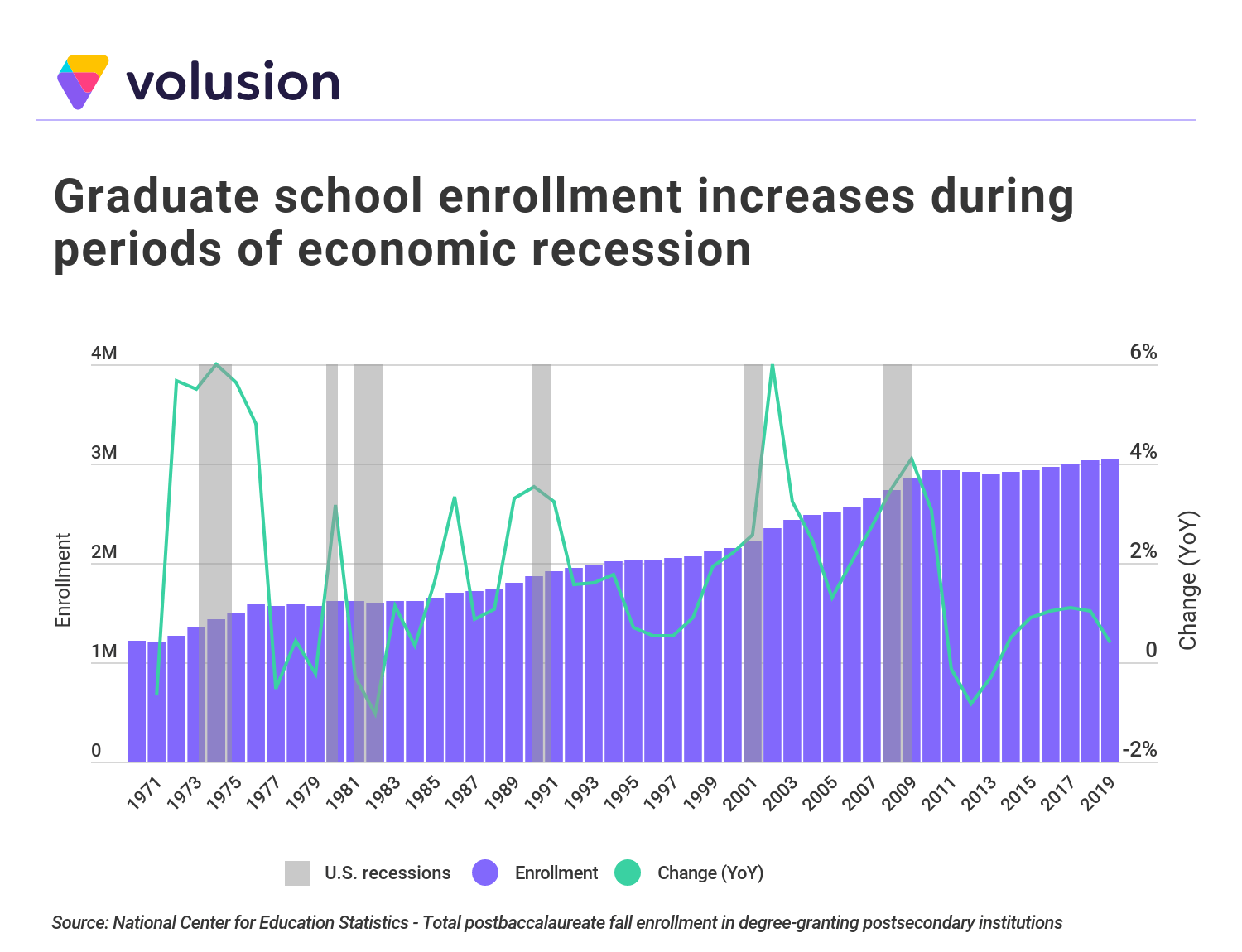
While enrollment in graduate programs fluctuates from year to year, it tends to spike during economic downturns. According to data from the National Center for Education Statistics, dramatic increases in graduate enrollment occurred in 1980-1982 and 2001-2002, when the economy was in recession. More recently, enrollment in graduate and professional programs increased about 7.3% between 2008 and 2010, the height of the Great Recession. Over the past five years, however, graduate school enrollment plateaued and then decreased as the economy recovered. As of 2019, there were 3.05 million students enrolled in an advanced degree program.

The Best-Paying Occupations That Don’t Require an Advanced Degree

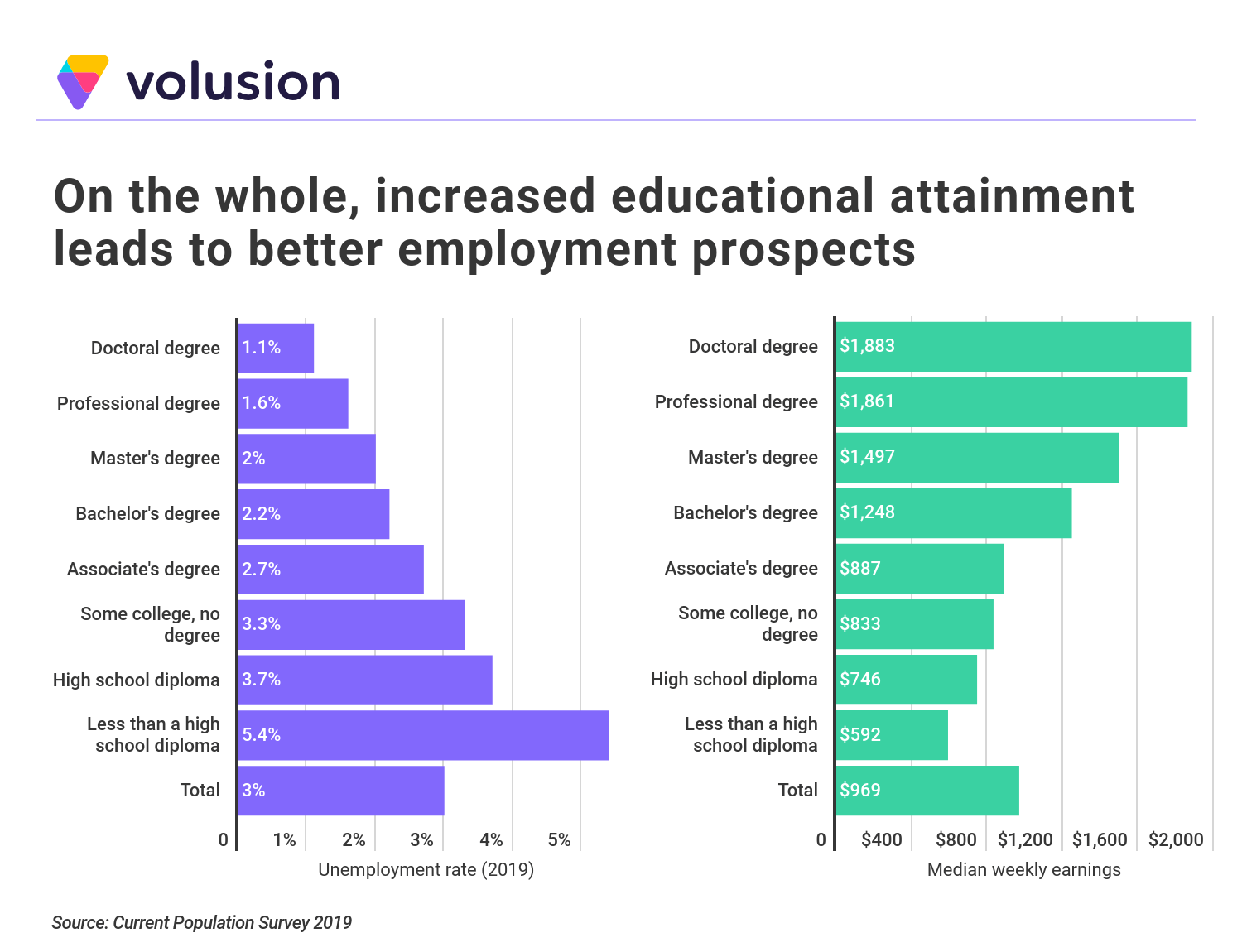
For many people, attending a graduate program is a good option and an advanced degree translates into better job prospects and higher earnings when the economy returns to normal. Individuals with a college education report lower-than-average unemployment rates and higher median wages compared to those without a degree. In general, the more advanced the degree, the greater the economic benefit. For example, the median weekly wages in 2019 for doctoral degree holders ($1,883) and professional degree holders ($1,861) were about twice as high as the median wage of $969 per week for all workers. In 2019, the unemployment rate for those with a master’s degree, professional degree, or doctorate was also at or below 2%, compared to the overall unemployment rate then of 3%.

The Best-Paying Occupations That Don’t Require an Advanced Degree

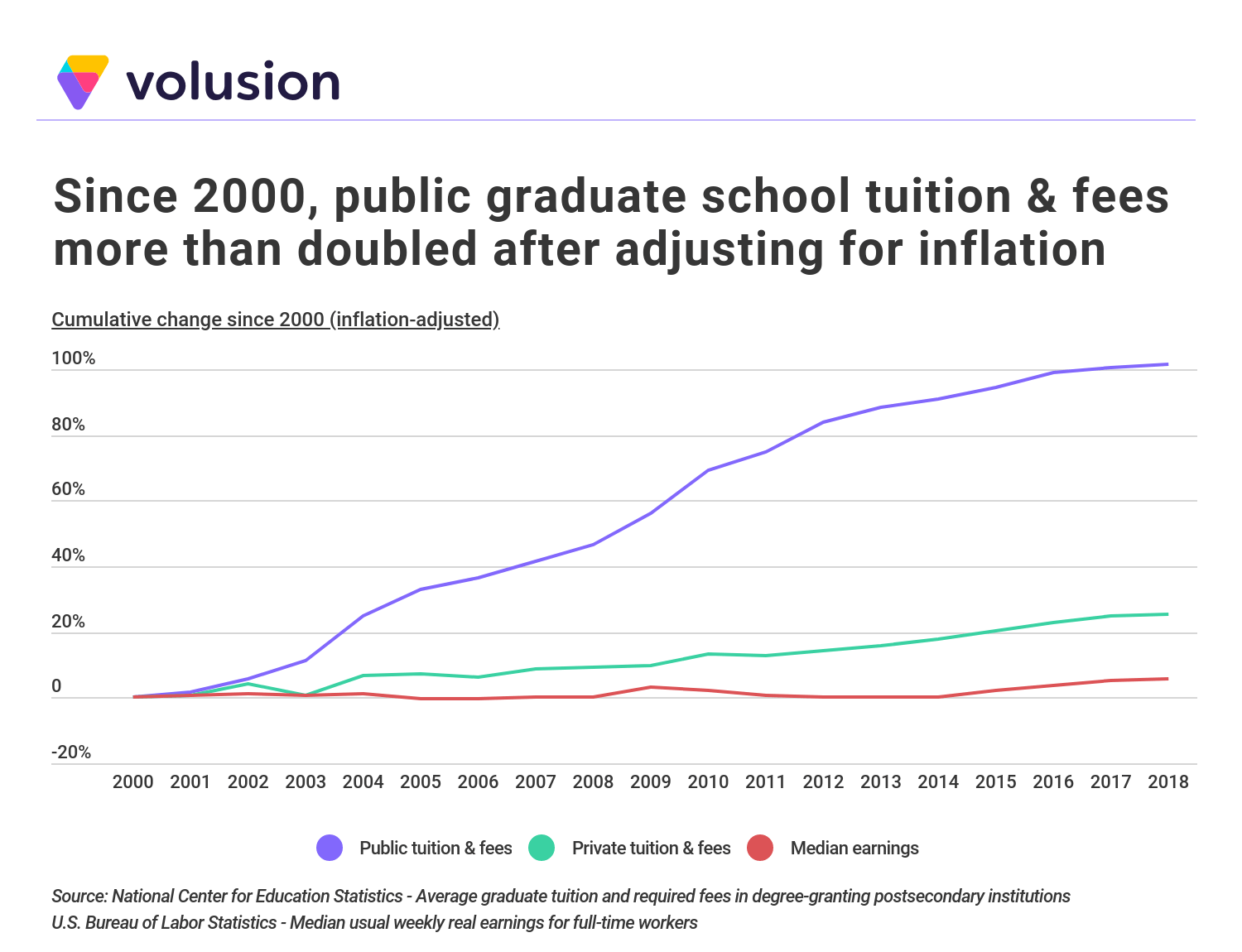
However, the skyrocketing cost of both undergraduate and graduate education is causing many to rethink whether or not the investment in an advanced degree is worth it. Adjusted for inflation, the average graduate school tuition increased by 101% at public universities and 26% at private universities over the past 20 years. For context, median weekly earnings for full-time workers increased by less than 6% after adjusting for inflation over the same time period.

The Best-Paying Occupations That Don’t Require an Advanced Degree

Research from the National Center for Education Statistics also found that the average cumulative debt (undergraduate and graduate combined) was $108,400 for individuals who pursue research doctorate degrees, $186,600 for professional doctorate degrees, and $66,000 for master’s degrees. For individuals who took out loans to pay for their undergraduate education, incurring additional debt for graduate school, while possible, often results in crippling monthly loan payments after graduation.

Fortunately, there are many lucrative jobs that don’t require graduate school. To find the highest-paying occupations that don’t require an advanced degree, researchers at Volusion analyzed salary and employment data from the U.S. Bureau of Labor Statistics’ Employment Projections Survey. In addition to salary data, Volusion also included the BLS’s 10-year projected employment growth for each occupation, as compared to the national average of 5.2%. It’s important to note, though, that the BLS’s employment projections for 2018-2028 were made prior to COVID-19, and new projections don’t yet exist.

Here’s what they found:

The 10 Best-Paying Jobs That Don’t Require an Advanced Degree

The Best-Paying Occupations That Don’t Require an Advanced Degree

Photo Credit: Alamy Stock Photo

10. Advertising and promotions managers

  • Median annual wage: $125,510
  • Work experience needed: Less than 5 years
  • Highest concentration of jobs: New York-Newark-Jersey City, NY-NJ-PA
  • 10-year projected job growth (pre-COVID): 3.2%

Advertising and promotions managers are responsible for producing advertising campaigns to be used in media such as radio, television, print, and the web to generate interest in a company’s products or services. Advertising managers might work in-house for a company or department, or for an agency that works with many different clients. The 10-year projected job growth of 3.2% is lower than the overall growth rate, but individuals can pursue this career path without a lot of work experience.


TRENDING

Volusion offers ecommerce software that makes it easy to sell products online. To make things simple, Volusion offers a wide range of professionally-designed ecommerce themes to choose from.


The Best-Paying Occupations That Don’t Require an Advanced Degree

Photo Credit: Alamy Stock Photo

9. Sales managers

  • Median annual wage: $126,640
  • Work experience needed: Less than 5 years
  • Highest concentration of jobs: San Jose-Sunnyvale-Santa Clara, CA
  • 10-year projected job growth (pre-COVID): 5.1%

Sales managers supervise the sales team within a company and set sales goals on a quarterly and/or annual basis. Sales managers might specialize in business-to-business (B2B) sales on behalf of wholesalers and manufacturers, or they might work in retail or ecommerce businesses to manage business-to-consumer (B2C) sales. The 10-year projected job growth for sales managers is on par with the average across all occupations. While the highest concentration of sales manager jobs are in the San Jose metro area, sales is a ubiquitous job function available in nearly every city and can also be done remotely.

The Best-Paying Occupations That Don’t Require an Advanced Degree

Photo Credit: Alamy Stock Photo

8. Natural sciences managers

  • Median annual wage: $129,100
  • Work experience needed: 5 years or more
  • Highest concentration of jobs: Durham-Chapel Hill, NC
  • 10-year projected job growth (pre-COVID): 5.9%

Natural sciences managers oversee scientific research projects and production from chemists, physicists, and biologists. Interestingly, the highest concentration of natural sciences manager jobs is in the Durham-Chapel Hill metro area, which is also known as the “Research Triangle” due to the proximity of North Carolina State University, Duke University, and University of North Carolina at Chapel Hill. The 10-year projected job growth is slightly higher than the average across all occupations.

The Best-Paying Occupations That Don’t Require an Advanced Degree

Photo Credit: Alamy Stock Photo

7. Financial managers

  • Median annual wage: $129,890
  • Work experience needed: 5 years or more
  • Highest concentration of jobs: Bridgeport-Stamford-Norwalk, CT
  • 10-year projected job growth (pre-COVID): 16.0%

Financial managers undertake a variety of financial initiatives within an organization, such as compiling financial reports, directing investment activities, and creating plans for long-term financial health. Financial managers often work in banks and insurance companies, but they can work in any type of company or industry. Financial managers are poised to have the highest 10-year projected job growth on this list, at more than three times the overall average.

The Best-Paying Occupations That Don’t Require an Advanced Degree

Photo Credit: Alamy Stock Photo

6. Marketing managers

  • Median annual wage: $136,850
  • Work experience needed: 5 years or more
  • Highest concentration of jobs: Bridgeport-Stamford-Norwalk, CT
  • 10-year projected job growth (pre-COVID): 8.1%

Marketing managers work within organizations or agencies to determine consumer demand for a product or service, define a target audience, and launch relevant marketing campaigns. Marketing managers often work in tandem with advertising partners and sales teams to create print and digital promotional materials. The projected job growth by 2028 is greater than the average for all jobs, and most marketing managers have more than five years of experience.


TRENDING

The importance of choosing the right ecommerce software can’t be overstated. Learn everything you need to know about selling products online with our beginner-friendly guide.


The Best-Paying Occupations That Don’t Require an Advanced Degree

Photo Credit: Alamy Stock Photo

5. Petroleum engineers

  • Median annual wage: $137,720
  • Work experience needed: None
  • Highest concentration of jobs: Midland, TX
  • 10-year projected job growth (pre-COVID): 2.6%

Petroleum engineers design equipment and methods used in extracting oil and gas. While much of their work is done in offices, petroleum engineers are likely to work in locations close to drilling and well sites. For example, the highest concentration of petroleum engineering jobs is located in Midland, Texas. The 10-year projected job growth is about half of the overall average. In the wake of COVID-19, there will likely be even bigger job losses in the industry due to the decline in gas prices and demand for travel.

The Best-Paying Occupations That Don’t Require an Advanced Degree

Photo Credit: Alamy Stock Photo

4. Architectural and engineering managers

  • Median annual wage: $144,830
  • Work experience needed: 5 years or more
  • Highest concentration of jobs: San Jose-Sunnyvale-Santa Clara, CA
  • 10-year projected job growth (pre-COVID): 2.8%

Architectural and engineering managers work in offices and construction sites to direct activities related to architecture and engineering projects. The projected job growth for this profession is below the overall average. With construction projects—especially residential—dropping precipitously as a result of COVID-19, work for architectural and engineering managers may also be on the decline for the near future.

The Best-Paying Occupations That Don’t Require an Advanced Degree

Photo Credit: Alamy Stock Photo

3. Computer and information systems managers

  • Median annual wage: $146,360
  • Work experience needed: 5 years or more
  • Highest concentration of jobs: San Jose-Sunnyvale-Santa Clara, CA
  • 10-year projected job growth (pre-COVID): 11.3%

Computer and information systems managers assist organizations with analyzing and implementing information technology needs. These managers often install hardware and software, create data security plans, and upgrade technology systems. The projected growth rate for this field is about twice as high as the overall average. Not surprisingly, the highest concentration of jobs for this field is located in the San Jose metro area, the heart of Silicon Valley.

The Best-Paying Occupations That Don’t Require an Advanced Degree

Photo Credit: Alamy Stock Photo

2. Airline pilots, copilots, and flight engineers

  • Median annual wage: $147,220
  • Work experience needed: Less than 5 years
  • Highest concentration of jobs: Anchorage, AK
  • 10-year projected job growth (pre-COVID): 4.6%

The main job duties for airline pilots, copilots, and flight engineers involve transporting passengers and cargo by air. These professionals must obtain a commercial pilot’s license and an FAA-issued Airline Transport Pilot (ATP) certificate to fly aircrafts such as airplanes and helicopters. The projected growth rate for this occupation was already below the overall average prior to COVID-19, but the flight industry faces an even more uncertain future as the pandemic decreases demand for travel.

The Best-Paying Occupations That Don’t Require an Advanced Degree

Photo Credit: Alamy Stock Photo

1. Chief executives

  • Median annual wage: $184,460
  • Work experience needed: 5 years or more
  • Highest concentration of jobs: Nashville-Davidson--Murfreesboro--Franklin, TN
  • 10-year projected job growth (pre-COVID): -5.5%

Chief executives are typically the highest position within an organization. Any company or industry can have a chief executive, so this is one of the most flexible jobs on the list. Chief executives usually work with a board of directors and other managers within an organization to direct operational activities and implement high-level business strategies. However, chief executives are the only occupation on the list with a negative job growth rate.

Methodology & Full Results

Statistics on median wages, work experience, education, and projected job growth are from the U.S. Bureau of Labor Statistics’ Employment Projections Survey. Only occupations requiring a bachelor’s degree or lower were included in the analysis. Median wages are for 2019 and the 10-year projected change in employment is for the years 2018-2028.

Employment concentrations by metropolitan area are from the U.S Bureau of Labor Statistics’ Occupational Employment Statistics Survey. For each occupation, the metro with the “highest concentration of jobs” is the metro with the largest share of employment in that occupation relative to the share of employment in that occupation at the national level.

All occupations in the list offer a median salary at least three times higher than the national median of $39,810 per year. However, most of these jobs do require a bachelor’s degree, and just over half require at least five years of experience. While graduate degrees may not be required for any of the jobs on the list, it will usually take both time and effort to reach these higher salaries.

While many of the jobs on the list can be done from anywhere with an internet connection, a few are more location-dependent. For example, petroleum engineers and architectural and engineering managers usually need access to job sites. Airline pilots are also beholden to the locations of their airports and flight itineraries. As the economy gradually reopens after COVID-19, jobs that rely on in-person interaction or travel will likely take longer to recover compared to those that can be performed remotely.


from Volusion Ecommerce Blog | SMB Marketing, Design, & Strategy https://ift.tt/3igdbtV
via IFTTT
How to Run an SEO A/B Test on Your Ecommerce Site With No Special Tools

How to Run an SEO A/B Test on Your Ecommerce Site With No Special Tools

Getting the right kind of traffic to your website is essential for any ecommerce business. Learning how to build pages to attract those visitors is not an easy task for anyone, even the experts. A good SEO strategy can help improve visibility, but it can be tough to figure out how to improve your SEO.

One effective way to select an SEO strategy is to test out changes through an A/B test. It's easier than you think—all you need is your existing Google Search Console or Google Analytics and a bit of patience.

What is an A/B Test?

An A/B test involves presenting two different versions of something to consumers for a specific period of time. Comparing the results of pre-selected metrics allows you to determine which version is more effective and should be implemented moving forward. A/B tests are used across many types of actions, including email marketing and SEO.

Why Run an A/B Test?

When it comes to SEO, an A/B test allows you to compare your existing website strategy with the one you want to try out. It can help you to hone your strategy and fully roll out what works if you've seen a positive effect on a few pages.

Importantly, an A/B test prevents an SEO crisis. Imagine if you were to update SEO across the board, only to find out it had a negative effect on ranking and traffic. That is a much harder problem to fix. With an A/B test, you can identify the best new strategies and preserve what's already working.

How Do You Run an A/B Test?

Running an A/B test correctly involves a few important steps:

Step 1: Define the Parameters

Before you start your test, it is important to choose what metric to monitor so you know what to analyze to determine success or failure. While ranking may be important, so is the amount of traffic. Google Search Console and Google Analytics allow you to see both.

If your ranking stays the same, but more people are clicking through as the result of your change, the experiment may be a success. For this reason, try to look at both of these core metrics.

Step 2: Choose Test Pages

One thing you cannot do in an A/B test is post two versions of the same page at the same time—Google will see this as duplicate content and penalize both in the rankings. In addition, there are many factors that affect how Google sees a page. Two identical pages may not actually be identical from a technical standpoint—the original page may be older and exist in a different spot in your website hierarchy, so by creating a "copy" of the old page, you would not actually be testing the result of your SEO changes alone.

Instead, select a group of pages to test. For example, you may choose to put 20 product pages in your test group. Then, divide those pages into group A and group B. Group A will stay the same, acting as your control group. In group B, you will introduce changes. You can use a simple spreadsheet to track which URLs are in the test group and which are A or B.

Step 3: Select Changes to Test

You may have taken advice from an SEO expert or performed your own research into changes that can improve your rank and clickthrough rate. An A/B test is a good time to put those changes into practice.

On your spreadsheet, document the specific changes you will make to group B—those may include new title tags, meta descriptions, keyword density, and eliminating duplicate text. Implement the same changes on all group B pages so that there is no confusion about what factors cause what results. Your A/B test should give you an accurate picture of what will happen if you do an SEO refresh over your entire ecommerce site.

Step 4: Track Results

Before you run your test, predict the ranking and traffic for both your group A and B pages without any changes. You can use your past data on these pages to make these predictions. This way, you can identify whether a drop or boost in traffic is because of the experiment or because of other factors that affect all pages.

Then, run your test and compare your metrics on all pages to your predictions. Remember to look closely at both the control and your experimental groups to get a clear picture of the data. If pages in group B had a 10 percent increase in traffic and pages in group A had a 5 percent increase, you might reasonably assume that the difference of 5 percent was because of your SEO changes.

Step 5: Note What's Surprising

Sometimes, following SEO best practices has surprising results—a change meant to improve ranking could hurt it, or pages may rank the same but have fewer hits. By taking a close look at your data and identifying what is surprising, you can continue to tweak the strategy to find what works.

Final Thoughts

Running an A/B test is an effective way to improve your website's SEO. You don’t even need any special online tools to perform an A/B test—just the tools you have already been using to monitor your site's traffic and ranking. Done in a controlled manner, you won't have to worry about losing the traction your site already has as you decide your future course of action.


from Volusion Ecommerce Blog | SMB Marketing, Design, & Strategy https://ift.tt/2NseuHY
via IFTTT
8 Foolproof Ways to Improve Ecommerce Email Engagement

8 Foolproof Ways to Improve Ecommerce Email Engagement

81% of businesses rely on email as their primary customer acquisition channel. This isn’t an overstatement considering that 42.3% of Americans subscribe to email lists for the sole purpose of receiving discounts. Don't take this the wrong way—customers engage emails for a number of other reasons too. Regardless of how people feel about email communications, many email campaigns fail to connect with customers. Figuring out a way to keep people engaged when every other company is trying to do the same can be intimidating. However, it doesn’t have to be.

The key to being successful at email marketing is to keep your customers at the center of all your efforts and send high-level and relevant content that they will look forward to hearing about. We recommend that our clients ask themselves the following questions prior to sending out email campaigns to ensure maximum email engagement:

  • Do we have an effective email list growth strategy?
  • Do we have an up-to-date email segmentation strategy?
  • What kind of content do we share with our customers?
  • How do we make our emails more exciting?

You might already have an existing email marketing strategy and a fairly good email engagement score. But don’t get too comfortable—the new generation of shoppers are constantly evolving and becoming more sophisticated about how they consume content. You need to constantly sharpen your email marketing efforts to better connect with your audience and increase engagement.

Introduction to Email Engagement and Common Email Engagement Metrics

Email engagement measures the extent to which your subscribers interact with your email. For instance, do they:

  • Open the message?
  • Read the copy?
  • Click on the links?
  • Follow the call-to-action?
  • Fulfill the conversion goals?

Tracking email engagement metrics is imperative because it facilitates future design and content decisions that can lead to more focused and effective email marketing campaigns. Here are some common email metrics that every email marketer should know, monitor, and track:

Email Open Rate

Open rate shows the number of emails opened compared to the total amount of emails delivered. Opens are just a basic metric when it comes to email engagement, so you don’t want to use them as the only measure of an email’s success.

How to calculate it: (Emails opened / Emails delivered) * 100

Click-Through Rate (CTR)

The number of clicks on the links in an email, divided by the number of emails delivered. If a good open rate is proof of how good the subject line is, the Click-Through Rate is determined by the quality and relevance of an email’s copy, images, and especially calls-to-action.

How to calculate it: (Emails clicked / Emails delivered) * 100

Unique Open Rate and Clicks

As you monitor your email campaign performance, there is a high probability that it includes multiple openings or clicks by the same user. The terms “unique openings” or “unique clicks” are used in such scenarios.

How to calculate it: (Unique clicks or unique openings / Emails delivered) * 100

Bounce Rate

This is the percentage of email addresses that returned an error after the email campaign was sent. These deliverability issues can be either permanent (hard bounces) or transient (soft bounces). Hard bounces occur because of non-existent or invalid email addresses. Soft bounces, on the other hand, happen due to full inboxes or temporary server issues.

How to calculate it: (Returned emails / Sent emails) * 100

Conversion Rate

While all the other metrics we discussed were on-mail KPIs, the conversion rate is a fundamental off-mail KPI that can be measured by integrating email platform data with data from external analytical systems like Google Analytics. Every email that you send must have a clear objective that links to some action you would like users to carry out. The conversion rate measures how effective your message is in regards to your objective.

How to calculate it: (Number of users who have completed the action / Emails delivered) * 100

The list of email engagement metrics doesn’t end here. You might be familiar with several other metrics like click-to-open rate, unsubscribe rate, spam score, etc.—learn more here.

Factors Affecting Your Email Marketing Success

8 Foolproof Ways to Improve Ecommerce Email Engagement

Graphic courtesy of TargetBay

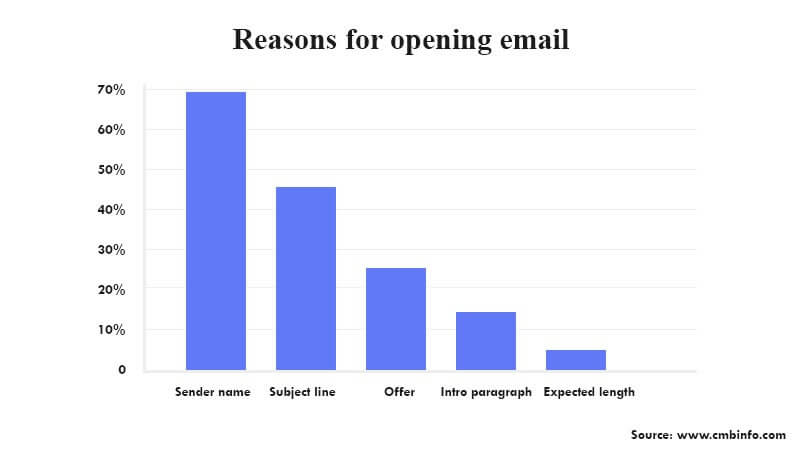
Some Reasons Why Recipients Choose to Leave an Email Unopened

For the past several years, we've helped hundreds of business owners and marketing managers optimize their email marketing efforts. We’ve analyzed thousands of email campaigns and asked a myriad of respondents for the reasons they choose to ignore an email. This is the list of most common reasons that we found:

  1. The recipient doesn’t recognize the sender.
  2. The message is not relevant to the recipient.
  3. The recipient receives too many emails.
  4. The recipient initially subscribed to a list for a discount and has already received the promised reward.
  5. The recipient is too busy.
  6. The recipient doesn’t check his/her email often.

8 Insanely Effective Strategies to Better Email Engagement

Now that you are aware of common reasons why a recipient ignores an email, it’s time to go through suggestions to boost your email open and click-through rates.

1. Enable users to set their preferences

Minimizing the unsubscribe rate and increasing subscriber satisfaction is crucial to improving your email marketing performance. When an email doesn’t satisfy a subscriber’s expectations, their obvious reaction would be to unsubscribe. The solution is straightforward. By asking what their preferences are, you can tailor your email campaigns to meet your subscribers’ needs.

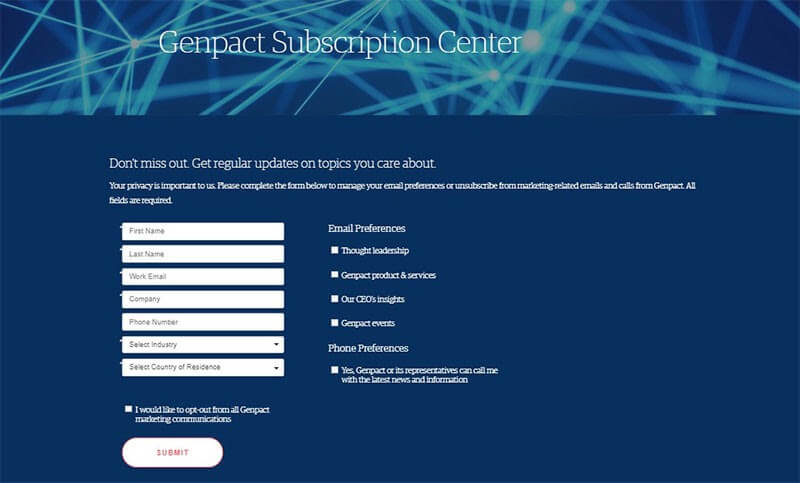
60% of marketers don’t give subscribers an option to choose the types of emails they want to receive, and only 30% of marketers allow their subscribers to decide how frequently they want to receive the emails. That’s where a preference center can help.

8 Foolproof Ways to Improve Ecommerce Email Engagement

Image Source

Genpact follows a humble preference center practice. While keeping it simple, they ensure that the users can either choose the topics they are interested in or opt out of the service.

Ecommerce retailers can adopt a slightly different approach here. For instance, a clothing retailer can allow its customers to decide whether they want information about women’s clothing or men’s. If subscribers receive relevant emails, they’re more likely to stay engaged with your brand.

2. Segment your email lists

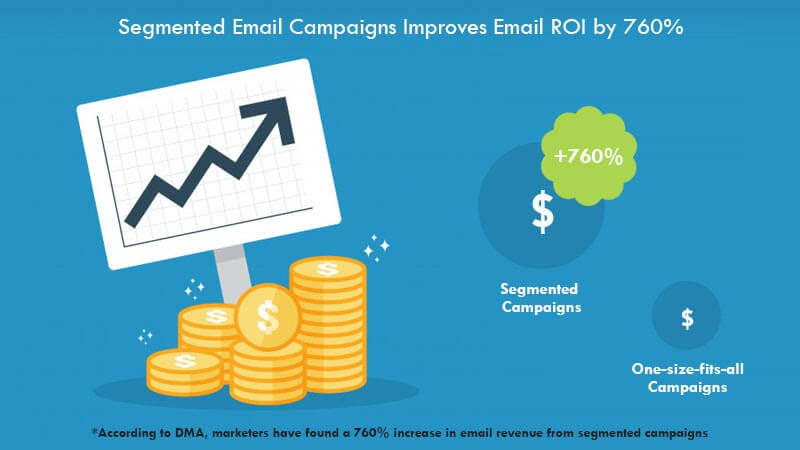
2020 has been a bizarre and difficult year for many businesses, but it looks like things are improving for email marketers. A study has shown that 78% of marketers have seen an increase in email engagement over the last 12 months. Besides that, marketers who used segmented campaigns witnessed as much as a 760% increase in revenue.

8 Foolproof Ways to Improve Ecommerce Email Engagement

Image Source

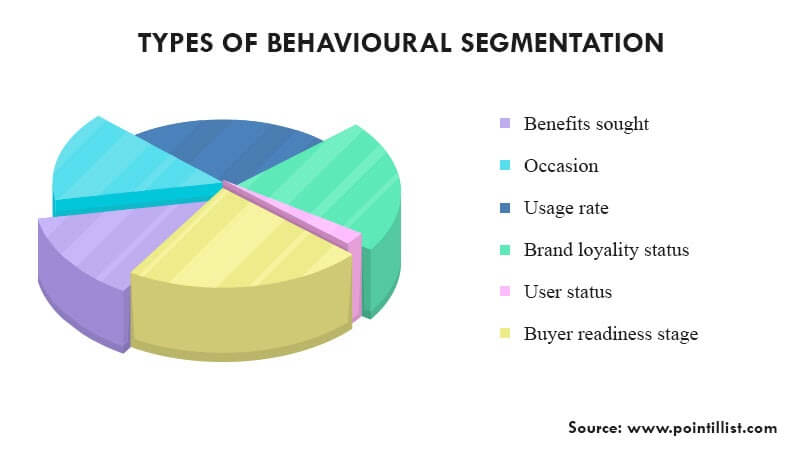
If personalization is the key to a high yielding campaign, segmenting email subscribers is the first thing every marketer should do. The rationale is that the information which is relevant to one customer might not be relevant to another. Personalizing emails based on segmented lists will increase the open and click-through rates of your email campaign. Retailers can group their customers based on several attributes, such as geographic location, gender, marital status, profession, age, and interests. With reference to ecommerce email engagement, behavior-based targeting is considered to be more effective.

8 Foolproof Ways to Improve Ecommerce Email Engagement

Image Source

To engage the recipients, a marketer must ride the long road of creativity. Sometimes, you will need to be a bit broader with your segments. And in some other cases, you’ll need to adapt your send frequency to specific groups.

After cleaning and sorting the email list, you can start sending out campaigns that are most relevant to each list and their interests. This increases the relevancy of your campaign, which in turn leads to better subscriber satisfaction.

3. Have a Customer-centered Email Subject Line Strategy

Often underrated and overlooked, most of modern marketers spend very little to no effort in streamlining their subject line strategy. Let’s apply the power of observation here. Our inboxes are constantly flooded with personal, professional, and promotional emails each day. In fact, an average person who works 9 to 5 receives 121 emails per day. That being said, it is extremely hard to earn the attention of email recipients. The decision of whether or not to open, skip over, or delete a message is usually made based on the subject lines we see at first glance. According to Invespcro, 47% of email recipients open an email on the basis of the subject line, whereas 69% of email recipients report email as spam based solely on the subject line.

8 Foolproof Ways to Improve Ecommerce Email Engagement

Image Source

In pursuance of the objective—to achieve higher engagement levels—you must invest enough time and effort into creating subject lines that appeal to your readers. High-converting subject lines are short, descriptive, and promising. You can explore different subject line styles here, like informational, personal, clever, how-to, etc.

4. Acknowledge the Impact of Responsive Design

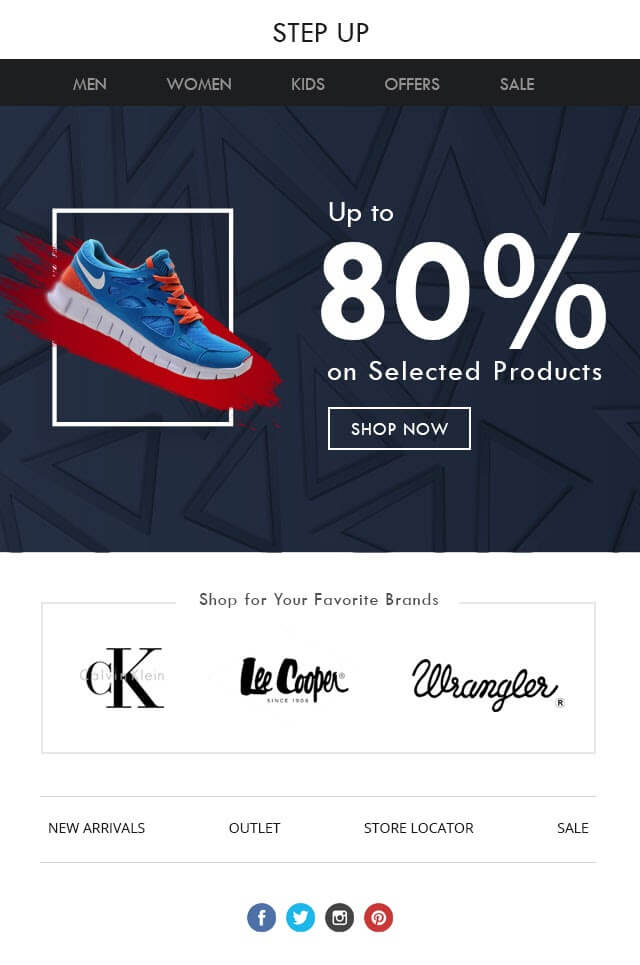
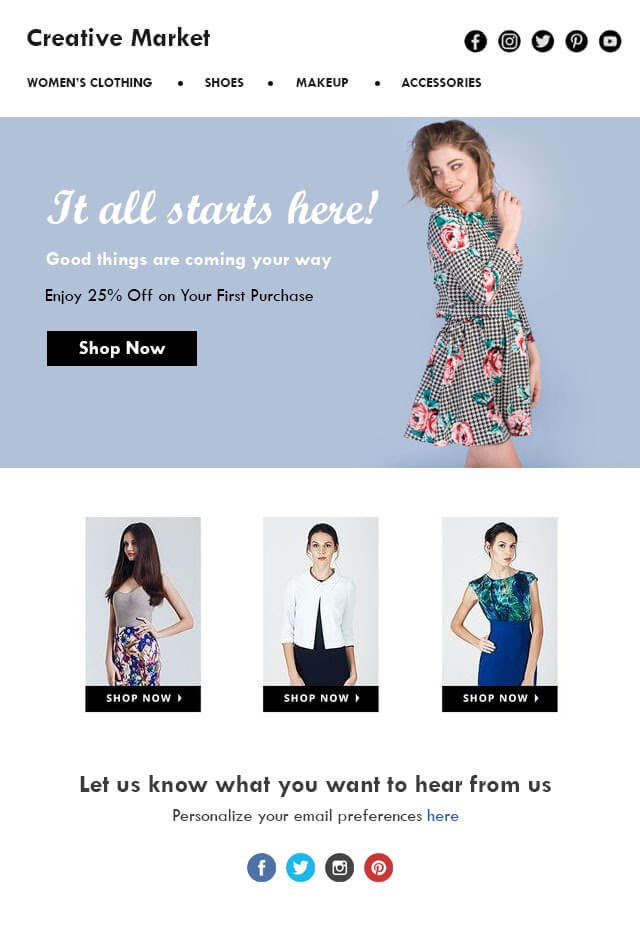
Did you know that 55% of email is now opened on a mobile device? If you haven't optimized your email marketing strategies for mobile yet, you're already late. Creating the appropriate design and optimizing your content for mobile does make a difference. However, a majority of ecommerce brands still believe that building templates that work on all devices (52%) are just enough. This isn't right. Instead of pursuing a “one size fits all” approach, focus on optimizing every aspect of the email if you want to reach the conversion and engagement rates that you are aiming for. This involves writing a brief and relevant copy, resizing pictures, leaving blank spaces around buttons to avoid missed clicks, and more. Here’s an example of a mobile-optimized email:

8 Foolproof Ways to Improve Ecommerce Email Engagement

Image courtesy of TargetBay

As stated in Yes Marketing’s overview of Q1 benchmarks, responsive emails have a 21% higher CTO (click to open rate) than non-responsive ones.

5. Personalize Your Emails

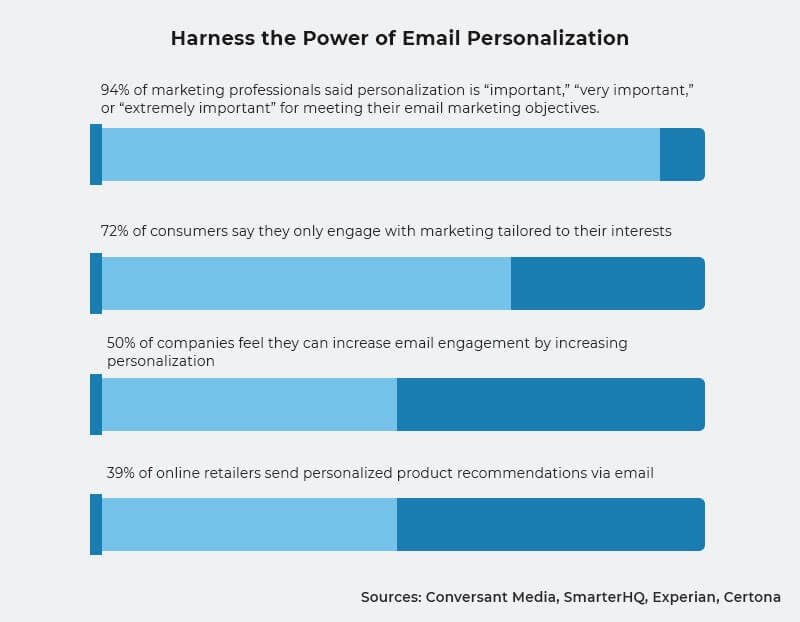
Personalization, in the context of email marketing, is about targeting a specific subscriber and sending a tailored email campaign by leveraging the data and information you have gathered. Basic email personalization techniques involve addressing the recipient by their first name in the subject line, while advanced tactics include creating email content based on the subscriber's gender, location, or other things you know about them. Does personalization in email marketing increase email engagement? 74% of marketers say that they’ve seen significant improvement in customer engagement when employed targeted personalization. Personalization is proven effective that it can increase your open rate by 29%.

8 Foolproof Ways to Improve Ecommerce Email Engagement

Image Source [1] [2] [3] [4]

Consumers nowadays are highly informed and more likely to interact with a brand that offers personalized experiences. People want to be seen and considered as individuals rather than a group of similar traits. So, where and how do you begin with personalization? It’s entirely possible to start simple. Begin with the subject line and preheader, and advance with more sophisticated tactics as you go along. The aim is to use personalization to bring value to your customers’ experiences.

6. Use Social Proof to Fuel Engagement

Social proof implies one of the hottest marketing buzzwords—perhaps the most debated strategy nowadays. Whether it’s preventing us from choosing a product that has less than 5 reviews or compelling us to take part in a social media trend like “10-year challenge,” social proof exerts a powerful influence on us.

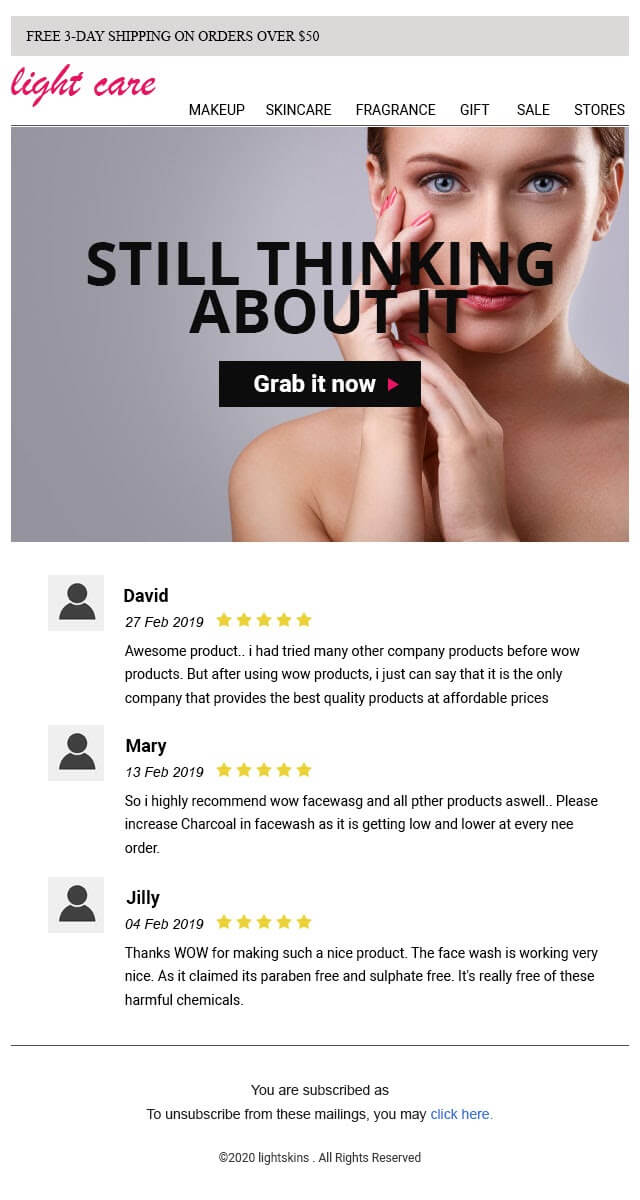
The effect of social proof is more evident in ecommerce. When making a purchase, new-gen shoppers look for genuine positive as well as negative reviews to ensure the credibility of the product. If this is an event of leveraging social proof in your ecommerce store to foster credibility, using brief customer reviews in marketing emails are equally or more useful. Incorporating customer reviews into your emails will help build trust in the product/brand, and also promote the engagement factor. An abandoned cart email is the epitome of how rewarding social proof is in a transactional email. Here’s an example:

8 Foolproof Ways to Improve Ecommerce Email Engagement

Image courtesy of TargetBay

Whether you choose to believe it or not, we, humans are social animals; we crave a sense of belonging. Consequently, our decisions are consciously or subconsciously influenced by the choices, opinions, and actions of those around us.

7. Offer Incentives

Let's face it: getting people—a lot of people—to actually interact with your email campaign isn’t easy. This is exactly why it is crucial to understand that the three main reasons people will join your email list are discounts, exclusive information, and to stay in touch. Out of these three reasons, discounts would be the apparent reason why a customer opens an email. As stated in a study conducted by Voucher Cloud, 7 out of 10 shoppers said they made use of a coupon or discount from an email recently.

  • Help first-time conversions: First-time shoppers are often uncertain and confused. They take a lot of factors into consideration before making a purchase decision. They might examine the trust signals, payment security factors, or even peer reviews. Providing a special discount or a first-time offer is a great way to help them overcome their hesitations and instill confidence to proceed with the transaction.
8 Foolproof Ways to Improve Ecommerce Email Engagement

Image courtesy of TargetBay
  • Re-engage inactive recipients: Most online retailers and marketers are interested in communicating with active subscribers. But, what about hundreds of inactive recipients in your email database? Offering incentives is an excellent option if your intent is to re-engage the previously qualified buyers who had stopped responding to your email campaigns.

When in doubt, discounts aren’t the only way to incentivize. You can offer free samples, webinars, limited one-on-one consulting, a sneak peek at original research, and more.

8. Get the Timing Right

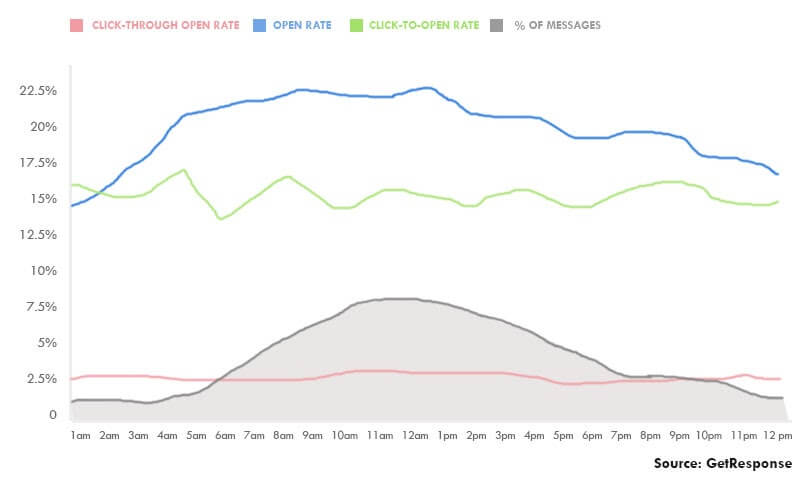
What’s the best time to send an email? Finding the perfect time to send out the email campaign is less about your convenience and more about who you’re emailing, what devices the recipient is using, and what country or time zone they belong to. For instance, in the United States, most recipients check their email in the morning. About 7% of all email opens occur between 10 a.m. and 11 a.m. Most of these opens happen on mobile devices.

8 Foolproof Ways to Improve Ecommerce Email Engagement

Image Source

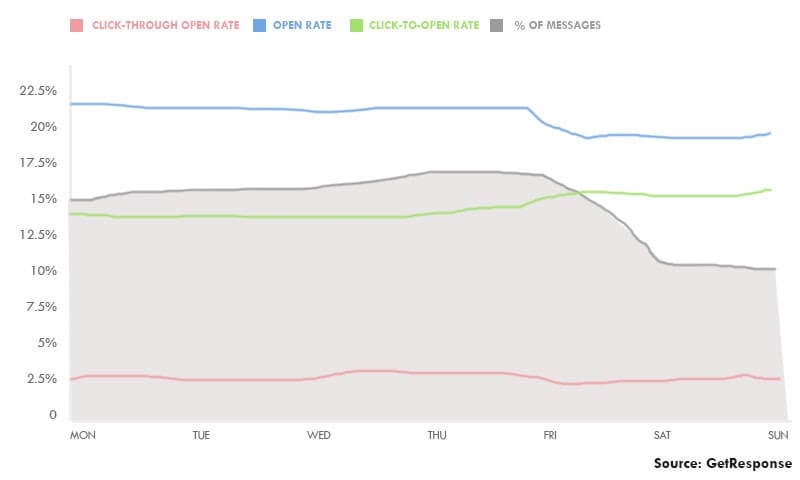
Now, let’s take a look at the average results of email campaigns sent on different days of the week. To arrive at this conclusion, we relied on data from GetResponse.

8 Foolproof Ways to Improve Ecommerce Email Engagement

Image Source

Once again, it isn’t wise to generalize when it comes to picking the right time or day to send an email. That’s why it’s better to understand your audience and to find the time slots that work best for you through testing.

Final Thoughts

Customer engagement is a key determinant of how proficient your customer acquisition and retention approaches are. The level of interaction you obtain from your email subscribers plays a substantial role in improving your email conversion rates and overall email marketing ROI. All the work that you put into improving your email marketing engagement will serve no useful purpose if you don’t fully understand who your customers are, what they expect from you, or how you can communicate with them at scale.

As we’ve already pointed out, with the right timing, content, design, personalization—in combination with providing a consistent experience and matching brand personality—you can dismantle the barriers of subscriber engagement.

Once you start applying these ideas, remember to reassess each and every aspect of your approach constantly. Customer journeys and customer profiles are ever-changing variables; as their requirements and preferences change, your content and email engagement strategy should also evolve along with them.


from Volusion Ecommerce Blog | SMB Marketing, Design, & Strategy https://ift.tt/2Z2l90V
via IFTTT
New Government – Labour Small Business Agenda

We’ve are all waking up to a new Government today, with the Labour party about to take control of the country and what should be top of your...