Showing posts with label Design & Strategy. Show all posts

Cities With the Most Female Breadwinners

Cities With the Most Female Breadwinners

Income inequality in the U.S. hit a new high in 2018, according to recently released data from the U.S. Census Bureau. Paradoxically, within households, there is increasingly less inequality between husbands and wives. In fact, among married couples, wives now outearn their husbands nearly 30 percent of the time, up from 15.9 percent in 1981.

Cities With the Most Female Breadwinners

The number of married couples in which the wife is the primary breadwinner has risen dramatically over the past several decades with rising female education levels and declining wage gaps. Still, it appears the nation is not entirely at ease with the development. A recent study by the Census Bureau found that if a household has a female breadwinner, the wife tends to underreport her true earnings while the husband is more likely to overreport his, attempting to conform to traditional gender norms. In addition, according to the Institute for Family Studies, 41 percent of female breadwinners still do more housework than their husbands, leading to lower satisfaction in their relationship. Interestingly, males who earn less than their wives do not experience this satisfaction penalty.

Given evolving gender norms and the growing numbers of women who earn more than their husbands, researchers at Volusion wanted to find which metropolitan areas have the most female breadwinners. Using data from the U.S. Census Bureau’s 2018 American Community Survey, they calculated the proportion of married-couple households in which the wife outearns the husband. Only heterosexual married-couple households in which both the wife and husband had earnings were included in the analysis. To improve relevance, Volusion grouped metropolitan areas into size cohorts based on population size: large metros (1,000,000 or more), midsize metros (350,000-999,999), and small metros (less than 350,000).

Across the entire U.S., female breadwinners earned a whopping $70,000 per year in 2018, while their husbands earned just $30,000. For comparison, the median earnings for all men 16 years and over with earnings was just over $41,000, and for women it was approximately $30,000. Here are the metropolitan areas with the most female breadwinners.

Cities With the Most Female Breadwinners

Large Metros With the Most Female Breadwinners

Cities With the Most Female BreadwinnersPhoto Credit: Alamy Stock Photo

15. Cleveland-Elyria, OH

  • Share of female breadwinners: 31.1%
  • Median earnings for female breadwinners: $70,000
  • Median earnings for female breadwinners' husbands: $32,000
  • Median earnings for all female workers: $32,000
  • Median earnings for all male workers: $46,000

TRENDING

Whether you work alone or for a large organization, selecting the right ecommerce software can’t be overstated. Learn everything about selling products online with Volusion’s guide.


Cities With the Most Female BreadwinnersPhoto Credit: Alamy Stock Photo

14. New York-Newark-Jersey City, NY-NJ-PA

  • Share of female breadwinners: 31.1%
  • Median earnings for female breadwinners: $90,000
  • Median earnings for female breadwinners' husbands: $36,500
  • Median earnings for all female workers: $40,000
  • Median earnings for all male workers: $52,000

Cities With the Most Female BreadwinnersPhoto Credit: Alamy Stock Photo

13. Miami-Fort Lauderdale-West Palm Beach, FL

  • Share of female breadwinners: 31.1%
  • Median earnings for female breadwinners: $60,000
  • Median earnings for female breadwinners' husbands: $26,000
  • Median earnings for all female workers: $30,000
  • Median earnings for all male workers: $35,000

Cities With the Most Female BreadwinnersPhoto Credit: Alamy Stock Photo

12. Rochester, NY

  • Share of female breadwinners: 31.5%
  • Median earnings for female breadwinners: $68,000
  • Median earnings for female breadwinners' husbands: $31,000
  • Median earnings for all female workers: $33,000
  • Median earnings for all male workers: $44,500

RELATED

Starting a business? See the most popular types of businesses and learn how to pick a business structure that suits your goals.


Cities With the Most Female BreadwinnersPhoto Credit: Alamy Stock Photo

11. San Francisco-Oakland-Hayward, CA

  • Share of female breadwinners: 31.9%
  • Median earnings for female breadwinners: $119,000
  • Median earnings for female breadwinners' husbands: $50,000
  • Median earnings for all female workers: $50,000
  • Median earnings for all male workers: $68,000

Cities With the Most Female BreadwinnersPhoto Credit: Alamy Stock Photo

10. Tucson, AZ

  • Share of female breadwinners: 31.9%
  • Median earnings for female breadwinners: $60,000
  • Median earnings for female breadwinners' husbands: $26,000
  • Median earnings for all female workers: $28,000
  • Median earnings for all male workers: $35,000

Cities With the Most Female BreadwinnersPhoto Credit: Alamy Stock Photo

9. Las Vegas-Henderson-Paradise, NV

  • Share of female breadwinners: 32.0%
  • Median earnings for female breadwinners: $60,000
  • Median earnings for female breadwinners' husbands: $28,000
  • Median earnings for all female workers: $32,000
  • Median earnings for all male workers: $38,000

Cities With the Most Female BreadwinnersPhoto Credit: Alamy Stock Photo

8. Richmond, VA

  • Share of female breadwinners: 32.3%
  • Median earnings for female breadwinners: $71,000
  • Median earnings for female breadwinners' husbands: $36,000
  • Median earnings for all female workers: $36,000
  • Median earnings for all male workers: $45,000

Cities With the Most Female BreadwinnersPhoto Credit: Alamy Stock Photo

7. Tampa-St. Petersburg-Clearwater, FL

  • Share of female breadwinners: 32.3%
  • Median earnings for female breadwinners: $65,000
  • Median earnings for female breadwinners' husbands: $30,000
  • Median earnings for all female workers: $31,000
  • Median earnings for all male workers: $40,000

Cities With the Most Female BreadwinnersPhoto Credit: Alamy Stock Photo

6. Philadelphia-Camden-Wilmington, PA-NJ-DE-MD

  • Share of female breadwinners: 32.5%
  • Median earnings for female breadwinners: $82,000
  • Median earnings for female breadwinners' husbands: $37,000
  • Median earnings for all female workers: $37,400
  • Median earnings for all male workers: $50,000

Cities With the Most Female BreadwinnersPhoto Credit: Alamy Stock Photo

5. Raleigh, NC

  • Share of female breadwinners: 32.5%
  • Median earnings for female breadwinners: $79,400
  • Median earnings for female breadwinners' husbands: $35,000
  • Median earnings for all female workers: $38,000
  • Median earnings for all male workers: $49,000

Cities With the Most Female BreadwinnersPhoto Credit: Alamy Stock Photo

4. Memphis, TN-MS-AR

  • Share of female breadwinners: 32.9%
  • Median earnings for female breadwinners: $62,000
  • Median earnings for female breadwinners' husbands: $31,000
  • Median earnings for all female workers: $30,000Median earnings for all male workers: $39,200

Cities With the Most Female BreadwinnersPhoto Credit: Alamy Stock Photo

3. Sacramento--Roseville--Arden-Arcade, CA

  • Share of female breadwinners: 33.1%
  • Median earnings for female breadwinners: $80,000
  • Median earnings for female breadwinners' husbands: $33,000
  • Median earnings for all female workers: $35,000
  • Median earnings for all male workers: $48,000

DID YOU KNOW?

Companies that don’t have a business plan are more likely to fail. Learn how to create your own ecommerce business plan with Volusion's fill-in-the-blank template.


Cities With the Most Female BreadwinnersPhoto Credit: Alamy Stock Photo

2. Hartford-West Hartford-East Hartford, CT

  • Share of female breadwinners: 33.3%
  • Median earnings for female breadwinners: $86,000
  • Median earnings for female breadwinners' husbands: $40,000
  • Median earnings for all female workers: $40,000
  • Median earnings for all male workers: $55,000

Cities With the Most Female BreadwinnersPhoto Credit: Alamy Stock Photo

1. Buffalo-Cheektowaga-Niagara Falls, NY

  • Share of female breadwinners: 33.6%
  • Median earnings for female breadwinners: $70,000
  • Median earnings for female breadwinners' husbands: $33,000
  • Median earnings for all female workers: $35,000
  • Median earnings for all male workers: $45,000

Methodology and Detailed Findings

All statistics were derived from the U.S. Census Bureau’s 2018 American Community Survey Public Use Microdata Sample (PUMS). The share of female breadwinners for each metropolitan statistical area was calculated as the proportion of all married-couple households in which the wife outearns the husband. Only heterosexual married-couple households in which both the wife and husband had earnings were included in the analysis. All statistics on median earnings are for all workers, including part-time and full-time individuals.

The analysis found a strong positive relationship between a woman’s level of education and the likelihood of earning more than her husband. Married women who hold at least a bachelor’s degree are almost 70 percent more likely to be breadwinners than those who had not finished high school. This suggests that women who earn more than their husbands do so not only because their husbands earn less than average, as the data shows, but also because of their own above-average earning potential.

Cities With the Most Female Breadwinners

The share of female breadwinners varies significantly by race as well. African-Americans are strongly overrepresented among female breadwinners; whereas Hispanics are significantly underrepresented. Among married African-American women, 38.1 percent are the primary earners in their relationships. For Hispanics, that number is just 25.6 percent. Among whites, Asians, and other races, the share of female breadwinners is close to the national proportion of 29.4 percent.

Cities With the Most Female Breadwinners


Despite a shrinking gender wage gap, increased levels of education among women, and more wives outearning their husbands than ever before, much work still needs to be done. That female breadwinners report being less satisfied with their family life than their peers who earn less than their husbands suggests a strong need for continued change both outside and inside the household.



from Volusion Ecommerce Blog | SMB Marketing, Design & Strategy https://ift.tt/2RMor58
via IFTTT

How Ecommerce Entrepreneurs Can Develop A Unique Selling Proposition (USP)

How Ecommerce Entrepreneurs Can Develop A Unique Selling Proposition (USP)

Can you define your unique selling proposition, or USP? Hopefully, ecommerce entrepreneurs can answer this question with a resounding “Yes!” However, if you are unsure of what a USP is or how you can develop one for your ecommerce business, read on for a definition and walkthrough of the necessary steps.

What’s a USP and why do ecommerce businesses need it?

Starting an ecommerce business requires drafting a business plan. This document acts as the foundation for the startup. Whether you choose a traditional or lean format for your plan, one element you’ll need to cover is what makes your company unique. How are you able to differentiate your company from direct and indirect competitors?

Enter the unique selling proposition. Also known as a USP, this proposition is what sets your offerings and services apart from the competition. Simply put, a USP defines what you have that others do not. Once you understand what makes you unique, you can do much more than hit sales goals. Use your USP to build up customer loyalty and create the best experience possible for your consumer base.

How do I develop a USP for my ecommerce startup?

Much like drafting a business plan, establishing your USP is easier to do than you might think. Get started by following these three simple steps:

1. Understand the needs of your customers.

One key element of a business plan is a market analysis. This section utilizes research and census data to determine which individuals make up your target market. From there, you are better able to define your target demographic and create consumer personas. In the long run, these personas allow you to attract, capture, and retain this audience. In the short run, they allow you to understand your customers and their needs.

Consider the needs of your ideal customer. How do they think, feel, and behave? Why would they buy what you have to offer? How can your offerings make their lives easier? Walk a mile in your customers’ shoes. If you struggle to do it, think about how you would sell what you’re offering to yourself and what makes the purchase worth the investment.

2. Determine your strengths.

Your ecommerce business is probably fairly aware of its strengths—many startups are able to identify them by creating a strengths and weaknesses assessment. As part of the strength assessment, for example, you should be able to analyze how your ecommerce company will satisfy customer needs and establish its staying power in the industry.

Once you have a thorough understanding of your strengths in business, you may be able to focus on them intensely to develop a USP strategy. You know what you’re best at and what you have to offer that nobody else can. Now, those abilities may be used as your selling point to create an extremely satisfying customer experience.

3. Solve problems and meet needs.

This next step is practically basic math. You figured out what your customers need, and you know what you have to offer that can help them. Add the two together, and the answer is your ecommerce business.

From here on out, your ecommerce business may use its USP to solve problems and meet the needs of your audience. Once you understand how you may solve problems for customers, you can sharpen how you’ll retain consumers. Determine the best methods for delivering these solutions to customers in a way that is better and faster than the competition. Don’t be afraid to stand out either. If you see a niche in the marketplace that nobody is catering to, fill it by offering a unique offering or service and put your business on the map.

The value of a USP

Having a USP for your business is invaluable. It takes a bit of time and energy to understand your customers and the competition, but it pays off in the long run. Establishing a clearly defined USP is vital to the success of your ecommerce business—and will remain valuable for years to come.


from Volusion Ecommerce Blog | SMB Marketing, Design & Strategy https://ift.tt/2Gbrm1D
via IFTTT

How to Boost Ecommerce Revenue During a Slow Sales Month

How to Boost Ecommerce Revenue During a Slow Sales Month

No doubt about it—January is downright depressing. With happy holiday memories in the rear-view and ransacked bank accounts in the foreground, the struggle is more real than ever. What’s more, today we “celebrate” Blue Monday—aka the most depressing day of the year. Understandably, this exhausted, melancholic mindset sends many of us into survival mode.

On the ecommerce side, shopper’s emotional slumps can quickly translate to sales slumps that leave store owners scrambling to generate revenue in slower months. Couple this with an influx in holiday profit-eroding returns, and it can feel like you’re working more for less money.

But don’t despair yet. Not only are we here to help you manage your returns, we’d also like to remind you that there are plenty of would-be buyers seeking retail therapy and accessories to accompany their new wares.

So instead of careening headlong into a full-blown lull, why not look at January as the reset your business needs to make the upcoming year your most profitable yet. Think of the following practices like a Whole30 for your online store—a healthy way to get back on track and increase sales during inevitable downturns.

1. Launch a loyalty program.

Earning a customer’s trust is hard, but rewarding it is easy. Though each specific system is a bit differently, the strategy is ultimately the same. Every time a customer shops your online store, you track their purchases and offer them something in return as they accumulate. Whether they shop their way to discounts, free products, or exclusive offers, a loyalty program keeps your customers bated and gives you a competitive edge.

You can also turn these repeat sales into an easy referral opportunity. For starters, the more generous the rewards, the more likely customers are to share their experiences with loved ones and social media followers.

But you don’t have to leave it to chance. Incentivize brand ambassadorship with a rewards-for-referrals component of your loyalty program. It’s free marketing for you and an easy sell to your already loyal customers. The trick is to target your offers based on a shopper’s history and buying behavior to keep them coming back for more.

2. Promote pop-up sales.

There’s a reason Beyonce likes to drop albums and videos unannounced—it engenders an element of intrigue and spontaneity that’s hard to resist. Pop-up sales have a similar effect on shoppers. If you’re not sure your sale has the appeal of an international zeitgeist, we suggest quietly announcing it to your social media followers, preferred shoppers (see above), or a segmented portion of your email list at least 48 hours prior to the sale.

The idea is to get your customers in the habit of checking their inboxes and feeds for news of a killer, impromptu sale. The best part? Any time is a good time for a pop-up sale. Hit them when they least expect it for an extra element of impulsiveness—winter bathing suit sale, anyone?—or choose a lesser known holiday or anniversary that’s representative of your brand.

Even in a month when money is tight, pop-up sales are compulsory and can provide the perfect pick-me-up for someone in the doldrums.

3. Create custom pieces and limited editions.

No one likes missing out—just the fear of it has even landed the term FOMO in the Oxford dictionary. Sellers can use this to their advantage during slow sales months.

True, the “while supplies last” angle isn’t new, but it is effective. The sense of scarcity draws customers in while the urgency and exclusivity seals the sale.We’ve seen it time and time again—unique, one-of-a-kind merchandise is good for customer bragging rights and shop sales alike. Whether you host a contest where shoppers can win a custom piece or offer a limited edition run of your most popular product, the novelty is a great way to generate a buzz during a decline.

4. Reinforce New Year’s resolutions.

January is all about new years and new yous. Show that you’re a supportive brand who’s here to help. This might mean discounting certain seasonally-oriented items or shining your marketing lens on trendy products that help with major goals.

You might also take this time to come up with some New Year’s resolutions for your business. Whether you’ve been putting off that SEO refresh because it was too intimidating during the holiday rush or you’re overdue for good old-fashioned goal setting, there’s no time like the present.

5. Supplement past purchases.

If a customer has it in their head that they need to make a return, there’s likely very little you can do to stop them. Better to put your focus on the larger majority of shoppers who are not only satisfied with your product, but are also already primed to make additional purchases.

Offering affordable accessories to enhance a past purchase is extra enticing. Start by updating all of your product pages with a curated list of add-ons. This way, the next time they visit your site to submit a review or get additional info about their new buy, they’ll be greeted with a list of complementary accessories to help complete and upgrade their purchase.

You can also spend some time perfecting your conversion generating retargeting strategy. More advanced ads now allow you to showcase prices and perfect pairings to any potentially interested buyers who have visited and left your store without making a purchase.

Finally, when selecting which items to include in your pop-up sale or seasonal clear out event, be strategic about the extras that go best with your biggest sellers. For instance, if you carry a stellar charcoal beauty mask, promote a moisturizing toner or night cream that enhances its skin-enhancing properties.

6. Put out teasers for new product.

Sometimes the big reveal can also be a big reel that beckons your customers to come back and pay you a visit after the holiday rush has subsided. We recommend loading your social media feeds up with teaser videos and snaps of impending steals and entirely new product lines. Give them sneak peeks of everything you have cued up for the new year and let the likes roll in. Be sure to have staff briefed on specifics like exact release dates, price-points, and more so that they can answer any customer questions.

Create campaigns that generate buyer buildup through high-resolution photos, video sizzlers, and crafty copy. Done right, you can even gain some new followers ahead of time and poise your product for unprecedented sales.Want to put out new products but aren’t sure what you want to sell or how to make such a critical decision? This Comprehensive Guide to Finding Ecommerce Products to Sell Online has everything you need to get started…and then some.

7. Perfect your product pages.

No matter how quality your merchandise is, if the product images and descriptions don’t reflect it you’re sunk. Who knows, January may be the only downtime you get to make vital updates to your product pages. It’s a little work upfront that can have long-term positive implications for your brand. The fresher, more optimized your product pages are, the more visually appealing, easy to navigate, and higher ranking they’ll be. This fuels your online store with some serious selling power.

We’d also like to remind you not to neglect the parts you can’t see. “Invisible content” contained in the metadata of your product pages’ title, URL, and meta description mean everything to the search engines that be.For more product page secrets, don’t miss this post on how Microcopy can increase conversions with transactional content on your site’s most mission-critical buttons.

8. Curtail cart abandonment.

Can you imagine increasing your sales by 70 percent? According to some estimates, that’s the average rate of abandoned shopping carts on ecommerce sites. If you made one sale for each of those previously castaway carts, you’d be in good shape no matter the slump. It’s why reducing cart abandonment is an evergreen strategy that’s guaranteed to increase your sales. We’ll leave it to you to do the implementing, but we recommend cycling through some of the site elements in the post linked above to rescue those sales.

In the end, you may not always be able to fully avoid a selling slowdown. January is generally a month in which everyone—especially ecommerce store owners—feels the sting. But it doesn’t have to be a downward spiral either. Driving revenue could be as easy as using the slowdowns effectively, getting focused, and implementing a few sales-saving strategies to get you through the slump and back on the up-and-up.

Have some more tips for surviving slow ecommerce months? Share with us in the comments!


from Volusion Ecommerce Blog | SMB Marketing, Design & Strategy https://ift.tt/36V7snn
via IFTTT

The Ultimate Guide to Selling on Walmart and Jet

The Ultimate Guide to Selling on Walmart and Jet

Amazon may have revolutionized the world of online selling, but their first mover advantage is rapidly fading as the market adjusts to their presence. With big name retailers like Walmart following suit and ready to compete, ecommerce store owners now have a lot of options to reach even more customers. In fact, if you're already selling online, expanding to other outlets like Walmart and Jet should be your next course of action—and it's easier than you think.

Why You Should Try Walmart and Jet

It's not so difficult to get your products listed on the likes of Walmart and Jet, but why should you go through the trouble at all? That's a question that practically answers itself.

  • Leverage brand recognition: The main benefit to selling on any third-party outlet is that you're going to get your products in front of an established audience while building trust with everyone who comes across what you're offering. That's because people are far more likely to buy from a website like Walmart or Jet than they are from a small shop they haven't heard of. When buying on a big name site, they know they can trust that their product will arrive on time and as described, and a support team is there to help otherwise.
  • Free 2-day shipping: Amazon Prime changed everyone's expectations for shopping online. Slow shipping just won't cut it anymore, and most people don't want to pay to have things brought faster. Instead, they expect fast, free shipping on every order, so that's what Walmart and Jet now offer. If you can meet four key criteria, you can get the "Free 2-day Shipping" badge on every product you list.
  • Outsource to partners: One of the main reasons people want to sell on Amazon is the FBA (Fulfilled By Amazon) program. Walmart competes by allowing sellers to outsource to their partners. Deliverr allows you to handle product fulfillment and performance ads for all of your products listed on Walmart. Plus, using Deliverr for your performance ads eliminates the minimum spend (which is $1,000 otherwise).
  • Access to key tools: Don't think that simply listing your products on Walmart or Jet is going to boost your sales. You'll have to put in a bit of work to get them ranking well in the search results, which is why these platforms provide very useful tools to help you optimize and market every listing. Walmart, for instance, allows you to use automation to manage pricing, inventory, and promotions on every listing.

With all of these advantages in mind, you're sure to begin to see the opportunities associated with these new outlets. However, there are certain rules that must be followed.

Learn The Selling Guidelines

In order to accept and list your products, Walmart and Jet have some basic selling guidelines that will control what you can list and how you can advertise. There are also some key considerations you'll want to keep in mind throughout the application process itself.

  • To sell on either platform, you must have a functional bank account.
  • To sell on either platform, you must have a valid US Tax ID. They do accept Social Security Numbers (SSNs) for Sole Proprietorships.
  • To sell on Walmart, your business must be registered in the US with a warehouse address in the United States. International sellers must have a DUNS number and an address for international headquarters.
  • To sell on Walmart, your business should already have positive reviews elsewhere on the internet to help establish your reputation as a seller.
  • To sell on Jet, you must sell branded products. Both platforms have prohibited products that you cannot sell.

Both platforms have their own seller guidelines—Jet has the "Jet Seller Performance Standards" and Walmart has their own seller performance requirements. Failing to uphold these requirements could lead to your removal from the platform.

Walmart is most likely to accept a seller that is a "category specialist," so don't be afraid to showcase highly-niche offerings that may address a gap in the current Walmart.com catalog. This is generally true for any marketplace because they want to fill in the gaps that their current sellers can't fulfill. That isn't to say that you can't sell in a category that's already filled with products, but realize that category specialists tend to get preference.

The Step-by-Step Guide to Selling on Walmart

Walmart may require a few steps before you're allowed to sell on the platform, but it's certainly worthwhile.

Step 1: Submit An Application

The application is where it all begins. In your application, you need to tell Walmart about the products and services you offer. Walmart suggest setting aside about 10-15 minutes to complete the application in full. You will want to have all of the following readily available so that you can complete it in a timely manner:

  • Your US Business Tax ID: Walmart will not accept a seller that files taxes using their personal Social Security Number (SSN). If you are a Sole Proprietorship, you can still sell on the Walmart Marketplace, but you'll have to apply to get an Employee Identification Number (EIN) with the federal government.
  • Verification Documents: Walmart will ask for an EIN Verification Letter from the Department of Treasury, along with a W9 or W8. These documents verify that you have a US business address or physical operations within the United States, which is a key requirement to sell on Walmart.com.
  • Your Business Address: The application will ask for your business address directly, which must be within the United States.
  • Planned Integration: Walmart will ask about your planned integration method to bring your product catalog to Walmart.com. For instance, you might choose a solution provider or opt to use an API or simple bulk upload process to bring everything over.
  • Categories: Walmart will want to know which product categories your business specializes in. They'll also ask questions about your catalog's size and other relevant information during the application process. For instance, you'll want to know how many SKUs you'll ultimately sell on Walmart.com. You'll have to categorize as used, refurbished, etc.

You will not receive an instant decision on your application. Walmart.com processes every application they get manually, and they receive thousands of them. Be patient after you have applied and wait to hear back. If accepted, you will be able to go on to the next step. Click here to apply.

If your application is accepted, you will receive a request to sign the Retailer Agreement, which you will get to go through with the help of a Walmart representative.

Step 2: Register Your Store

After signing the contract, you will receive an email with a link to schedule an onboarding date. On that date, you will get an email to register your account. You must complete your seller profile and connect your payment account at this step. It will take about an hour to complete your registration. You must use the unique URL in the email to do so.

Once you have your account registered, you should have login credentials and access to the Walmart Seller Center. It's important to note that whoever completes the registration process will automatically become the administrator of the account. They will have access to all secure information, including bank information, the private key, and your consumer identification information. Set up security questions to protect this information within your account.

Step 3: Complete The Launch Checklist

The onboarding process is extensive, but it's essential so that you learn the ins and outs of the platform. You'll start by choosing an integration method, and then you can add your items. You'll then get to complete test orders as you familiarize yourself with the fulfillment process and the necessities of shipping, returns, and customer service.

With your account registered, you will fly through the onboarding process. About an hour will be spent completing your Partner Profile and obtaining your API Private Key and Consumer ID. The next onboarding steps will consist of testing item and quantity ingestion (3-5 days to complete) and order testing (30-90 minutes to complete).

Step 4: Go Live

After spending some time getting used to the Walmart.com interface and all of the tools available to you, you will get in touch with a representative again and let them know that you're ready to go live. They will go over everything one last time and ensure it's all set before your products finally begin appearing on the Walmart Marketplace.

The final review will take between 1 and 4 days. Once confirmed, Walmart will expect you to ramp up your item setup. Within 5 weeks of going live, they want you to have at least 80% of your catalog live on Walmart.com. Realize that Walmart is very involved with sellers, and you can expect on-going support with your account.

The Step-by-Step Guide to Selling on Jet

Jet.com is a Walmart.com partner, and the steps to selling on Jet are very similar to selling through the Walmart Marketplace.

Step 1: Fill Out The Application

Selling on Jet begins with the application, which will ask for a primary contact along with basic business information (like your Tax ID). You can apply to become a Jet Partner by clicking here. Similar to Walmart, you will have to wait for manual approval of your application. You should receive an email updating you on the status of your application soon after applying.

Step 2: Integrate With Jet

Following the application process, you will hopefully receive an email verifying that you are approved to sell on the Jet marketplace. You will then begin the integration process, which you can complete using the Jet API or through a trusted third-party channel.

As with Walmart, you will be expected to bring in so many products, which you will have to describe to them during your application. The team will want to know what category you're selling in and how many products you plan to list on Jet.com.

While the integration process should not be too difficult, especially with the help of the Jet team, you will have to have a tech system of your own to utilize the Jet API.You may end up having to use a third-party solutions provider to integrate and bring in your products.

Step 3: Complete the Onboarding Program

While Jet's onboarding program is much less extensive than Walmart's, there are still items to complete. The Jet team will help you with a basic setup guide so that you can get going with the Jet Marketplace in as little time as possible. If you have questions throughout any phase of the process, you should have a point of contact within Jet who you can reach out to for help.

Like with Walmart, you'll need to go through some onboarding steps, where you will familiarize yourself with the Jet interface and the tools that are available to you as a seller on the Jet Marketplace. Take your time to complete any and all training they provide so that the actual selling process is as seamless as possible.

Expanding Your Reach

Walmart and Jet pose a fantastic selling opportunity for ecommerce retailers. While the application process might take longer than you initially anticipated, the advantages of being a seller on these platforms are worth every minute. After all, the stricter application processes mean that the sellers who do get approved have less competition to contend with. Plus, aside from reaching millions of new customers, these platforms give you access to innovative selling tools that will help you build your brand and, ultimately, earn more sales.


from Volusion Ecommerce Blog | SMB Marketing, Design & Strategy https://ift.tt/386L9v8
via IFTTT

How to Increase Ecommerce Sales Using Odd Pricing

How to Increase Ecommerce Sales Using Odd Pricing

Whether you specialize in a product or a service, you have to put a price on whatever it is you’re selling. It’s not always easy to price something, and many ecommerce merchants resort to just picking a number and hoping it works out. In reality, a lot of time and thought is involved in determining how to appropriately price items. In the world of ecommerce sales, determining how to strategically price products and run successful promotions is critical to success.

The good news is that picking a price doesn’t have to be a complete guessing game. Consumers have a tendency to respond to certain types of prices, and the psychology behind this concept can help you price products and services in a way that will better appeal to them. By strategizing correctly, you can influence and persuade people who are making purchase decisions to make them more likely to buy from you.

The Basics of Pricing Psychology

Simply put, pricing psychology is a strategic way to price your products or services to influence people when making a buying decision. Psychological pricing began during the late 19th century when newspapers started competitively pricing their papers. Since then, companies both big and small have been putting a lot of work into figuring out the best strategy for pricing products, and many develop their own pricing psychology based on their industry and target customers.

Using Odd Pricing to Increase Your Ecommerce Sales

Odd pricing is the strategy of taking a few cents off your price to give the illusion that it is much cheaper than other, similar products. This means pricing goods just below the nearest found figure, such as charging $9.99 instead of $10.00 or $1,995 instead of $2,000. The psychology behind it works by creating the appearance that you, the retailer, carefully calculated the price of the product based on its actual value. When consumers see this slightly lower figure, it creates higher demand. The practice of odd pricing has been around for some time in retail, but it continues to work as a way to increase ecommerce sales as well.

Speculations abound as to why odd pricing is effective. Many companies have found that a consumer sees an odd price as being closer to the lower amount (the left number effect) than the amount it is actually closest to; for instance, if a product is priced at $2.99, they will interpret it as being closer to $2 than $3. The illusion of the lower cost can trigger an enhanced buyer response.

Product prices that steer away from the typical round numbers of $1.99 can also have a positive effect, so charging $397.67 instead of $399.99 or $400 can have a considerable effect on your overall sales. This psychological pricing strategy tends to work best for products in the tech world, such as laptops and mobile phones, because it gives the impression that it has been precisely calculated. The customer believes that the price has been fully researched and decided upon based on an actual formula of what the customer is receiving, plus an additional, nominal profit for the seller.

A customer might take time to make their decision and inspect the details, specifications, and features of a product before considering purchasing it. Once they have done the initial research, offering them the rational price of an odd number can sway their buying decision.

Additional Tips for Developing an Ecommerce Pricing Strategy

In addition to odd pricing, there are other things to keep in mind that can help you win the online pricing war.

Know your Margins

The reality is that the lowest price doesn’t always win. It has much more to do with perceived value—and if you are pricing your products too low, your customers might not be as enticed. You still need to make a profit, so it’s important to ensure that you aren’t lowering your prices to a point where you are losing money. Choose a sustainable price based on the profit margins you need to keep your business going.

Differentiate Yourself

Knowing your unique selling proposition (USP) is also important. What makes your product different from your competitors? Every company has to be able to define and explain their unique selling propositions to their target market. For ecommerce stores, the differentiation could boil down to having a totally unique product, key features you offer, unparalleled customer service, etc. Pricing competition is at an all-time high now, so it’s critical to think outside the box when positioning your company and your product to consumers.

Pricing your product or service well can help you make sure your ecommerce store sees the success it deserves. By paying attention to the psychology involved, you can increase the perceived value of what you’re selling, leading to higher conversions and more revenue for your business.


from Volusion Ecommerce Blog | SMB Marketing, Design & Strategy https://ift.tt/302wi27
via IFTTT

How to Test Your Product Idea Without a Large Investment

How to Test Your Product Idea Without a Large Investment

For any ecommerce store, getting started comes with its own host of worries and uncertainty. Chief among those uncertainties is the question of whether people will actually buy the product you want to sell, and whether you will be able to earn revenue from it. There are a lot of ways to answer those questions, but the best way is to simply test your product idea before you make a large investment in building your store.

While you can certainly spend a lot of money and time testing your product idea, you don’t need to break the bank. There are plenty of free and low-cost ways to ensure that your product will sell. By following these methods, you can save your business capital for other important aspects of starting your company.

In this guide, we’ll cover:

  • The importance of testing a product idea
  • The six most effective and affordable ways to test your product idea

Why Testing is Important

When you’re excited about a new product idea, it’s easy to lose sight of process and preparation and rush head-long into bringing that product to market. However, taking the time to adequately test new products isn’t a step that wise ecommerce sellers overlook. Testing your product before launch:

  • Prevents wasting time and money. Testing product viability ensures that you aren’t wasting your time or money in bringing a product up for sale. Bringing a product to market is no easy task—it requires a lot of investment to ensure success. By testing product viability before launch, you can gauge whether your time and money is being spent in the most effective way, or whether you need to adjust your strategy.
  • Opens a feedback and improvement loop. Feedback from consumers is the most valuable data you can collect to make sure you’re entering the market with a product that will succeed. When you test a new product, you have a built-in phase for iterating and improving the product to better fit what your customers are looking for.
  • Offers insight into product demand. The testing phase can help give you a sense of how many consumers are interested in the product demand, making it easier to plan inventory when the new product it comes time to launch. This way, you can avoid spending money on more products than you can sell, or providing a poor customer experience by making shoppers wait for items on backorder.
  • Enables strategizing for future success. Maybe your product is in demand by a different audience than you expected, or for a different purpose than you had anticipated. Product testing also enables you to play around with messaging, positioning, and other elements that will determine your ability to sell successfully and help ensure the product’s success later on.

6 Affordable Ways to Test Your Product Idea

There are so many benefits to testing products before bringing them to market. So why don’t more online store owners prioritize product testing? There are a few reasons, but chief among them is cost—it’s easy to sink a lot of time and financial investment into the process.

The good news is that you don’t need to spend a lot of time or money on testing. Instead, try out these 6 affordable (or even free) ways to test out your product ideas.

Get Feedback from Friends and Family

Cost: Free

Our first suggestion for gathering product feedback before you launch is the simplest, and it also doesn’t cost you anything. All you need to do is ask your friends, family, and network for feedback on your product.

Since this method of product testing is free, it does require a little upfront effort to get the most out of the responses. Your best option is to prepare a detailed survey that guides friends and family toward answering the questions you need answered. Consider questions like:

  • Would you be willing to spend money on X product?
  • How much would you spend on X product?
  • What features or options would entice you to spend more?
  • How would you use this product?
  • Are you willing to test a prototype and provide feedback?

Try Raising Money via Crowdfunding

Cost: Low

Regardless of whether you plan to fund a substantial part of your online store by crowdfunding, it can be an excellent, built-in product testing phase. Better yet, if your product shows traction, you’ll even earn some funding as a bonus. The low cost comes primarily from investments in building a solid, compelling campaign and the small fee (usually a percentage of the funding raised) that most crowdfunding platforms charge.

The first key here is to choose the right crowdfunding platform. The best way to do so is to consider where your target customers hang out and where similar products see success. For ecommerce, your two main options are:

  • Kickstarter: Best for creative and innovative projects
  • Indiegogo: Caters to a diverse range of products

The second key is to invest the time and effort into creating a good campaign. If you don’t empower your test with compelling messaging and visuals, even the best product won’t gain traction on a crowdfunding platform.

Start an Email List to Gauge Interest

Cost: Low

When it comes to product testing, the only way to ensure that your results translate into real sales is to test within the audience you want to sell to. While it can be expensive to access a particular segment of the market, it doesn’t have to be.

One of the lowest cost ways to gauge interest within your target market is to start an email list. Your only real cost here is the platform fee for the email marketing software you use, which is often small and dependent on the number of subscribers you amass or emails you send.

A key benefit to this testing method is that an engaged email list can come in handy in a lot of ways. Before you have a prototype, building the list can give you a sense of the interest level for a product you want to sell. Once you have a physical product to test, you can tap this same engaged base of potential customers for feedback. Plus, when you’re ready to launch, you’ve already built a list of warm leads who are likely to buy.

Run a Consumer Survey

Cost: Low-Medium

Running a consumer survey is one of the most flexible methods ecommerce owners have for testing product ideas. While it may sound official, a consumer survey can be as simple and small as the friends and family feedback we mentioned before.

To really hone in on how viable your product idea is, you can also conduct a consumer survey through a third-party like Google Surveys. With this option, your costs will be higher, but you also gain access to survey creation tools, wider audiences, and more advanced targeting and data analysis options.

The key here is to ensure that your survey questions:

  • Are clear and simple to answer
  • Don’t lead respondents to a particular answer or characterization
  • Encourage respondents to share the kind of information you need
  • Offer both quantitative data (through multiple-choice questions) and qualitative answers (through open-ended questions)

Test the Waters With Social Media and PPC Advertising

Cost: Medium

The beauty of the product testing options here is that they can be used in conjunction to continuously refine your product idea until it’s ready for market. As you get closer to launching the product, it begins to make more sense to spend a little more on testing.

That’s where a testing method like social media and pay-per-click (PPC) ads can come into play. PPC ads are great for testing for a few reasons:

  • Ad platforms (like Facebook Ads, Instagram Ads, and Google Ads) have tons of analytics built in, so you can track product interest easily and in a variety of ways.
  • With PPC ads, you can start out with a small budget and invest more if and when the product launches.
  • You’re also testing both the product and the advertising channel, so you’ll be one step ahead come launch day.

Launch Lean With a Simple Store

Cost: Medium

When we talk testing, it’s easy to focus exclusively on the pre-launch phase; however, testing doesn’t end as soon as the product page goes live. That’s why launching your online store in a lean, pared-down way is one of the best ways to test product viability.

In today’s ecommerce market, it’s never been easier, quicker, or more affordable to set up an online store, so there’s really nothing holding you back. Plus, if you’re worried about the complexities of ordering inventory, you can always launch your store by taking pre-orders only. That way, you don’t have to order any inventory until those products are already sold.

Note: If you’re ready to get started with a Volusion ecommerce store, you can start for free for 14 days. To hit the ground running, check out the five quick steps to building your Volusion trial store.

Test Your Product Without Breaking the Bank

The value of product testing is obvious in today’s ecommerce marketplace. Testing enables you to validate and refine both the product and your messaging around it before you invest in inventory or pricey marketing. With the six affordable testing options above, you’re ready to hit the ground running without the hefty upfront price tag.


from Volusion Ecommerce Blog | SMB Marketing, Design & Strategy https://ift.tt/2sXzyzD
via IFTTT

Get More Customers to Your Ecommerce Website with These 8 Tips

Get More Customers to Your Ecommerce Website with These 8 Tips

When it comes to being a business, just about every touchpoint is an important one. These days, it’s not enough to just have a great product—it’s equally important to have a great customer experience on just about every contact point. While you may not be able to control some other touchpoints, such as a third party social network being down, there are other things you can control, such as your ecommerce website.

The performance of your ecommerce website is just as important as the products you sell. Even before your customers land on your site, you should be making improvements and performance tweaks, particularly on speed and overall experience. Read on to see eight of our top tips to get more customers on your ecommerce website.

Consider using a dedicated hosting and server service

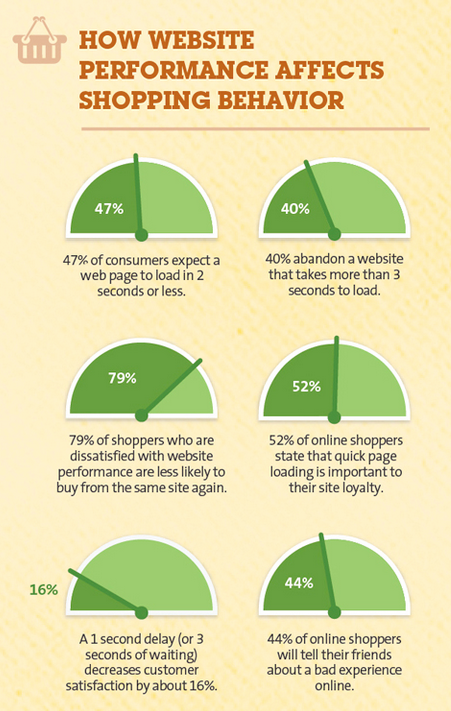
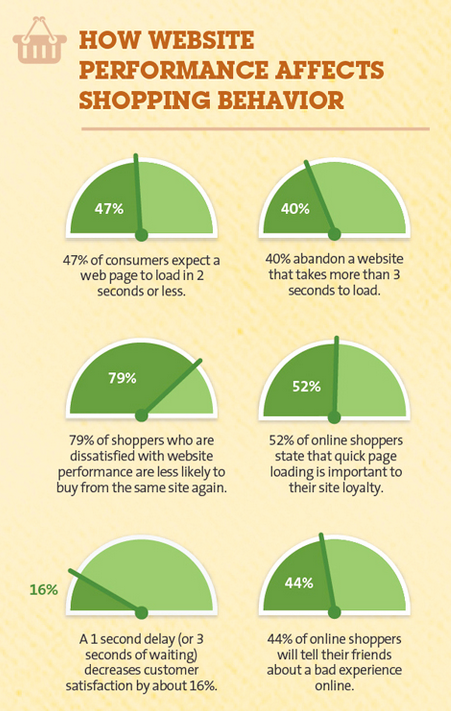
Speed continues to be one of the most important factors that affect your customers’ experience on your site. If your ecommerce website is too slow, potential customers may be frustrated, complain about their experience to their peers, or, worst of all, abandon your site altogether.

Get More Customers to Your Ecommerce Website with These 8 Tips
Image source: Neil Patel

To boost your site’s conversion rates, you might want to look into dedicated hosting and server service instead of shared hosting. This means that your ecommerce store is hosted on its own server, and therefore can load quickly since it doesn’t share resources or bandwidth with other sites. It’s a bit of an investment, but considering how much a slow website can affect your sales and brand experience, it may just be worth it.

Use a responsive theme for your online store

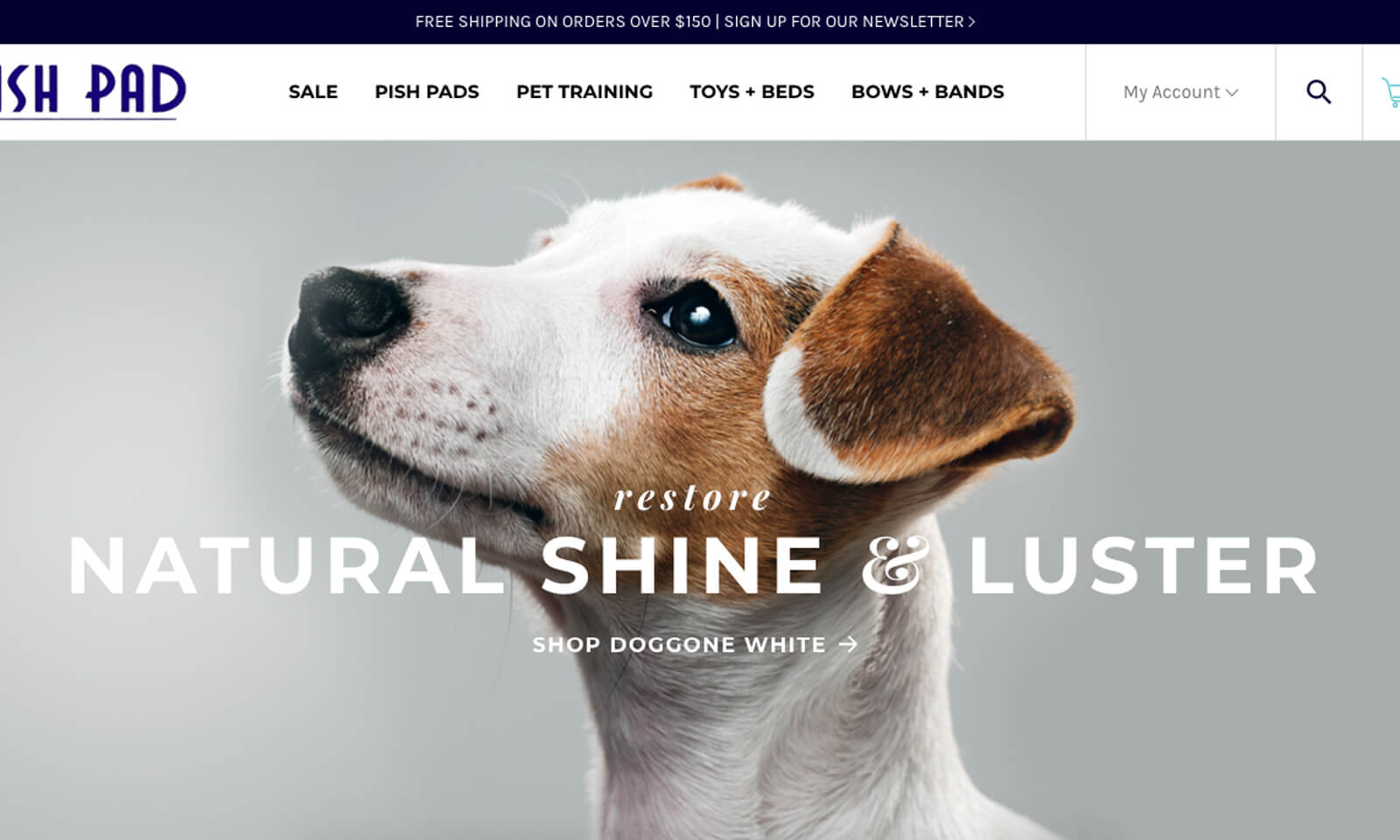
A reliable and responsive theme may help improve site visitors’ browsing and shopping experience. For example, below is a minimalist ecommerce store built with Volusion that has beautiful photos and typography as their main theme. You can easily navigate across the site, see product categories, and have easy access to search, shopping carts, and account settings.

Get More Customers to Your Ecommerce Website with These 8 Tips
Image source: Pish Pad

Make the checkout process seamless

Checkout has to be easy for customers if you want them to complete their purchase, and there are a few strategies that can help you improve your overall checkout experience. One great one is enabling guest checkout, especially for customers who may not have the time to create an account, or may be on your site shopping for gifts but aren’t necessarily your primary audience.

You can also offer free shipping incentives for a minimum purchase amount, or use time-limited discounts and promotions across your site to encourage timely checkout.

Add a blog to your Ecommerce website

Starting a branded, high value blog may be just what you need to increase conversions on your ecommerce site. After all, a strategic blog can either showcase your product use cases or give inspiration to shoppers. It can also show your expertise in the industry, making you a trusted source of information.

Visitors who stumble upon your high-value blog posts may be more willing to purchase from you if they see the free value that you already give. Consider creating a content plan that has a mix of informational posts and showcase posts—or posts that give customers ideas on how to use your products.

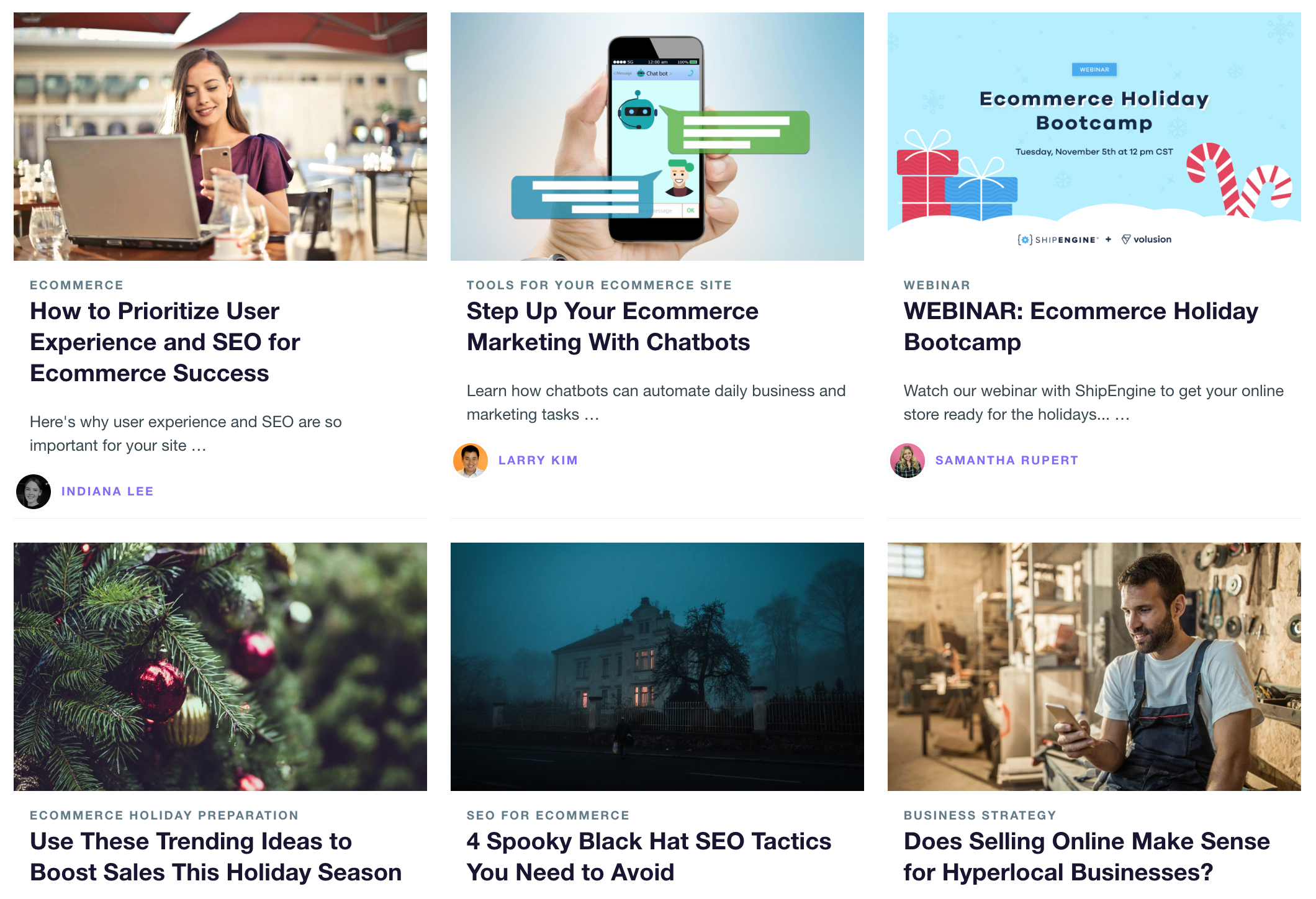
Here’s an example of Volusion’s own blog, which gives ecommerce and business tips to help both potential and current customers improve their ecommerce sites.

Get More Customers to Your Ecommerce Website with These 8 Tips

Optimize your product pages

One way to optimize your product pages is by making them SEO-friendly. This will help them show up on search engine queries and make it easy for customers to find what they’re looking for.

Another good way to improve your product pages is the use of several photos of a product that showcase their use or features. If your products are physical goods, take product shots from multiple angles, find ways to showcase their actual size by using references like models or furniture, and always take high-quality pictures in great lighting. If you’re selling software or digital goods, put in several mockups and examples of your product in action. Make the product seem tangible, and be sure to include all of the important features of your product as well as how it benefits buyers.

Lastly, make sure that your product pages prominently show reviews or testimonials from previous or current customers. Make it easy for new customers to leave a review, and possibly consider giving exclusive incentives if they leave one.

Match your PPC copy with the message of your landing page

If you’re using pay-per-click (PPC) to attract customers, then one essential optimization practice is keeping your PPC copy consistent with your landing page copy. After all, you don’t want users to see an ad on Google telling them they can find waterproof shoes, but then land on a page and see no mention of it again.

Make sure that whatever your customers are seeing on your ad, they also see on your designated landing page. It’s not a matter of making false claims; we’re sure you wouldn’t put out an ad with false promises. Rather, it’s about building trust and letting your customers believe that the ad was truly relevant and not misleading.

Build an email list

Last but not least, you’ll want to start growing your email list if you want visitors to return to your ecommerce store. An email list doesn’t need to be exclusive to current buyers; you can and should be finding ways to attract interested non-buyers to your list as well.

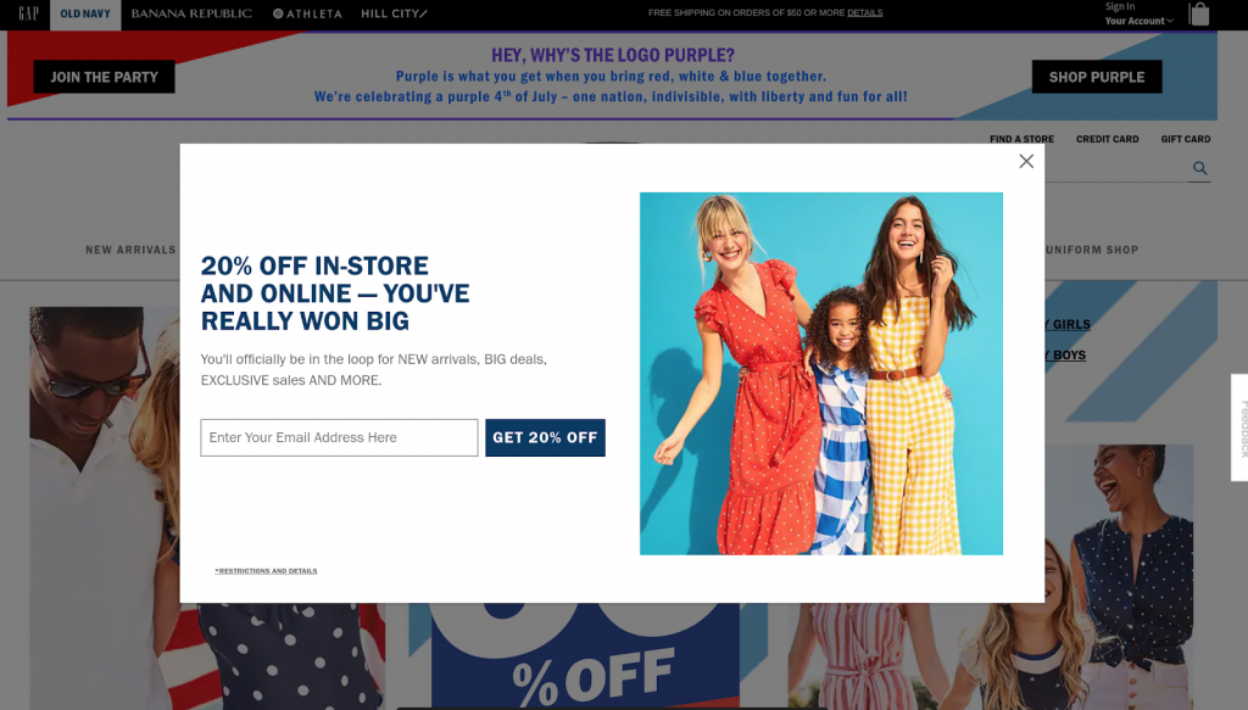
Consider free opt-in offers like discounts on their first purchase or access to an exclusive library of resources and tools. Find ways to incentivize getting their email addresses so it becomes easier to stay in touch even if they don’t make a purchase on their first visit.

Get More Customers to Your Ecommerce Website with These 8 Tips
Image source: Chamaileon

Make sure your website is secure

These days, web browsers make it easier for users to determine whether or not the site they were visiting was secure. A visitor seeing that they’re on an unsecure ecommerce site will likely hesitate before making a purchase. They may not be so willing to give up personal information, such as addresses or credit card details.

To instantly build trust with customers, take the time to make sure your website is secure. There are several things you can already do to improve site security, but some of the most important are being on https instead of http, and choosing a trusted web host.

Key Takeaways

If you want to increase conversions on your ecommerce website, sometimes optimizing and improving that site is exactly where you need to start. Focus on creating great customer experiences—after all, it’s the little things that make a big impact on shoppers.


from Volusion Ecommerce Blog | SMB Marketing, Design & Strategy https://ift.tt/2sJgVPX
via IFTTT

Guest Post on the Volusion Blog

Guest Post on the Volusion Blog

Are you writing great content, but wish you could reach a wider audience? Consider becoming a guest author on the Volusion Blog!

Volusion is an industry-leading ecommerce platform website. Our blog receives thousands of daily views, making it a great channel for showcasing your content.

To be considered for publication, your content must meet the following guidelines:

  • New and Original: Content must be unique and original to Volusion.com, and may not be published elsewhere. We do not accept syndicated content. You will be credited with authorship on the published article and provided with a link to your homepage from your author bio.

  • Niche-relevant: Volusion accepts guest posts relating to ecommerce, SMB operations and growth, and industry trends. Some topic examples include:

    • Ecommerce operations
    • Ecommerce website design
    • SMB strategy and industry trends
    • Automation and process improvements; third-party integrations
    • Digital marketing, customer acquisition, growth strategies
    • Ecommerce and SMB-specific legal tips
  • High-quality: Posts must be well-written and informative. Submissions with excessive typos, inaccurate information, or spammy backlinks/anchor text may result in rejection. Please view our Brand Guide to familiarize yourself with our voice, style, and more.

If you’re ready to get started, fill out the Contact Form below—we’ll be in touch shortly!


from Volusion Ecommerce Blog | SMB Marketing, Design & Strategy https://ift.tt/2U3N80G
via IFTTT

Types of Business Ownership

Types of Business Ownership

Business ownership comes in more forms than most people realize. A business owner might have sole ownership of their business or share it with others. Some owners may be responsible for making all of the business decisions, while others might be passive investors. If you're looking to start, own or co-own a business, your first step is to understand the different types of business ownership. The daily lives of different types of business owners can vary drastically from one another, so it's important to know what you're signing up for.

Types of Business Owners

Sole Proprietors

A sole proprietor is someone who is operating a business alone. A sole proprietor maintains sole ownership of a business, and is also responsible for running the business itself. A sole proprietor is the owner, operator, and only member of a self-run business. Sole proprietors are one of the most common types of small business owners, since the barriers to sole proprietorships are low and they require very little licensing.

Benefits of being a sole proprietor

The benefits of being a sole proprietor are fairly straightforward:

  • You maintain sole ownership of your business
  • All profits are yours to keep
  • You get to make all business decisions
  • Very easy to set up  - simply by starting a business and running it alone, you've formed a sole proprietorship

Downsides of being a sole proprietor

  • You have to do all of the work
  • All business losses and expenses will likely come from your own pocket
  • You don't have the expertise or guidance of others to rely on
  • Difficult to scale up or hire employees

Sole proprietors work best for:

The sole proprietorship business ownership model works best for people who plan to run highly automated or low-maintenance businesses, such as an ecommerce website. Sole proprietors should be ready to fund their own business idea, as it's rare for sole proprietorships to get any sources of external funding. They should also be ready to make all business decisions alone, although they may rely on third-party contractors for some work (like legal advice or accounting help). In order to be a successful sole proprietor, you must have a well-thought-out business model and the commitment to stand by your business. Since all losses and profits are yours and yours alone, a sole proprietorship has the potential to make you very wealthy if successful (or saddle you with a large bill if you're unsuccessful).

The daily life of a sole proprietor is typically quite busy, especially during the stages of business creation and growth. Since a sole proprietor has no one else to help with running the business, they need to be able to do a lot of different things well, from setting up their website to running their own marketing or advertising campaigns. Since their most limited asset is typically their own time, sole proprietors will benefit immensely from tools that automate or improve daily operations, like automated shipping or inventory control.

Partners

A partner has decided not to go it alone, and will work with others to make a successful business. The types of partnerships and the level of responsibility shared by each partner is quite flexible, but the most common types of partnerships are General Partnerships, in which both owners share some level of responsibility for operating the business, and Limited Partnerships, in which one person  typically runs the business while another only invests.

Benefits of being a partner:

  • You can rely on your partner(s) for help with running or funding the business
  • This business model is easy to set up
  • Very flexible in terms of dictating ownership and responsibility
  • Can be used to secure an outside investor in exchange for a portion of ownership

Downsides of being a partner:

  • Two-person partnerships can result in many 'tied votes' or disagreements on how to run the business
  • It's highly recommended that you sign a formal partnership agreement
  • Can become liable for debts or expenditures accrued by other partners
  • Requires a high level of trust & ability to work together

Partnerships are best for:

Partnerships are best for 2-3 people who want to pool their expertise or resources in order to start a company. You'll need to make sure that you trust the people you're going into business with - in a general partnership, all responsibilities and liabilities are split equally among members. If you're considering becoming a partner, you'll also need to be prepared to work well with others and rely on democracy & discussion to make business decisions, since you won't have sole say on how the business is operated. No matter what type of partnership you set up, we highly recommend a formal partnership agreement to cleary define each partner's responsibilities and level of liability, as well as ensure that a process for voting or managing disagreements among partners is established.

The daily life of a partner can vary greatly - some partners may act very similar to sole proprietors, in which they have the sole say over what to do and how to do it (although they'll have an external investor). Other partners may act in small teams, or may act mostly independently of one another but share resources like office space (such as lawyers' offices with several partners). However, it's common for even independent partners to share resources and knowledge with other partners, since one of the major benefits of becoming a partner is the ability to specialize and rely on the specializations of your other partners. If you're considering becoming a partner, make sure to create or fully understand your part of the partnership agreement.

LLC Member

A Limited Liability Corporation, or LLC, is one of the most popular types of businesses for small- to medium-sized teams to start a business. Designed to be easy to set up, an LLC will allow its members to share liability for a company while delegating control of daily business operations to a managing member. In essence, it allows small businesses to assume a more formal corporate structure without requiring all of the paperwork and oversight needed to become a full corporation.

Benefits of becoming an LLC member

  • Very flexible in terms of dictating individual responsibility
  • Daily operations handled by a managing member
  • Profits and losses shared by members, reported on personal tax returns
  • Easy to set up

Downsides of becoming an LLC member

  • Liability is shared among members, so you might be responsible for losses incurred by another member
  • If key members leave, you might have to dissolve the LLC and create a new one
  • If you are a non-managing member, your ability to make business decisions might be limited
  • If you are a managing member of your LLC, you'll be exposed to greater legal liability than non-managing members

Joining an LLC is best for:

Becoming a member of an LLC is best for anyone who wants to start or join a company with a small to medium-sized team (typically 2-10 members) without needing to jump through a lot of legal hoops. LLCs are very flexible in terms of overall structure, and can share the responsibility of daily operations among all members or delegate it to a single member.

It's highly recommended that all LLCs have operating agreements that clearly define the roles, responsibilities, and levels of liability for all members, as well as lay out guidelines for how to manage the company and make group decisions. If you'd like an additional degree of insulation between you and your businesses' legal and financial liabilities, an LLC may be the right choice.

LLC Managing Member

An LLC requires at least one managing member, who oversees daily operations of the LLC. Managing members have the authority to act as an agent of the company, which allows them to conduct business in the name of the company. This can include everything from daily operations (like making a product or mopping the floor) all the way up to managerial decisions, such as hiring employees or entering into contracts with other companies or individuals.

The managing members of an LLC are responsible for making the company successful. As such, their duties and responsibilities tend to be many and varied. Depending on the LLC and the members that make it up, the daily life of a managing member will vary depending on what responsibilities were laid out in the operating agreement.

From a legal perspective, managing members face a slightly greater degree of liability than non-managing members. Managing members are protected from lawsuits from other members of the LLC during the conduction of normal business, but if the LLC finds that a managing member's behavior caused injury to the company, he or she can be sued by the LLC for damages. Additionally, managing members may be more vulnerable to lawsuits from external sources, as they have greater visibility in the conduction of business.

If the above is scaring you off from becoming a managing member of an LLC, let us assure you that this form of business owner is quite common, and you can protect yourself and your company from suits by making sure that you use well-structured contracts, operating agreements, and terms of agreement. We recommend a service like LegalZoom to help you get the legal side of things sorted out.

Corporation Board Member

Corporations are large, complex businesses that dictate decision-making authority to a board of directors, who are responsible for creating the company's by-laws. Board members are also responsible for setting the high-level goals and mission of  a company, as well as setting up its leadership structure. This type of business ownership typically results in a high degree of decision-making power and a lot of meetings, but little to no work on the daily operations of the corporation. These positions also tend to be some of the most difficult to obtain, especially within larger corporations. Unless you're a career exec or wealthy investor, it's probably best to set your sights on one of the other types of business ownership listed here.

Corporation Shareholder

One of the most common (and most overlooked) forms of business ownership is to become a shareholder in a corporation - to own stocks in that company. Depending on the size of the company and the number of stocks issued, you might be the sole owner of a corporation (if you hold 100% of the shares) or share your ownership with thousands or millions of others. Shareholders typically have a very hands-off, 'investor only' role unless they control a large percentage of the stocks issued. If you're looking for the quickest and easiest way to become a (partial) business owner, all you need to do is buy some stocks!

Types of Business Ownership, Summarized

While you'll always need to ensure that the type of business and type of business ownership you select matches your personal and business needs, here's a quick summary of business ownership types and their most important features:

  • Sole Proprietorship: Best ownership type for someone wanting to open their own small business. Very easy to set up.
  • Partner: Best ownership type for someone who wants to open a small business with a partner. A partner may help run the business or only act as an investor.
  • LLC Non-Managing Member: Best ownership type for someone who wants to invest directly in a small business without worrying about daily operations.
  • LLC Managing Member: Best ownership type for small groups of people looking to go into business together. Managing members will be involved in daily operations.
  • Corporation Board Member: Best ownership type for the highly experienced or well-off. Typically requires a long history with a company.
  • Corporation Shareholder: Best ownership type for someone who simply wants to invest in others' businesses. All stockholders are partial business owners.

Own Your Own Business Today

If you've dreamed of owning your own business or have an idea for a business, Volusion's all-in-one ecommerce software makes it easy to build the online store of your dreams. With professionally-designed templates, easy click-and-drag storebuilding, and websites built for speed, you'll be up and running your own business in no time. Try a free 14-day trial now and see how easy it can be for yourself.


from Volusion Ecommerce Blog | SMB Marketing, Design & Strategy https://ift.tt/2sNgLXJ
via IFTTT

New Government – Labour Small Business Agenda

We’ve are all waking up to a new Government today, with the Labour party about to take control of the country and what should be top of your...