Today we are picking up with the second half of the discussion we started last week with Ezra Firestone of SmartMarketer.com. In this episode, we talk about building backyard home offices, including what we are putting in our own home offices and creative ways to solve plumbing issues (without breaking the bank!). We also dive deep into Shopify checkout and explore what these changes could mean for the eCommerce ecosystem.
Today’s episode is a little less structured, as I’m talking with my good friend Ezra Firestone of SmartMarketer.com about everything from what makes a strong relationship to what it’s like growing up on a hippie commune. Listen in as we dive into what Ezra’s been up to and how he’s creating a communal living space, as well as the importance of networking and so much more.
You’ll learn:
What it was like growing up on a hippie commune
How communal living works
The number one important attribute in relationships
There are more than 20 million eCommerce stores in operation across the planet. So the e-entrepreneur has to think hard about how to stand out from the competition.
It’s no easy task to shine through a sea of competitive and established e-stores. But the first step is to provide a good user experience. A good online store should empower customers. They should have everything they need for a fruitful digital transaction. Because then they will become your best advocates and spread the word.
Today there are over 800,000 stores on Shopify alone. Among these businesses, there are some impressive online store examples offering high-quality shopping experiences. So it’s no surprise they enjoy monumental financial success.
Let’s take a keen look at six successful Shopify stores for reference. Each of these store examples should point to the key elements you should focus on to help you gain customer traction and success for your own eCommerce store.
The Sill
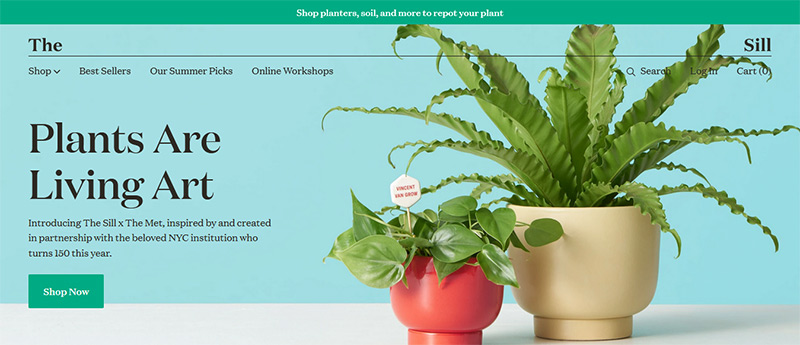
As soon as you get to The Sill’s homepage, you know exactly what you are getting into – indoor potted plants.
The website colors are clean, airy, and absolutely refreshing. But this simple color choice is very deliberate. It calls back to nature and to their company ethos. In their own words, “plants make people happy.”
This Shopify store makes plant lovers especially happy. They take advantage of user attention by offering 10% off. But they do it in a way that is neither cluttered nor overbearing.
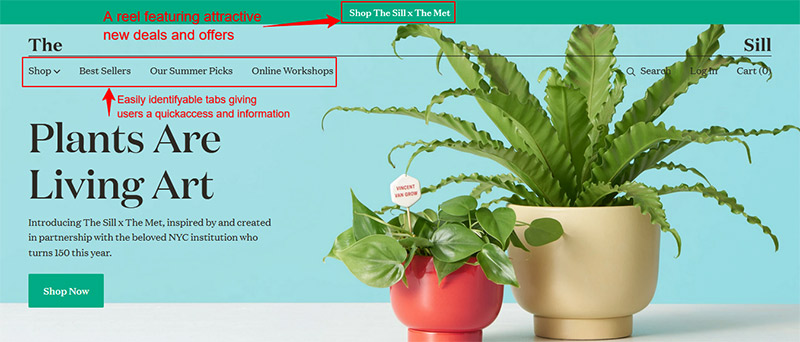
The header menu is quite cleverly done for an online store. Notice the deliberate gap between “The” and “Sill”.This design element mirrors the place plants are most likely to be found in a home – the window sill.
It also directs the user’s eyes to the company’s interactive menu offerings. From left to right, the tabs are easily identifiable. As the user navigates the site, the separated logo words come together and the store products shine.
The high-quality product photos at The Sill are also a standout. They instill delight, confidence, and curiosity in the buyer. If you need inspiration for a smart eCommerce site design, this is an excellent start.
Rebecca Atwood
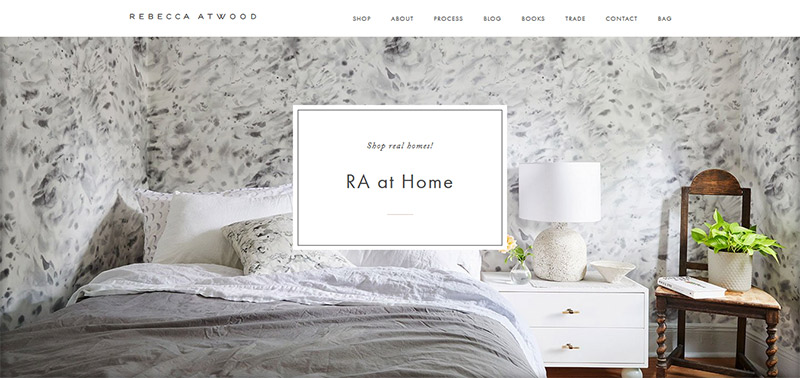
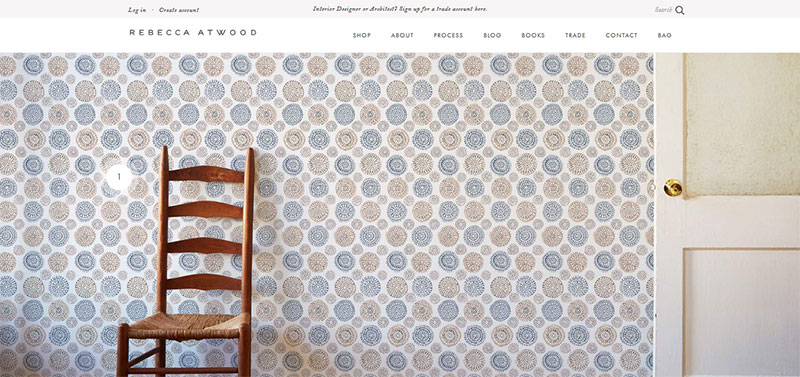
Rebecca Atwood is a bespoke Brooklyn-based online store that deals in home textile design. Atwood’s goal is “to inspire unique, beautiful and imagined spaces”. The Shopify store site captures this with the use of white spacing. The textile imaging adds a layer of thoughtfulness.
The site transforms into an online store with navigation that is seamless on both mobile and desktop. This is key as almost 50% of consumers today shop more on mobile than in-store.
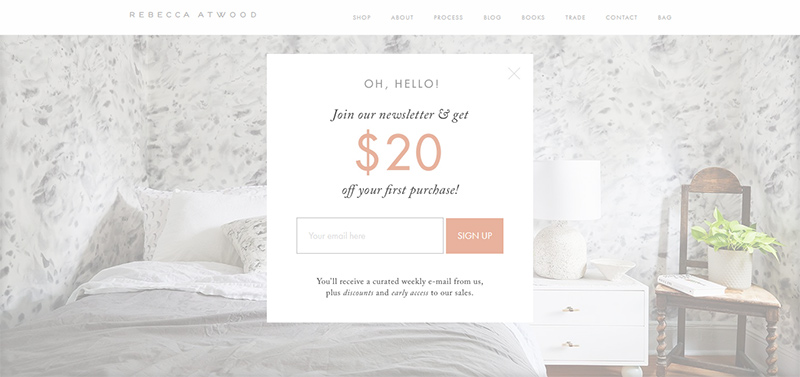
Like The Sill, Rebecca Atwood leverages the power of digital marketing. They give the user a strong incentive to join the online store’s newsletter list, using a pop up that appears shortly after the site homepage loads.
This is one Shopify store example that knows how to build an aspirational image in the user’s mind. They do this by using the brand backstory and cleverly showcasing their products. Buyers can see their products such as wallpaper in context.
Most importantly, the Rebecca Atwood Shopify store offers a click-to-buy option, streamlining the user experience. They don’t have to scroll back to the shop or navigate anywhere else to make the purchase.
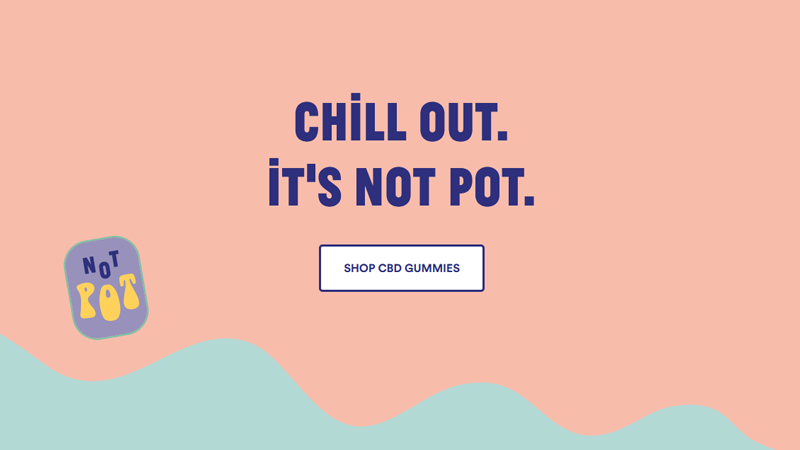
As a Shopify store, you need to gain what’s called niche authority. You also need to deliver a product that erases all doubt about your expertise. Not Pot does exactly that.
This is one of those Shopify stores that straddles the fine line between engaging copywriting and creative site design with ease.
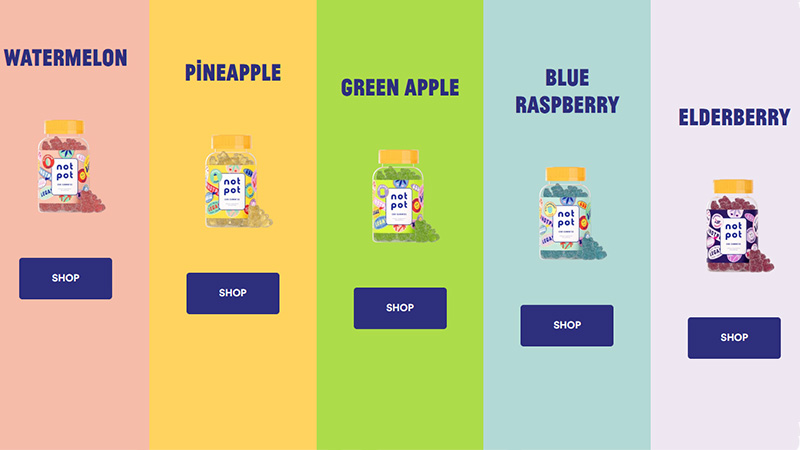
Not Pot understands that clients have may have reservations about trying new hemp gummies. So they back up the copywriting camaraderie with excellent product design.
They inspire confidence using verified buyer reviews. They also include adorable vegan CBD gummies fashioned into polar bears.
Another great feature from Not Pot is the newsletter CTA. Note the engaging design and company values. They give users a reason to feel like hemp is the only thing missing from their lives.
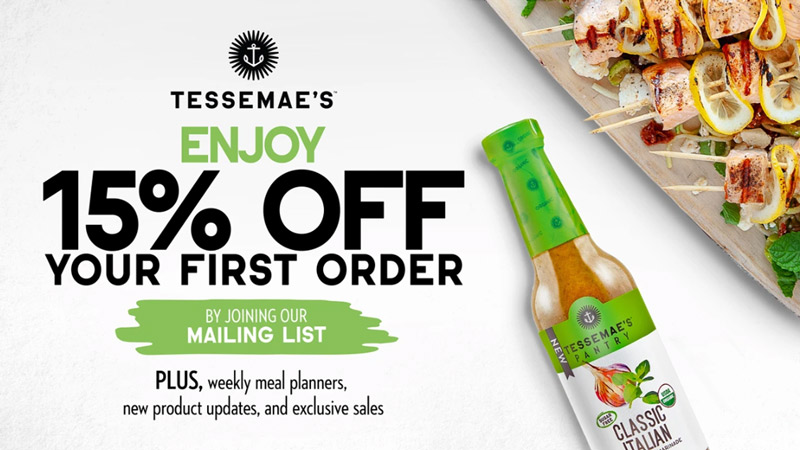
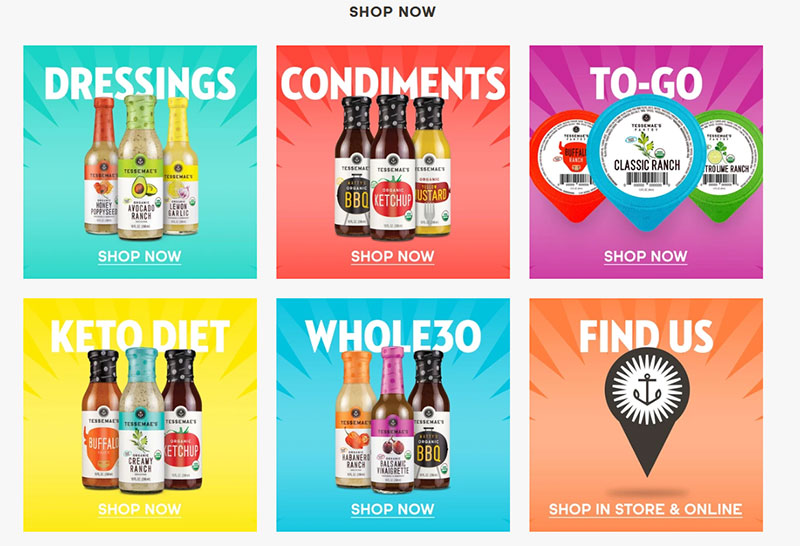
Like all of our successful Shopify store examples, Tessemae’s All Natural store sets the tone with a pop-up you can’t ignore. In exchange for signing up for their mailing list, you get a 15% OFF promo code sent to your email.
Tessamae’s would be among the best examples of Shopify product photography. They offer motivation to click the shop button with high-value offers, including keto meal plans and recipes to suit every dietary requirement. They also cater for customers’ financial preferences by offering weekly or monthly plans.
Tessamae’s featured recipes aim to represent exceptionally good value. And while browsing these recipes, customers see complementary recommended products. The slides and interactive drop-down menu tabs also make navigation around the Shopify store seamless and convenient.
They’ve found a way to beautifully showcase their products, achieving a sense of excitement without being overbearing. The easy Shop Now buttons also facilitate faster buying decisions.
Harnessing the power of social media, Tessemae’s publishes fan photos on the homepage, creating a sense of community and extending the brand’s reach. It’s definitely among the top-ranked food-related Shopify stores.
WP Standard
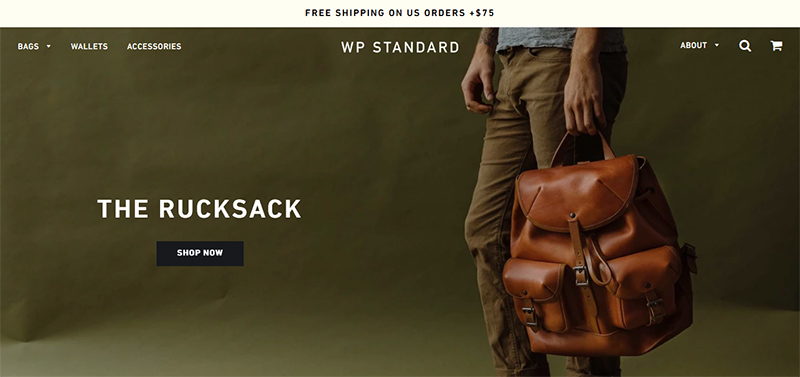
An entrepreneur looking for examples of a niche store on Shopify should bookmark WP Standard. This online store makes a statement right on the landing page. The minimalist theme is a nod to the luxury items they sell. Everything is clean, dignified, and sophisticated.
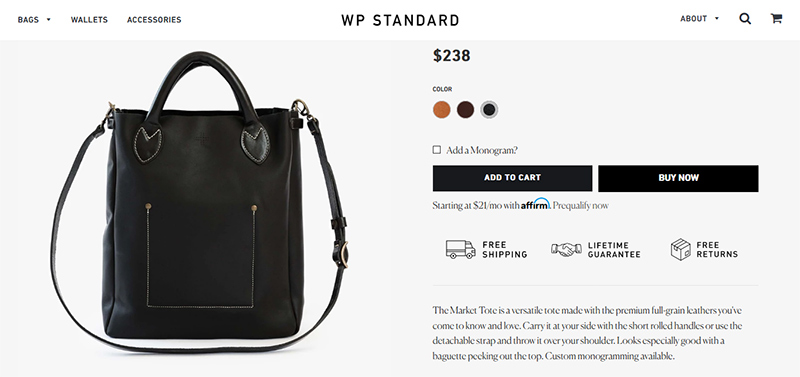
The point-of-sale experience their Shopify store provides is just as exemplary. They begin by highlighting each item in action, supported by high-quality photography.
WP Standard shows the product in context and offers color variants. The customer can even opt for a custom monogrammed add-on. There’s a clear product description, including the materials used and product dimensions. They also share customer reviews, reinforcing trust in their brand.
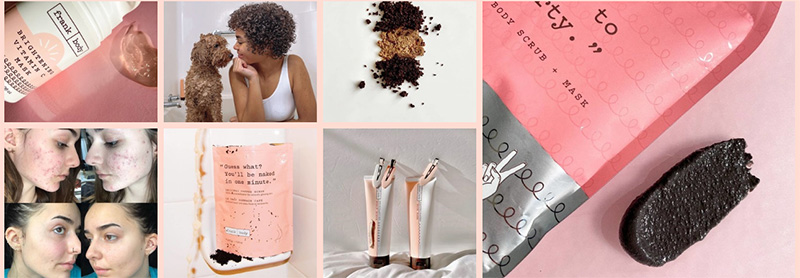
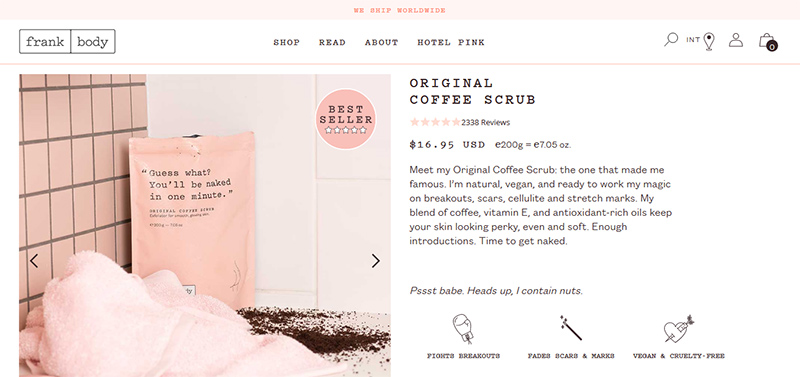
Frank Body is an online store dealing with cosmetics. It also ranks as one of the best Shopify stores that nail the brand look. And it has the eCommerce success to boot. The imagery, graphics, and copywriting are all beautifully done.
Their Shopify homepage draws the user in with its “regular everyday person” vibe. They create a delightful persona by using realistic models. The hesitant buyer is reassured by the suggestion of product reliability and relatability.
The first person copywriting builds much-needed rapport with potential customers. The signature pink color scheme transfers to their packaging, promoting brand retention and recognition throughout the buyer experience.
Frank Body ist among the best store examples that nail the digital marketing space. Each of the products on their shop page has a quirky but relevant hover effect, displaying a model photo to demonstrate its application.
This then clicks through to a well-executed sales page. Note the detailed product descriptions, social media plugin, and customer reviews. They also have a seamless checkout process and a display of related products.
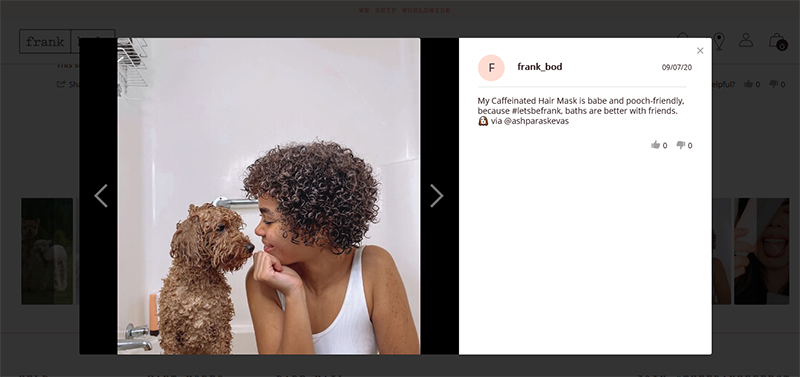
Their creative Shopify store uses the ‘Click to Buy’ plugin that should be a staple for any eCommerce store. Simultaneously drawing from its Instagram feed and expanding a community feel, this is very important for today’s savvy online buyer.
Learn From and Grow With the Most Experienced Ecommerce Network
Ready to launch your Shopify venture? Start with a solid foundation before leaping into uncharted territory.
eCommerceFuel members use the same tried and tested design and UX elements employed by these featured stores to achieve their own success stories. Why reinvent the wheel when you can learn directly from them?
In summary, the characteristics of successful Shopify stores also include:
Content scaling and management abilities
Conspicuous promotions and discount code tools
Fast and simple checkout processes
SEO-optimized codes and site layout
Data reporting tools
Integrated blog
Email marketing integration
Internationally accepted payment options
The thriving eCommerceFuel community is a high-value business network. Look no further for the largest online community of 7+ figure eCommerce store owners.
After spending years in the software space owning non-eCommerce businesses, Lee Lichlyter went on the search for the perfect business. Lee is now the owner of CameraReadyCosmetics.com, and today he joins the show to discuss the process of buying and taking over the business, including the criteria he stuck to and the length of time it took to find a business that fit within that criteria.
You’ll learn:
Lee’s background in tech and SaaS
The criteria he stuck to when searching for the perfect business
How long it took him to find a business that met his criteria
The process of buying and taking over the business
Brian Anderson is the CEO and founder of GetNacelle.com, a headless eCommerce solution for Shopify Plus. Today he joins the show to discuss the benefits of using headless commerce, what a progressive web app is (and how it’s related to headless), and the kind of investment you may want to consider before committing to headless.
Why would you stop selling on your website when direct-to-consumer is all the rage? That is exactly what I will be discussing today with my guest, Dafina Smith of CovetAndMane.com. Listen in as Dafina shares how her products are promoted, how she got started in the eCommerce world, and more.
You’ll learn:
Why Dafina decided to stop selling directly to the customer
Ronnie Teja is the owner of Branzio.com, an 8-figure watch company that he runs entirely remotely. In this episode, we discuss what it’s like running a sizeable business while living in three places (Berlin, Vancouver, and Bangkok), Ronnie’s thoughts on mindfulness, and his best advice for hiring the right members for your team.
You’ll learn:
What it’s like running a sizeable business while living in three places
How Ronnie built up his management team
What helped him to grow long-term
How he is able to genuinely connect with so many people
With over $25 million in product and service sales online, you could say Jared Mitchell is a successful entrepreneur. Today he joins the show to discuss how he became the director of eCommerce for Neil Patel, what he has learned from working with such a big name, how to build top of the line sales funnels, and more.
You’ll learn:
How Jared ended up as the director of eCommerce for Neil Patel
Customer loyalty is the key to customer retention, meaning repeat customers for your business. The fundamental goal for an eCommerce shop is to attract customers, and ultimately keep them coming. This is certainly true for members of the popular forum, eCommerceFuel, who come together in one of the world’s largest eCommerce communities to share their knowledge and experience with each other.
With the competition being so stiff in the online marketplace, you need to ensure the loyalty of the customers you have.
How do you get the edge though? What will keep clients coming back time and again to your store?
Adapted from a traditional shop model, an eCommerce customer loyalty program is essential for customer retention.
Let’s take a look at what it is and how to implement a customer loyalty program for your eCommerce store.
What is a Customer Loyalty Program?
A study by Experian Data Quality shows that 75% of US companies have seen a return on their investment from customer loyalty programs. Well-executed loyalty programs are proven to provide value and useful customer data.
Even more telling, 63% of companies use customer retention to track success. The number of new sign-ups is also an indication of a loyalty program’s impact.
The concept of a rewards program followed, which thanked buyers for repeat business. It was quickly adopted by businesses across the world.
The practice has now spread to the world of eCommerce. Is your eCommerce business ready to join the future of rewards programs?
What is the Importance of Customer Rewards Programs?
Studies have shown that new customers don’t always equal increased sales.
Consumers like to feel valued. Customer loyalty programs go beyond marketing and recognize the role of the customer. Simply put, loyalty programs show you care.
Customers who feel unvalued leave businesses and increase the churn rate (the rate of clients who decide to take their business elsewhere). An increased churn rate will drive up the cost of acquiring each customer and reduce your profit margin.
How Can Customer Loyalty Programs Impact Your Bottom Line?
According to Bain & Company and HBS, a loyalty program increases retention rates by 5% and increases profits by 25% to 95%.
Costs are higher at the beginning of the relationship and usually level off as profits from each loyal client increase.
CEO of eBay, Meg Whitman says that the company is spending less than $10 to acquire a new customer. Loyal clients use word-of-mouth to refer new customers and provide personal advocacy. eBay has found that referred customers cost considerably less than maintaining marketing efforts.
Loyal customers essentially take the role of marketers as well as help desk staff – and they do it all for free.
It’s clear that for eCommerce companies, long-term profits depend on superior customer loyalty. Savvy business owners understand that customer rewards programs play a major role in business success.
It may seem that you are losing out by not having a program in action, and want to jump right in. Before you do, note that smart owners also need to know what’s out there and make informed decisions.
Firstly, which loyalty program is best for your business?
What are the Different Types of Customer Loyalty Programs?
Points Programs
This is probably one of the most common types of customer loyalty programs and also the simplest to implement.
The gist of these loyalty programs is for the customer to earn points as they spend. They are typically used by shops that offer low-cost purchases.
Points are then redeemed for rewards such as:
Freebies
Discounts
Special goods
Discounts and coupons have proven to be the best tactic for driving loyalty. According to Expedia Affiliate Network, 61% of consumers actively use these two rewards regularly.
Free shipping is another incentive that can be based on the points that customers earn.
An excellent example of a point-based loyalty program is that of The North Face clothes brand. They offer a unique way of redeeming points and reaching their target market.
Their VIPeak program shows how you can use your loyalty program to create a connection between consumers and your brand.
Being a retailer of outdoor gear, the rewards include travel opportunities like adventure trips, group hikes, and even mountain climbing experiences.
Imagine being a buyer and lover of hiking equipment, then being gifted an amazing hiking trip?
Spend programs are easy to implement and maintain. Customers need to reach a certain amount of spend in a set time. Once reached, they receive store credit or a gift card.
It’s convenient for customers as they’re already spending money. For eCommerce stores, this equals more transactions per customer and better profit margins per transaction.
Tiered Programs
For tier-based programs, customers ‘climb the ladder’ as they spend more. They’re usually used for big-ticket items such as airline tickets. Consumers will increase their spending to reach a higher tier and gain more rewards.
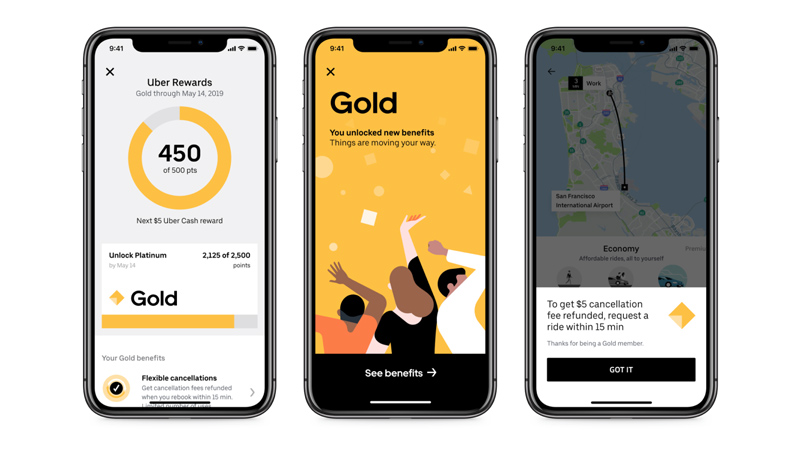
Uber is an example of a successful tiered program. It was launched to counter competition from other companies like Lyft and Grab.
Similar to airlines who target frequent fliers, Uber Rewards targets frequent riders.
Customers receive 500 points on entry which rewards them with $5 to use on a trip. To reach the next level (Gold) they need another 500 points. Rewards include free cancellation and faster customer service.
The levels increase up to Diamond which requires 7,500 points. Rewards are upgrades to Uber Black cars, free Uber Eats rides, and dedicated phone support.
The aim is to encourage clients to use the more expensive offering – in this case, Uber Black rides – to reach the Diamond level faster.
Also known as a VIP or Premium program, paid programs require customers to pay for membership.
By paying an annual or one-time fee, consumers receive exclusive rewards. Thanks to this exclusivity, these programs make brands seem more valuable in the eyes of the customer.
The advantage of paid programs for eCommerce owners is that you can actually save money. You receive membership fees to fund the benefits provided and may even have a surplus.
Members of a premium program are more likely to remain loyal as they don’t want to waste their money. It will also encourage increased repeat purchases as they try to recoup the cost of joining.
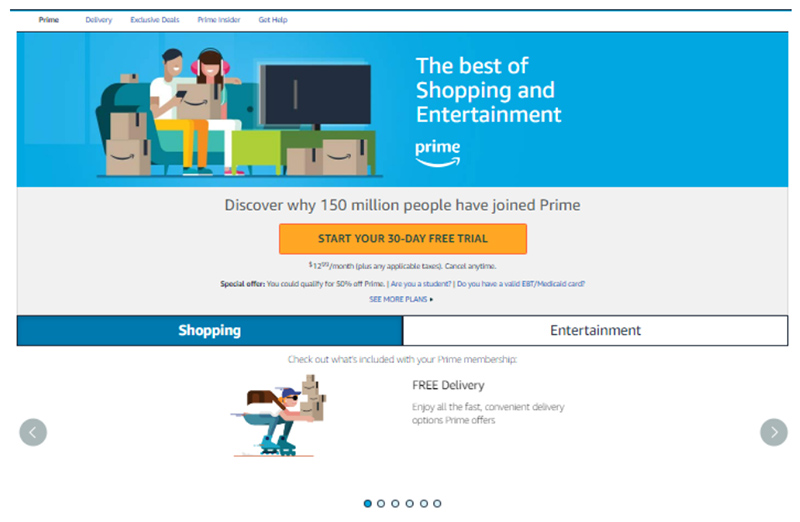
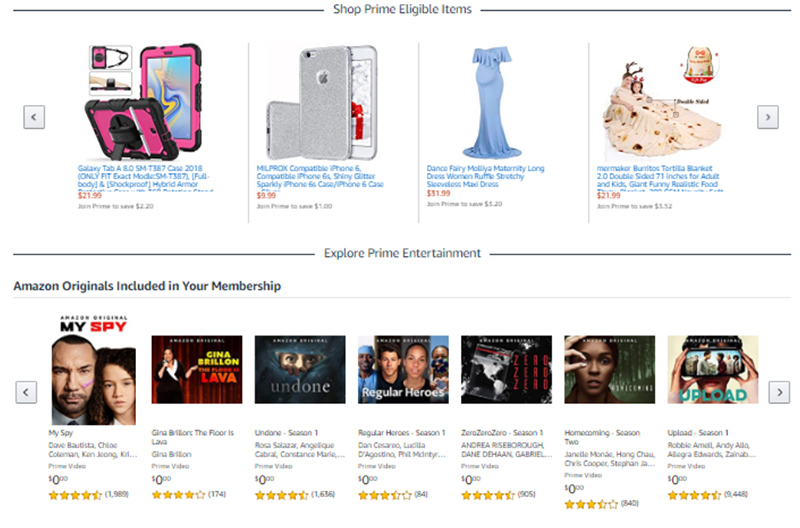
Amazon Prime is one example of a highly successful VIP program. For a monthly or annual fee, members get discounts, free shipping, access to free videos, and music.
The free entertainment woos Millennials who often spend thousands on subscriptions and purchases. More serious shoppers will love the free shipping if they are constantly ordering.
Take a leaf from Amazon’s book and give your customers a gift they really want, and not just generic offerings.
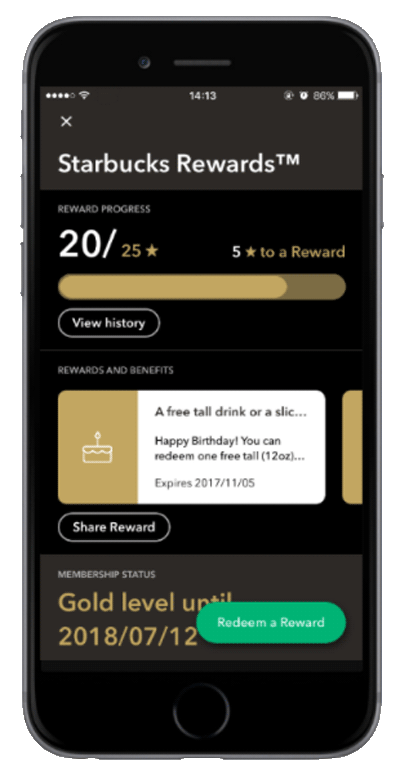
Starbucks was one of the first to include gamification in a customer rewards program.
The My Starbucks Rewards program adds an aspect of fun to earn points. Customers are encouraged to play the game on the mobile app and earn stars. The stars earned allow them to redeem free cups of coffee as well as select merchandise.
An added advantage is the use of the app to market products directly to consumers. This combination of gaining loyalty and marketing offers the best of both worlds.
Create a strong ethical relationship with customers that is based on your values. If they feel part of a world-wide cause, they will be more inclined to become brand ambassadors.
Maybe you run an online garden shop. Your reward system could give a percentage of what a client spends to a climate-change organization. Have an online grocery store? Send money to Feed the Children or similar non-profit. The options are endless!
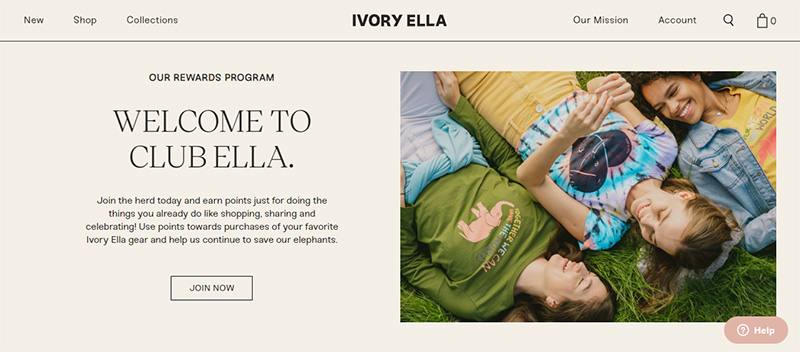
For example, Ivory Ella donates 10% of its profits to Save the Elephants.
Buyers can also earn discounts for making charitable donations. Who wouldn’t want to save elephants by shopping?
How Do You Measure the Effectiveness of Customer Loyalty Programs?
After launching your loyalty program, ensure you analyze your data to see if it has a positive impact on your eCommerce business. Although there are numerous metrics, sometimes, simplicity is key.
Here are the common metrics to use for your eCommerce business.
Customer Retention Rate
This is the most important metric because the main purpose of a loyalty program is to attract more repeat customers.
You need to decrease the churn rate, meaning the number of people buying from your shop should be more than those who move to the competition. Make sure to use a specified period and measure the number of customers you have retained.
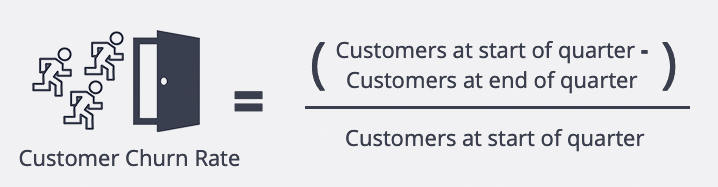
To calculate your churn rate, the simplest formula is:
For example, if your business had 1,000 customers at the start of the period, and then 850 at the end of the period, your churn rate would look like this:
When you get a negative churn rate, it shows that more customers have made purchases. Great for your business, right? All businesses always want a negative churn rate.
Google Analytics
Google Analytics can show you how many website visitors convert into loyalty program members. You can see at what points most conversions happen, with triggers such as ads or newsletters. You can then improve the weaker triggers and adapt your loyalty strategy.
Net Promoter Score (NPS)
The Net Promoter Score shows how likely a customer is to recommend your business to others. It’s an indicator of business growth and measures customer experience on a scale of 0-10.
Conduct a survey of your customers, divided them into three categories.
Promoters (Score 9-10): Existing customers who are fiercely loyal. As loyalty program members, they’re likely to refer your business to others.
Passives (Score 7-8): Customers are impassive and can be swayed by competitors. You can work to engage them and turn them into promoters with your loyalty program.
Detractors (Score 0-6): These are customers who are not pleased with your brand or products. They are likely to spread negative word-of-mouth and can harm your brand.
To calculate your NPS, use the below formula:
Promoter % – Detractor % = NPS
An answer of -100 means all your customers are detractors. In the converse, +100 shows you have all promoters. You need to aim to achieve the highest possible number.
Steps to Create a Customer Loyalty Program
You want to create a program that not only attracts members but creates loyalty.
You could also combine a few different types according to your needs.
The steps you need to take to make your own programs are as follows:
1. Identify Your Needs
The major aim of your program is to target your top customers and keep them shopping with you. You will need to ask key questions to identify major factors, such as:
Why do you need a customer loyalty program?
What are the goals of the program?
Who are the key customers you are targeting?
What benefits do your customers gain from your products?
After answering these questions, choose the type of program you want to create based on the options outlined above.
2. Fine-Tune Necessary Details
After completing the basics, go into details of the program, such as the terms and conditions. Decide on the rewards you will be offering and how to communicate with consumers. As an eCommerce store, you may want to implement an app or use your website to communicate with members.
3. Launch a Beta Program
Test your program with a select few top customers. Launch a pilot loyalty program that will allow you to fix any issues and check the clients’ responses.
4. Implement a Complete Program
The three steps to implementing your loyalty program are:
Step 1: Create a report of your top customers according to the amount spent. You need to determine who qualifies for a reward based on points earned or money spent. This can be a quarterly or monthly report, depending on your specifications.
Step 2: Send a reward to your top customers and communicate their eligibility to claim the reward.
Step 3: Repeat this each month or quarter and take note of the trends. You will notice customers who have stopped shopping. Offer them discounts or shopping credits to ‘re-activate’ them into the loyalty program.
If you notice there are consistent customers shopping and claiming rewards, acknowledge them with a thank you piece of communication.
5. Focus on the Redemption Process
The process of redeeming a reward needs to be simple and communicated to customers. You want to encourage a high redemption rate otherwise there will be a high churn rate.
6. Communicate Progress to Members
Keep program members aware of their progress with regular updates. Let them know how close they are to receiving rewards and use examples of other members who have achieved the set goals.
7. Reduce Churn Rate After Redemption
Some members may leave your store after redeeming a prize. You need to give them an incentive to keep shopping.
Give discounts or upgrade their membership as encouragement to achieve the new goal.
Nothing makes customers feel more valued than being personally recognized and acknowledged.
How Do You Use Social Media as Part of Customer Loyalty Programs?
Most eCommerce stores have social media profiles (or they should). Customer loyalty programs are a great way to gain an audience if coordinated with your social media assets. Offer points and additional rewards for engagement like follows, shares, and likes.
You could develop your own loyalty apps and customize them to your website. If you don’t have the infrastructure or budget, apps are available.
You could also see if you qualify to join eCommerceFuel and have an opportunity to apply for eCommerceFuel Capital. It’s a chance to access long-term funding and world-class mentorship.
Take a look at some of the top apps for your loyalty program.
Stamp Me Loyalty App
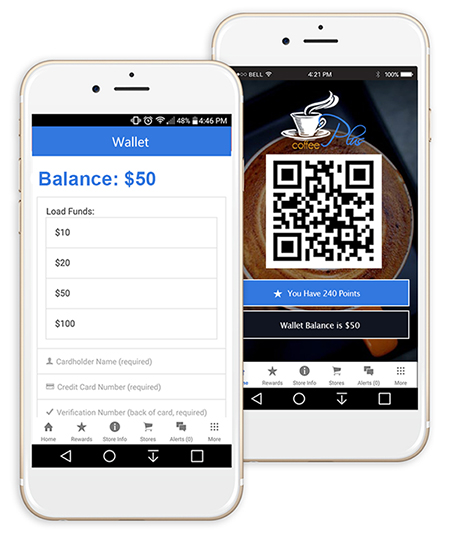
This award-winning app can be used by businesses of any size. They offer customized reward solutions as well as a digital stamp loyalty card on the phone. This allows you to manage your digital loyalty program, communicate directly with customers and increase retention rates.
TapMango provides tools to run your loyalty program and target loyal customers. They also offer tools such as SMS and email to encourage customers to keep returning to your store.
You can control the rewards customers earn and take advantage of the referral option. This customer loyalty program lets clients keep track of their points and discount deals with a mobile app.
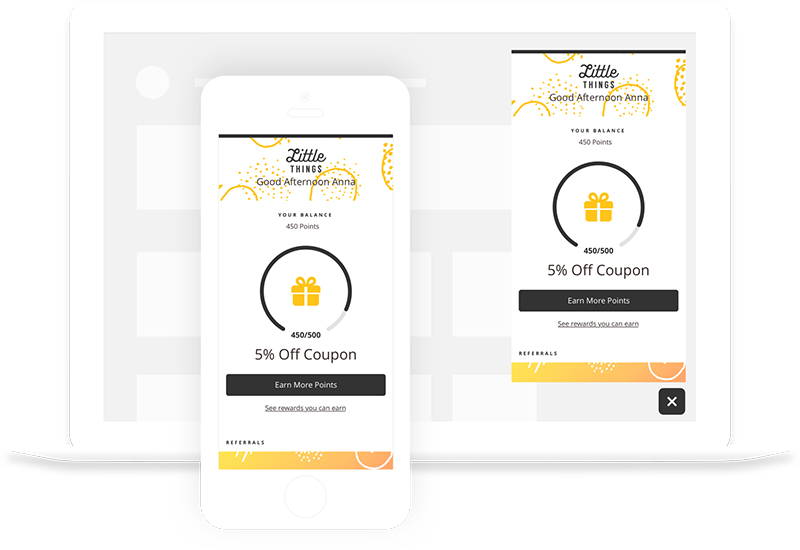
Smile.io is a points-based loyalty program that also offers VIP-based programs. You can also turn loyal customers into advocates by promoting referrals and social sharing.
You can control how customers share referral links via either social media or email.
We hope this guide is useful in your quest to create a successful customer loyalty program. Don’t forget to ask other eCommerce owners for help and share your experience by participating in online communities. You’ll quickly find that there are many others who have gone before you and worked out what works and what doesn’t work so well.
Remember, loyal customers are the best kind. They equate to free and highly-effective marketing and can often be the best advocates for your business.
 from eCommerceFuel https://ift.tt/3nlZX0I