Indian court rejects retail giant Future Group’s plea against Amazon

An Indian court rejected Future Group’s plea that sought to prevent its partner Amazon from interfering in — and blocking — the Indian retail giant’s $3.4 billion asset sale deal to Mukesh Ambani’s Reliance Industries, delivering a glimmer of hope to the American e-commerce firm that has invested more than $6.5 billion in the world’s second largest internet market.

Future Group was seeking an ad-interim injunction to restrain its partner Amazon from writing to regulators and other authorities to raise concerns over — and halt — the deal between the two Indian giants. The Delhi High Court ruled on Monday that Amazon cannot be barred from writing to regulators and authorities on account of “potentially irreparable damage.” The regulators will decide whether the deal should be approved in accordance with the law, the court said.

The ruling is the latest episode in the high-stake battle between estranged partners Amazon and Future Group. Amazon bought 49% in one of Future’s unlisted firms last year in a deal that was valued at over $100 million. As part of that deal, Future could not have sold assets to rivals, Amazon said in court filings.

Things changed this year after the coronavirus pandemic starved the Indian firm of cash, Future Group chief executive and founder Kishore Biyani said at a recent virtual conference. In August, Future Group said that it had reached an agreement with Ambani’s Reliance Industries, which runs India’s largest retail chain, to sell its retail, wholesale, logistics, and warehousing businesses for $3.4 billion.

Months later, Amazon protested the deal by reaching an arbitrator in Singapore and asked the court to block the deal between the Indian retail giants. Amazon secured emergency relief from the arbitration court in Singapore in late October that temporarily halted Future Group from going ahead with the sale.

Until Monday, it remained unclear whether that ruling would hold any water in front of Indian courts. So much so that hours after the Singapore arbitration court announced its verdict, Future Group and Reliance said in a statement that will be going ahead with the deal “without any delay.”

Amazon had also reached out to the Competition Commission of India, the Indian watchdog, to block the deal. Competition Commission of India, however, approved the deal between the Indian firms. In earlier hearings, lawyers for Future Group likened Amazon’s effort to block Future Group’s deal to the East India Company, the British trading house whose arrival in India kicked off nearly 200 years of colonial rule.

At stake is India’s retail market that is estimated to balloon to $1.3 trillion by 2025, up from $700 billion last year, according to consultancy firm BCG and local trade group Retailers’ Association India. Online shopping accounts for about 3% of all retail in India.

Future Group and Amazon did not immediately respond to a request for comment.

This is a developing story. More details to follow…


from eCommerce – TechCrunch https://ift.tt/3rfmgYC
via IFTTT

Human handled freight suspended by France due to mutant Coronavirus

France suspends human handled freight due to mutant Coronavirus

Britain moved fast this week plunging 18 million people that live in London, South East and Eastern England into Tier 4. This included a blanket ban on International travel as well as a stay at home order. Now, various countries have started to impose travel bans from the UK but notably on top of the travel ban France have suspended human handled freight for at least 48 hours as of midnight Sunday.

The human handled freight suspension is notable as it’s the first time we’ve seen direct freight bans as opposed to human travel bans due to the global pandemic. Previously there have been severe delays but not outright bans.

Austria, Belgium, France, Germany, Ireland, Israel, Italy, and the Netherlands have already suspended travel from the UK, Sweden is likely to follow soon. Largely, it would be irrelevant for those in Tier 4 areas but also blocks those from Tier 1, 2 and 3 from travel (or related Tiers for Scotland and Wales). The big difference with France is the suspension of human handled freight.

This is all in response to the new fast spreading mutated strain of the Coronavirus which prompted Tier 4 in the UK in the first place. Whilst the new strain has already been seen in Italy, countries are desperate to stop widespread importation of the new strain, hence the fast response and new travel and freight bans.

So what is human handled freight? Well pretty much it is likely to be considered anything sent by regular courier and mail services. It allows for freight which isn’t handled by humans such as container traffic to continue. However if you’ve recently shipped a parcel via courier or mail or if you are about to then it’s likely it won’t be going to France before Christmas.

France have said that the next two days will be used to come up with a coordinated response and a new testing regieme in partnership with their EU partners.

We’ve yet to see a response from couriers or the Royal Mail. We also don’t know but suspect that packages destined for France through eBay Global Shipping may also be impacted.

The post Human handled freight suspended by France due to mutant Coronavirus appeared first on Tamebay.


from Ecommerce – Tamebay https://ift.tt/34von0O
via IFTTT

Tier 4 Restrictions will last long after Christmas

Tier 4 Restrictions will last long after Christmas

Apparently I’m not on my own in Tier 4 restrictions, 18 million of you are in the same position of spending Christmas with whoever you live with (or on your own) and you won’t be seeing friends and family this winter.

On Saturday late afternoon and evening there was instantly a rush as people attempted to find a train ticket and get out of London. Police will now patrol to prevent escapees from the Tier 4 travel ban that came into effect at midnight Saturday. In other areas there was a panic rush to the shops by those who hadn’t finished or (this applies to one person I know) even started their Christmas shopping.

Millions across the country will also have presents stacked under the tree waiting for families who now won’t be arriving. If that’s you then the best advice is to get them boxed up pronto an book a courier today for Monday collection. Couriers are going to be busier than ever and if you don’t move fast it will be too late.

For the retail shops piled high with Christmas products they were hoping to shift after the last national lockdown, the news will be devastating as they’re unlikely to shift the lot through click and collect and it’s way to late to consolidate back to warehouses to sell. Retail generally need Q4 to break into profit and the outlook is devastating.

As an online seller, expect and even bigger deluge of orders over the next few days if you’re still trading. If you don’t automatically upgrade to next day services then at least consider offering them as an upgrade as many will want to purchase emergency presents to delivery as gifts and avoid their loved ones having nothing to open on Christmas day.

Christmas is effectively extremely limited for those in Tier 4 who can now only meet one person at a time outside in public spaces. For the rest of the country it’s down to mixing with a maximum of one other household but only on Christmas Day itself, with an immediate lockdown for many starting on Boxing day.

Christmas is a hugely emotional holiday to have cancelled at the last minute, but it’s time to think about the New Year as, although Tier 4 restrictions are in place for two weeks, there seems very little chance that they will be removed at the end of a fortnight. It can take up to 10 days for an infection to turn into an illness and so people who are already infected may not fall ill until after Christmas. Blocking households from meeting under the Tier 4 restrictions will help limit further spread, but not with household units who will now be locked up at home for two weeks. It’s highly unlikely that families will (as advised) spend Christmas with the windows wide open. This will all add up to the likelihood that Tier 4 is here to stay, probably for months and potentially until Easter so plan for the long haul and expect for online selling not to significantly slow down in Q1 2021.

The post Tier 4 Restrictions will last long after Christmas appeared first on Tamebay.


from Ecommerce – Tamebay https://ift.tt/3pb905u
via IFTTT

Extra Crunch roundup: ‘Nightmare’ security breach, Poshmark’s IPO, crypto boom, more

The rest of the world may be slowing down as we prepare for Christmas and the new year, but we are not taking our foot off the gas.

Alex Wilhelm keeps a close watch on the public markets in his column The Exchange, but this week, he branched out to look at some of the metrics underpinning soaring cryptocurrency prices and turned his gaze on StockX, the consumer reseller marketplace that just raised $275 million in a Series E that values the company at approximately $2.8 billion.

“Selling a tenth of your company for north of a quarter-billion may be somewhat common among late-stage software startups with tremendous growth,” he says, but “don’t laugh — the round actually makes pretty OK sense.”

Our staff continues to file their end-of-year stories: We ran a post this morning by Manish Singh that studies India’s massive total addressable market for retail. The nation has more than 60 million mom-and-pop neighborhood stores, and companies like Walmart and Amazon are eager to offer help with payments, logistics and inventory management — as are hundreds of native and foreign startups.

In an interview with author and MIT professor Sinan Aral, Managing Editor Danny Crichton discussed some of the debates currently swirling around the desire in some quarters to regulate social media platforms. In “The Hype Machine,” Aral explores topics like neuroscience, economics and misinformation before offering potential solutions for resolving what he calls “a full-blown social media crisis.”

The stories that follow are an overview of Extra Crunch from the last five days. Complete articles are only available to members, but you can use discount code ECFriday to save 20% off a one or two-year subscription. Details here.

Thank you very much for reading Extra Crunch this week; I hope you have a safe, relaxing weekend!

Walter Thompson
Senior Editor, TechCrunch
@yourprotagonist


Unpacking Poshmark’s IPO filing

How did fashion marketplace Poshmark go from posting regular losses in 2019 to generating net income in 2020?

After the company filed a public S-1 last night, Alex Wilhelm pondered the question this morning in The Exchange.

Like many e-commerce platforms, Poshmark saw a surge in activity during the COVID-19 pandemic, but it also slashed its marketing spend, which helped boost profits. As the cash-rich company prepares its road show, “Poshmark is valuable,” Alex concluded.

“How valuable the market will decide. But who will it enrich with its final pricing decision?”

Just how bad is that hack that hit US government agencies?

WASHINGTON, D.C. – APRIL 22, 2018: A statue of Albert Gallatin, a former U.S. Secretary of the Treasury, stands in front of The Treasury Building in Washington, D.C. The National Historic Landmark building is the headquarters of the United States Department of the Treasury. (Photo by Robert Alexander/Getty Images)

The breach of FireEye and SolarWinds by hackers working on behalf of Russian intelligence is “the nightmare scenario that has worried cybersecurity experts for years,” reports Zack Whittaker.

The intrusion began several months ago, but news of the breach wasn’t made public until this week.

“Given that potential victims include defense contractors, telecoms, banks, and tech companies, the implications for critical infrastructure and national security, although untold at this point, could be significant,” said Erin Kenneally, director of cyber risk analytics at Guidewire, an industry platform for insurance carriers.

In his analysis for Extra Crunch, Zack breaks down the rippling effects of supply-chain attacks that can compromise platforms like SolarWinds, which is used by more than 420 of the Fortune 500.

From startups to Starbucks: The embedded API opportunity

contactless payment with QR code

Image Credits: dowell (opens in a new window) / Getty Images

Embedded finance connects services like payment processing with everyday activities like grabbing a coffee before unlocking an e-scooter.

“The ability to be at the right place at the right time, supporting consumers and merchants alike, where they want it, how they want it and when they want it — cannot be understated,” says Simon Wu, an investment director with Cathay Innovation.

In a post that identifies embedded finance’s top providers and enablers, he offers advice for startups and established brands that are hoping to “earn and build customer loyalty while generating new revenue streams.”

Is rising usage driving crypto’s recent price boom?

Bitcoin is at an all-time high.

CoinMarketCap reports that crypto market values have reached almost $659 billion; that figure was just $140 billion in March 2020.

“These gains have created a huge amount of wealth for crypto holders,” Alex Wilhelm wrote yesterday.

To get a better handle on why crypto values are sky-bound, he parsed some basic industry metrics, including the number of unique bitcoin addresses, fees paid and transactions per day.

“Do the price gains make sense in the short term? Who knows,” he wrote, “but they are not based on nothing.”

2020 was a disaster, but the pandemic put security in the spotlight

Stage Light on Black. Image Credits: Fotograzia / Getty Images

For his year-end Extra Crunch story, security reporter Zack Whittaker looked back at the myriad security challenges and vulnerabilities COVID-19 brought to the fore.

The hacks of Fire Eyes and SolarWinds were just one link in the chain: How well is your company prepared to deal with file-encrypting malware, hackers backed by nation-states or employees accessing secure systems from home?

“With 2020 wrapping up, much of the security headaches exposed by the pandemic will linger into the new year,” says Zack.

Inside Zoox’s six-year ride from prototype to product
Zoox Fully Autonomous, All-electric Robotaxi

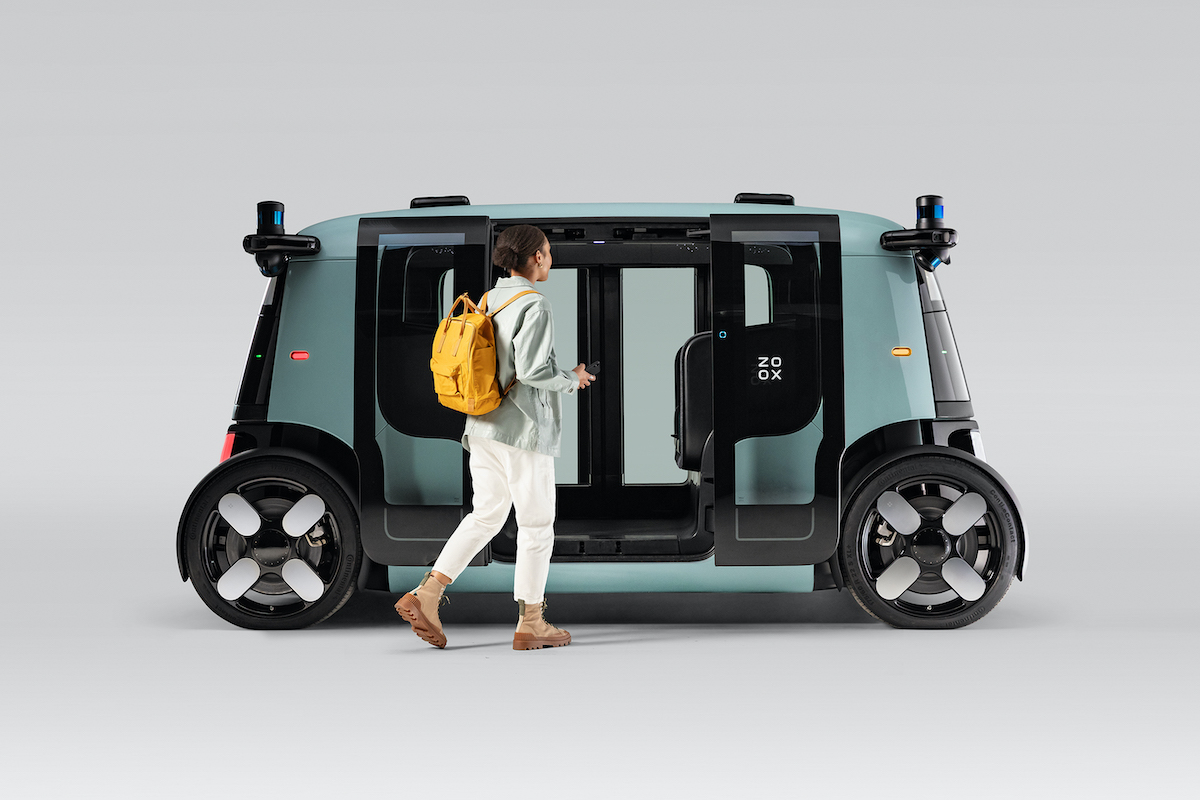
Zoox Fully Autonomous, All-electric Robotaxi. Image Credits: Zoox

After six years of research and development, autonomous vehicle company Zoox this week unveiled an electric robotaxi that can carry four people at a maximum speed of 75 miles per hour.

Automotive writer Kirsten Korosec interviewed Zoox co-founder and CTO Jesse Levinson to learn more about the vehicle’s development and how the company overcame a series of technical and legal challenges.

“I would say that if you have a big idea and you’re confident that it makes sense, you should at least explore the idea, rather than giving up because the current regulations aren’t designed for it,” said Levinson.

Kirsten only had 15 minutes to interview Levinson, but this comprehensive interview covers topics like regulatory compliance, Zoox’s relationship with parent company Amazon and the highest (and lowest) moments he experienced along the way.

Pluralsight $3.5B deal signals a matured edtech market

Fairy dust flying in gold light rays. Computer generated abstract raster illustration

Fairy dust flying in gold light rays. Computer-generated abstract raster illustration. Image Credits: gonin / Wikimedia Commons

In one of the largest enterprise acquisitions of 2020, Visa Equity Partners this week purchased Utah-based edtech startup Pluralsight for $3.5 billion.

According to the entrepreneurs and investors reporter Natasha Mascarenhas spoke to, this deal “shows the strength of edtech’s capital options as the pandemic continues.”

“What’s happening in edtech is that capital markets are liquidating,” a major change from “the old days where the options to exit were very narrow,” says Deborah Quazzo, a managing partner at GSV Advisors and seed investor in Pluralsight.

Dear Sophie: How did immigration change for startup founders in 2020?

Image Credits: Sophie Alcorn

Dear Sophie:

I’m on an F1 OPT and am about to incorporate a startup with my two American co-founders.

What were the biggest immigration changes in 2020 affecting us?

—Ambitious in Albany

How to pick an investor in good or bad times

High angle view of young man walking towards white doorways on blue background

High angle view of young man walking towards white doorways on blue background Image Credits: Klaus Vedfelt / Getty Images

Founders and the VCs who back them may not be friends, but they’re usually friendly.

Investors are on a first-name basis with entrepreneurs from their portfolio companies and frequently have candid conversations with them about life, work and the world in general. In the before times, they might even have shared a meal or attended a baseball game together.

But make no mistake, it is a top-down relationship — the investor will always have the upper hand. When an entrepreneur accepts a check, they are hiring their next boss.

In an Extra Crunch guest post, Quiq CEO and founder Mike Myer poses two questions for founders who are considering a new relationship with a VC:

  • How can the investor help the business?
  • What’s the risk that the investor will hurt the business?

From India’s richest man to Amazon and 100s of startups: The great rush to win neighborhood stores

https://techcrunch.com/2020/12/18/from-indias-richest-man-to-amazon-and-100s-of-startups-the-great-rush-to-win-neighborhood-stores/

NEW DELHI, INDIA – 2011/12/18: Rice is sold at a night market in Paharganj, the urban suburb opposite New Delhi Railway Station. (Photo by Frank Bienewald/LightRocket via Getty Images)

In India, about 90% of consumers buy their everyday goods from neighborhood-based kirana stores instead of supermarkets.

As a result, U.S. retail giants like Walmart and Amazon have adopted an “if you can’t beat them, join them” approach, offering the nation’s 60 million mom-and-pop shops software for inventory control, payments and e-commerce.

India’s retail market will be worth an estimated $1.3 trillion by 2025, but e-commerce represents just 3% of that activity today, reports Manish Singh.

For his final Extra Crunch story of 2020, he looked at the startups and major players who are hoping to carve out their niche in one of the world’s largest retail ecosystems.

ClickUp CEO talks hiring, raising and scaling in the white-hot productivity space

Line of differently sized pink ceramic piggy banks in ascending size order on white surface, green background

Image Credits: PM Images / Getty Images

Earlier this year, business productivity software startup ClickUp raised a $35 million Series A.

Now, just six months later, the company has closed a second round of $100 million that values the San Diego-based startup at $1 billion.

Lucas Matney interviewed CEO Zeb Evans this week to learn more about how the company was buoyed by pandemic-based behavior shifts that doubled its customer base and multiplied revenue by a factor of nine.

“I think that the biggest thing that we’ve always focused on is shipping a new version of ClickUp every week. That is our differentiation,” he said. “We’ve kind of created these iterative cycles called natural product-market fit and it’s been hard to keep up with that.”

2020’s top 10 enterprise M&A deals totaled a staggering $165B

Multi Colored Bling Bling Dollar Sign Shape Bokeh Backdrop on Dark Background, Finance Concept.

Multi Colored Bling Bling Dollar Sign Shape Bokeh Backdrop on Dark Background, Finance Concept. Image Credits: MirageC / Getty Images.

In 2018, the total value of the year’s 10 top enterprise mergers and acquisitions reached $87 billion; last year, that figure fell to just $40 billion.

But in 2020, 10 M&A deals accounted for $165.2 billion.

“Last year’s biggest deal — Salesforce buying Tableau for $15.7 billion — would have only been good for fifth place on this year’s list,” notes enterprise reporter Ron Miller. “And last year’s fourth largest deal, where VMware bought Pivotal for $2.7 billion, wouldn’t have even made this year’s list at all.”



from eCommerce – TechCrunch https://ift.tt/2KBlIeT
via IFTTT
Tap Network raises $4M for its customizable rewards program

Tap Network is providing a new approach to loyalty rewards programs that it describes as “rewards as a service.”

You may recognize the Tap Network name, as well as its co-founder and CEO Lin Dai, from Hooch, a startup that offered a drink-a-day subscription service before shifting focus to a broader rewards program. Dai told me he “learned a lot from the Hooch experience” but ultimately “decided that Tap is a much bigger opportunity, we’re really looking at rewards in general.”

So Tap Network is a new startup, one that recently raised $4 million in funding from investors including Revelis Capital, Nima Capital, the Forbes family office, Warner Music Group, Access Industries, Bill Tai, Bob Hurst, Edward Devlin and others.

Dai said that normal rewards programs are only accessible to the top 10% or 20% of a company’s customers. So in his view, businesses have an opportunity to “super serve the average customers who 40 years ago might not have been considered important customers, but who today could be building a loyalty behavior pattern.”

Tap Network

Image Credits: Tap Network

He added that making rewards programs accessible to more customers has an added benefit for many businesses, because “whether it’s a major bank or major travel company, they are starting to accrue billions of dollars
that are locked up in these wallets.” Those points might never be redeemed, but they’re still considered liabilities from an accounting perspective.

Tap Network aims to solve this problem by allowing customers to spend those points through a broader network of rewards, which can usually be redeemed at a lower point level. It’s offered as a white-label addition to an existing rewards program, with each program choosing the rewards that might be the best fit for their customers.

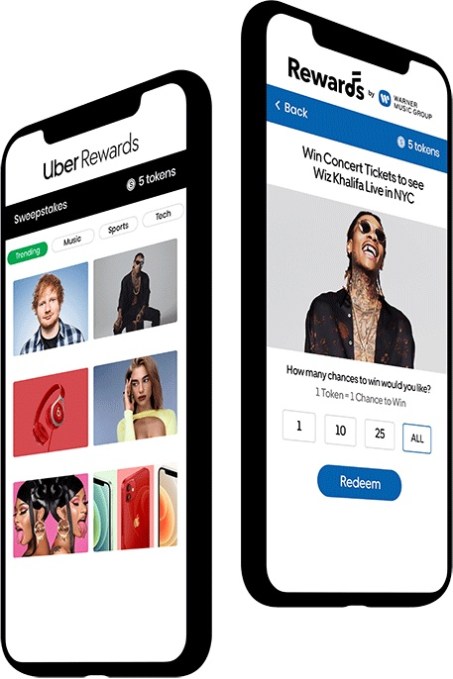
For example, Uber recently worked with Tap Network to expand its Uber Rewards program, offering new Tap Network-powered rewards like free Apple Music or HBO Max, as well as the option to donate to causes like World Central Kitchen. And the minimum number of points needed to claim a reward fell from 500 points to 100 points.

Other companies using Tap Network include Warner Music Group (which, as previously mentioned, is also an investor) and privacy-focused browser company Brave.

Dai said that in the future, Tap could even allow consumers to combine rewards points from different programs: “If I want to redeem something, I might be able to take a little bit of my Uber points, a little bit of my Warner points, a little bit of points from another program” and combine them.


from eCommerce – TechCrunch https://ift.tt/37umB1C
via IFTTT

Unpacking Poshmark’s IPO filing

So much for a year-end IPO slowdown.

On the heels of news that Expensify could direct list next year and Coinbase’s announcement that it has filed to go public (albeit privately), Poshmark dropped a public S-1 last night.

We’ll have more on the bloc of IPO news in coming posts, but as Poshmark has provided hard numbers and a fascinating business 2020 story, we’ll start here.


The Exchange explores startups, markets and money. Read it every morning on Extra Crunch, or get The Exchange newsletter every Saturday.


We’re going to range a little wider in this IPO dig than usual, including more notes on investor ownership and what the the company does. That’s in case you, like myself, had forgotten.

So, we’ll start with product and talk finances before noodling over the surprising venture capital results that Poshmark is prepped to produce. Let’s get into the filing!

Poshmark

Poshmark is an e-commerce marketplace that allows users to sell new and used fashion-related goods to one another. It sits atop secular trends towards e-commerce over traditional retail, mobile commerce over static, and what I would call a cultural rethinking of used goods in recent years.

And of course, Poshmark has braved the economic waves that COVID-19 brought to the global market.

The company’s model is simple: It holds no inventory, instead providing a marketplace where buyers and sellers connect, juiced with an algorithmically-built feed of items and an emphasis on digital social interactions. At the end of 2019, the company’s audience was 83% female and 80% of its members were part of the Gen Z and Millennial generations.

It’s not hard to understand how Poshmark makes money, with the company charging 20% of a sale price for goods over $15, or a capped rate for cheaper goods.

In theory, the company has a workable flywheel for growth. Attracting new users via marketing helps it build a deeper user base. Those users generate more social activity and purchases, which, in turn, could bring in more sellers.

That would help keep Poshmark’s goods selection fresh. Which, could attract even more buyers. More goods and more sales means more revenues for Poshmark. Which can then spend some of the resulting margin back into marketing, kickstarting the process all over again.

But despite that winsome circular updraft, the company has posted regular losses, which means Poshmark has had to outspend its business model to keep its growth up. Until 2020, that is. This year, things turned around in profit-terms for the e-commerce marketplace, ending with the company turning in consecutive profitable quarters.

Poshmark’s cash generation also improved in 2020, putting it on strong footing heading into its public offering. As with other companies that wound up enjoying a strong 2020 based at least in part on COVID-19 and its resulting economic impacts, investors will have to math out what happens to the company in 2021.

Let’s talk about the company’s historical growth and how it wound up generating net income this year.

Results

From the first nine months of 2019 to the same period of 2020, Poshmark grew its revenues 28% from $150.5 million to $192.8 million. Its profitability, however, swung sharply from a net loss of $33.9 million in the first three quarters of 2019 to net income of $8.1 million during the same period of 2020.


from eCommerce – TechCrunch https://ift.tt/3h0ExEr
via IFTTT

From India’s richest man to Amazon and 100s of startups: The great rush to win neighborhood stores

After spending more than a decade disrupting the neighborhood stores in the U.S. and several other markets, Amazon and Walmart are employing an unusual strategy in India to face off this competitor: Friending them.

Walmart and Amazon, both of which face restrictions from New Delhi on what all they could do in India, have partnered with tens of thousands of neighborhood stores in the world’s second-largest internet market this year to leverage the vast presence of these mom and pop stores.

In June this year, at the height of the pandemic, Amazon announced “Smart Stores.” Through this India-specific program, for instance, Amazon is providing physical stores with software to maintain a digital log of the inventory they have in the shop and supplying them with a QR code.

When consumers walk to the store and scan this QR code with the Amazon app, they see everything the shop has to offer, in addition to any discounts and past reviews from customers. They can select the items and pay for it using Amazon Pay. Amazon Pay in India supports a range of payments services, including the popular UPI, and debit and credit cards.

The world’s largest e-commerce giant also maintains partnerships that allow it to turn tens of thousands of neighborhood stores as its delivery point for customers — and sometimes even rely on them for inventory.

India has over 60 million small businesses that dot the thousands of cities, towns and villages across the country. These mom and pop stores offer all kinds of items, are family run, and pay low wages and little to no rent.

This has enabled them to operate at an economics that is better than most — if not all — of their digital counterparts, and their scale allows them to offer unmatched fast delivery.

Krishna Shah, a New Delhi-based doctor, on paper is one of the perfect customers of e-commerce services. She lives in an urban city, uses digital payments apps and her earnings put her in the top 5% income level in the country. Yet, when she needed to buy food for her cats and needed it as soon as possible, she realized the major giants would take hours, if not longer. She ended up placing a call to a neighborhood store, which delivered the item within 10 minutes.

That neighborhood store, which employs fewer than half a dozen people, was competing with over a dozen giants and heavily funded startups including Grofers and BigBasket — and it won.

At stake is India’s retail market, which is estimated to be worth $1.3 trillion by 2025, from about $700 billion last year, according to Boston Consulting Group and the Retailers’ Association India. E-commerce, by several estimates, accounts for just 3% of the retail market in the country.

If that figure wasn’t small enough already, consider this: Some of the biggest customers of Flipkart and Amazon are these small retail stores. An executive with direct knowledge of the matter told TechCrunch that during some sales, as high as 40% of all smartphone units are bought by physical stores. The idea is, the executive said, to buy the devices at a discounted price, sit on them for a few days and when Amazon and Flipkart are done with their sales, sell the same phones at their standard prices.

Sujeet Kumar, co-founder of Udaan, a Bangalore-based startup that works with merchants, said that even as smartphones and the internet have reached all corners of India, e-commerce hasn’t been able to disrupt the retail market.

“The problem is that it is very difficult for e-commerce companies to build a supply chain and distribution network that is more efficient than those established by neighborhood stores. These mom and pop stores operate on an insanely different kind of cost economics. E-commerce companies are not able to match it,” he said.


from eCommerce – TechCrunch https://ift.tt/3p4SSm4
via IFTTT

New Government – Labour Small Business Agenda

We’ve are all waking up to a new Government today, with the Labour party about to take control of the country and what should be top of your...