Online Brand CMOs ‘Tremendously Confident’ at recovery

Online Brand CMOs 'Tremendously Confident’ at recovery

ChannelAdvisor and research firm CensusWide surveyed 304 CMOs working at UK brands selling online. 91% of CMOs said they feel confident that their brand’s revenue would grow over the next 12 months, with a quarter (25%) feeling very confident in revenue growth. Respondents were also self-assured about customer growth, with 92% expecting it to become even easier for their brand to attract and retain online shoppers across the next 12 months, with nearly a third (32%) saying they expect this to become ‘much easier’.

When asked which hires would be most sought after by their brand over the next 12 months, ecommerce expertise was ranked first, followed by marketing talent. Those surveyed listed web developers third, while senior strategic expertise came fourth, followed by logistics expertise.

As brands look to build further ecommerce success in a very crowded market, many have poured money into online marketing. 80% of brands say their digital marketing spend is higher than pre-COVID levels and 91% expect their digital ad spend to increase further over the next 12 months.

Digital ads across all online channels were primarily dedicated to directing consumers to D2C opportunities. 36% of CMOs said digital advertising was directing traffic to the brand’s own website, while 29% said clickable digital ads directed customers to online marketplaces such as Amazon. 20% direct to retailer partner websites, while 14% said their digital ads were not clickable.

How Brands Have Adapted To A New Wave Of Online Shoppers

The pandemic has seen brands responding to shifting consumer habits and behaviour. More than a quarter (29%) of CMOs said they had noticed an older demographic of shoppers purchasing their brand’s products online. 31% said they had noticed that shoppers were purchasing online more frequently than before COVID, while more than a quarter (28%) observed that consumers were demanding more flexibility in when and how their products were delivered compared to before the pandemic.

Brands have invested to meet these new demands over the last year. 84% of CMOs say their brand has increased the speed of their average delivery time since the start of the COVID-19 crisis. 45% have invested significantly in their logistics capabilities, including delivery and returns.

Brands have also spent to optimise the various channels they sell across. When asked about areas they have made significant investments in across the last 12 months, 49% of CMOs say their brand has invested heavily in optimising their presence on online marketplace channels, while 45% made a significant investment to improve their relationships with retailers. More than a third (38%) say they have invested in optimising their own online stores.

“This research shows that brands are tremendously confident about their online prospects and believe the next 12 months could drive even higher ecommerce revenues than those seen during lockdown. It appears that the investments in marketplaces, online advertising, ecommerce infrastructure, and retail relationships are paying off for most brands.”
– Mike Shapaker, Chief Marketing Officer, ChannelAdvisor

The post Online Brand CMOs ‘Tremendously Confident’ at recovery appeared first on Tamebay.


from Ecommerce – Tamebay https://ift.tt/3fvj07l
via IFTTT

Livestream e-commerce: Why companies and brands need to tune in

What comes to mind when you think of livestreaming? In the U.S., most people would name their favorite celebrity leading a Q&A on Instagram or a gamer doing a speedrun on Twitch.

In China, it’s shopping, streamed live.

Livestream e-commerce has taken off in China in the last few years and is expected to yield more than $60 billion this year. In 2019, 37% of online shoppers in China (a cool 265 million people) made purchases on livestreams — and that was well before quarantine. In 2020, it’s estimated to have reached around 560 million people.

During Taobao’s annual Single’s Day Global Shopping Festival in 2020 (China’s Black Friday), livestreams accounted for $6 billion in sales — nearly doubled from a year earlier.

Starting to see a trend? The big U.S. companies have noticed, and they’re jumping on the bandwagon faster than you can say, “Swipe up to buy now!”

Last December, Walmart livestreamed shopping events on TikTok. Amazon released a live platform where influencers promote items and chat with customers. Instagram launched a Shop feature that encourages users to browse and buy within the app. Facebook also kicked off Live Shopping Fridays for the beauty and fashion categories.

“It’s an entertaining way for shops to tell the story behind their products. It brings buyers closer than ever to their favorite creators and allows them to have a voice in the conversation.”

Startups are growing fast to keep up with the heavy hitters — PopShop.Live raised $20 million to let people buy everything from books and toys to jewelry from sellers who livestream their offerings, and Whatnot raised a $50 million Series B, largely to expand its livestream commerce infrastructure. There’s also a burgeoning category of SaaS tools such as Bambuser, which is working with brands like Klarna to test native livestream shopping directly within branded apps.

At this pace, retailers will all welcome livestream commerce teams like they have influencer partnerships in recent years. It’ll just be part of the digital equation to stay competitive and relevant in the future of marketplaces and e-commerce.

From B.C. to 5G: The evolution of shopping

What is old is new again. Your grandparents spent years watching QVC because it balanced the experience of speaking with an associate with the convenience of their retirement community’s TV room. Livestream is today’s version of “shoptainment,” where hosts showcase products dynamically, interact with their audiences and build urgency with short-term offers, giveaways and limited-edition items.

Now, with livestream commerce, hosts can form deeper customer connections and answer questions in real time. It’s a new standard of communication that holds a longstanding truth from Istanbul’s Grand Bazaar to smartphones: People shop to kill time and are more likely to buy when they feel connected with a salesperson.


from eCommerce – TechCrunch https://ift.tt/379kAag
via IFTTT

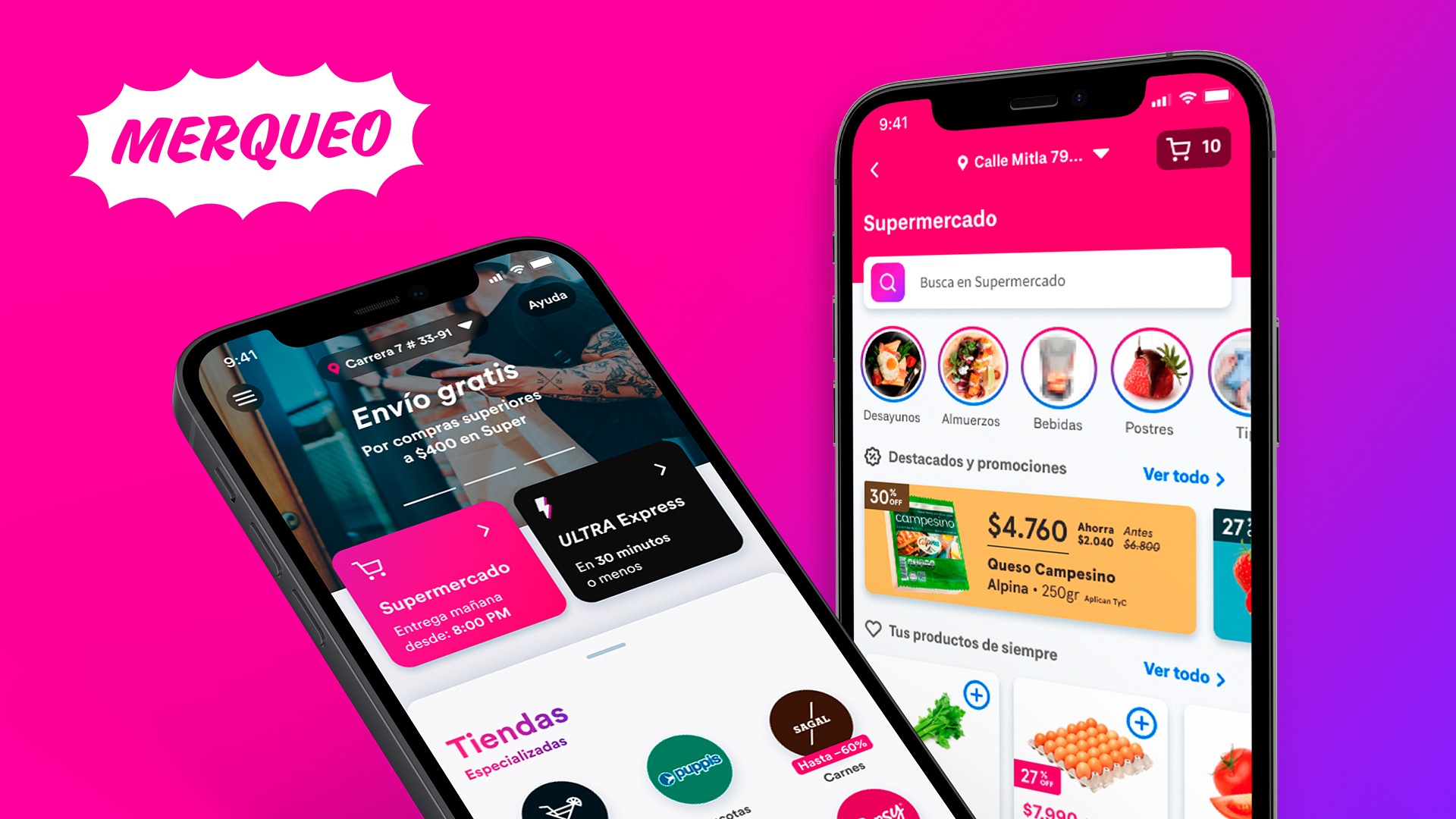
Colombia’s Merqueo bags $50M to expand its online grocery delivery service across Latin America

Merqueo, which operates a full-stack, on-demand delivery service in Latin America, has landed $50 million in a Series C round of funding.

IDC Ventures, Digital Bridge and IDB Invest co-led the round, which also included participation from MGM Innova Group, Celtic House Venture Partners, Palm Drive Capital and previous shareholders. The financing brings the Bogota, Colombia-based startup’s total raised to $85 million since its 2017 inception.

Merqueo CEO and co-founder Miguel McAllister knows a thing or two about the delivery space in Latin America, having also co-founded Domicilios.com, a Latin American food delivery company that was bought by Berlin-based Delivery Hero and later merged with Brazil’s iFood.

McAllister describes Merqueo as a “pure-play online supermarket with a fully integrated grocery delivery service” that sources directly from large brands and local suppliers, bypassing intermediaries and “delivering directly from its dark store network.” (Dark stores are traditional retail stores that have been converted to local fulfillment centers.”

Merqueo offers more than 8,000 products, including fresh foods, packaged goods, home essentials, beverages and frozen products. It currently operates in more than 25 cities in Colombia, Mexico and Brazil and has over 600,000 users.

Image Credits: Merqueo

It must be doing something right. The startup is close to $100 million in “run-rate revenue,” according to McAllister, having grown more than 2.5x in 2020. Merqueo also reached positive cash flow in Colombia, its most mature market. Over the last year, large Latin American retail chains and retailers have approached the company about potentially acquiring it, McAllister said.

Part of the company’s success might be attributed to the speed and flexibility it offers. Users can choose how and when to receive their groceries according to their needs, with the startup offering delivery in as little as 10 minutes or three to four hours. Users can also schedule delivery of their groceries in two-hour intervals for the same day or the next day.

Also, owning and controlling the “entire” vertical supply chain gives it the ability to obtain better margins, offer competitive pricing and achieve healthy unit economics, according to McAllister.

Merqueo plans to use its new capital in part to expand geographically. The company is currently in phase one of its expansion to Brazil, entering initially in Sao Paulo later this month. Next year, it expects to launch in other Brazilian cities such as Rio de Janeiro, Fortaleza and Salvador de Bahia.

The market opportunity in Latin America is massive considering that online grocery sales only represent just 1% of the market –– far lower than in the U.S., EU or China, for example. Other players in the increasingly crowded space include GoPuff in the U.S., Getir out of Turkey and Mexico-based Jüsto, which raised $65 million in a Series A led by General Atlantic earlier this year.

“The pandemic accelerated the adoption of online grocery shopping in LatAm,” McAllister told TechCrunch. “The region went from 0.3% share of online groceries to 1%. And after the pandemic, we are seeing a 50% increase in the pace of user adoption.” Overall, the $85 billion e-commerce market in Latin America is growing rapidly, with projections of it reaching $116.2 billion in 2023.

Currently, Merqueo has over 1,300 employees in LatAm, up 60% from last year. It plans to continue hiring with the proceeds from the Series C round as well work “to become the largest and most ambitious dark stores network of Latin America.”

Alejandro Rodríguez, managing partner at IDC Ventures, is naturally bullish on Merqueo’s potential.

“From all the opportunities we looked into, Merqueo is undoubtedly the most advanced in the region. … The Merqueo team has proved they know how to scale the business and how to get to profitability,” Rodríguez told TechCrunch.

Online grocery delivery is a business with many technical and operational complexities, he said. In his view, Merqueo’s technology and operational expertise allow it to tackle those issues in a way that has led to “the best customer experience that we have seen in a scalable way.”

“They have the best combination of both great service metrics and healthy unit economics,” Rodríguez added.


from eCommerce – TechCrunch https://ift.tt/3lasZSU
via IFTTT

Consumers desire more authentic eco-transparency

Consumers desire more authentic eco-transparency

Bazaarvoice’s Influenster community has revealed that consumers desire eco-transparency from brands now more than ever.

Consumers are really keen on bettering themselves as sustainable shoppers in a bid to bring oceans back from the brink. This means that a lot of pressure is being put on brands to be more open with the efforts they make in offering sustainable initiatives.

Over three quarters (78%) of consumers feel it’s important to use brands or products that are described as ‘green’, ‘eco-friendly’ or sustainable, however, whether consumers will trust these efforts is another story with 1 in 3 consumers believing brands are not completely transparent with their practices when using terms such as ‘eco-friendly’, ‘sustainable’ or ‘green’ (30%) in their marketing and packaging. A quarter (24%) believe brands just use such terms to sell products.

Authentic sustainability efforts

As a brand, you might be under the impression that consumers opt for quick, efficient information but is that changing? According to the data, consumers want to hear more from brands on their sustainability efforts, as long as it’s authentic.

Social media is your friend

Almost two-thirds of consumers (60%) will actively search on brand websites, blogs and social media to understand what a company is doing to be more eco-friendly, sustainable or to discover what their ‘green’ initiatives are. In fact, Instagram (48%) and influencers (48%) are now the second most popular source for consumers looking to educate themselves about sustainable practices, just behind search engines (50%).

So right now, consumers favor eco-transparency from brands, wanting to hear about the efforts they are making to keep the earth and its oceans healthy. If your brand provides sustainable options, it’s never been a better time to provide your consumers with a heart-to-heart on the good you do for the planet.

“Every year we see consumers become more aware of their ecological footprint, and sustainability is undeniably now a necessity for today’s shopper. Consumers are already actively changing their lifestyles to be more sustainable, and it’s clear they want to trust that brands and retailers are following suit. Uncertainty remains around how the actions of some retail corporations impact the planet, so the key for brands to garner trust and respect is to be open, transparent, and communicative about the ways they prioritise sustainability.”
– Ed Hill, SVP EMEA, Bazaarvoice

The post Consumers desire more authentic eco-transparency appeared first on Tamebay.


from Ecommerce – Tamebay https://ift.tt/3xbTx8R
via IFTTT

Twitter grab a piece of ecommerce pie with Shop Module

Twitter grab a piece of ecommerce pie with Shop Module

Earlier in the year Twitter let us know that they were testing out the potential for shopping on their platform. This week Twitter have announced the launch of a pilot of the Shop Module, a feature that allows them to explore how shoppable profiles can create a pathway from talking about and discovering products on Twitter to actually purchasing them.

The Shop Module is a dedicated space at the top of a profile where businesses can showcase their products. When people visit a profile with the Shop Module enabled, they can scroll through the carousel of products and tap through on a single product to learn more and purchase — seamlessly in an in-app browser, without having to leave Twitter.

Twitter wouldn’t be the first or last social media platform to test the waters for ecommerce. It is not surprising that social media platforms would want to take advantage of their expansive member base. Eerily, even before the Pandemic began businesses selling on social media sites and apps were predicted to rise and given the current circumstances, these platforms have been pushed to develop shopping features that meet the new much larger demand for ecommerce.

Currently, Twitter are starting small with a handful of brands in the United States. People in the U.S. who use Twitter in English on iOS devices will be able to see the Shop Module. As they learn, Twitter is creating deeper partnerships with businesses that reflect whom they’re building for with a new Merchant Advisory Board. The board will consist of brands that have established themselves as best-in-class examples of merchants on Twitter. With their partnership, Twitter hope to more easily address the needs of businesses of any size or vertical in our product innovation.

The post Twitter grab a piece of ecommerce pie with Shop Module appeared first on Tamebay.


from Ecommerce – Tamebay https://ift.tt/3l734f1
via IFTTT

£3m Klarna Small Business Support Package for SME recovery

£3m Klarna Small Business Support Package for SME recovery

A new £3m Klarna Small Business Support Package has been launched today, to help British SMEs recover from the pandemic. The package comes as new research reveals a quarter (24%) of SMEs aren’t confident their business will survive the next two years with 46% of owners stating their main priority is to simply survive the next six months.

The Klarna Small Business Support Package will provide 100 retail SMEs with access to much needed support across different elements of their business, from office space and customer acquisition to advertising support. Specifically, the fund will provide SMEs with WeWork All Access for 3 months, complimentary use of Klarna’s Pay later products for one year and £15,000 of Klarna media services. Together this package equates to over £30,000 of support for each business.

The recipients of the package will be decided by a hand-picked panel of judges including Matt Vickers MP for Stockton South and Co-Chair of the APPG on Future of Retail, Alex Marsh Head of UK for Klarna and Mathieu Proust, General Manager, UK, Ireland & Emerging Markets at WeWork.

Support will be split across four categories:

  • Retail Innovator

    For the small businesses who have been breaking barriers and bringing innovation to the retail industry

  • Omnichannel trailblazer

    For those leading the way on omnichannel retail, and creating exceptional cross-channel experiences for their customers.

  • Sustainability Champion

    Celebrating the retailers who have made a commitment to our planet, and champion sustainable retail as part of their business.

  • Pandemic Impact

    For those who have been heavily impacted by the pandemic – from physical store closures to impact on demand.

The £3m Klarna Small Business Support Package comes after Klarna-commissioned research highlighted the specific issues senior SME leaders have faced in the past 16 months. It found that nearly two fifths (38%) of SMEs didn’t think that they’d survive the pandemic with a further 39% feeling they are still yet to recover. The impact on wellbeing is also startling, with 44% of SME leaders noting that pandemic induced business pressures had a negative impact on their mental health.

The initiative will also support those who want to make a positive impact on society, notably in sustainability. A third (32%) of SMEs want to make a positive contribution to society over the next 6 months and 50% are committing to focus on sustainability over the next year. As part of its 1% Pledge, Klarna is committed to supporting those who align with their climate goals.

“SMEs are at the core of our economy and it’s vital that they’re given all the tools they need to survive. At Klarna, we are determined to help small retailers navigate their way back to pre-pandemic levels and we hope that this fund, together with our Accelerator Program, will inspire and boost confidence across the SME sector.”
– Alex Marsh, Head of UK at Klarna

Matt Vickers, MP for Stockton South and Support Package judge said: “It has been a monumentally difficult year for our SMEs, and as we recover from the pandemic, it’s vital that we can provide all the support we can. Klarna’s £3m Support Package and Accelerator Program will be instrumental in rebuilding business health and confidence and I encourage every SME to get involved.”

Mathieu Proust, General Manager, UK, Ireland & Emerging Markets at WeWork, said: “WeWork is fortunate to be home to some of the UK’s most exciting start-ups and SMEs and we know the power of the right resources, space and network on driving success. After such a challenging year for SMEs, we’re looking forward to welcoming the Support Package beneficiaries into our community and to providing space designed for collaboration and innovation to help them grow and thrive”

Alongside the Support Package, Klarna has also launched a ten-part Accelerator Program hosting a series of free training masterclasses with industry experts from various partners including Shopify, WeWork, Global-e, dotdigital and more to provide SMEs with actionable insights to boost their business.

The first of these sessions ran yesterday, with over 400 attendees and is one of many initiatives being undertaken by Klarna as part of its commitment to supporting SMEs.

Applications for the fund are open until 8th September.

Also check out the Accelerator Program here.

The post £3m Klarna Small Business Support Package for SME recovery appeared first on Tamebay.


from Ecommerce – Tamebay https://ift.tt/2VftOyY
via IFTTT

Social Commerce in the Gulf Cooperation Council countries

Social Commerce in the Gulf Cooperation Council countries

Gulf Cooperation Council countriesHassan Mikail, head of Shipa Ecommerce, has over 20 years combined experience in the digital, marketing & global partnerships. He has spent the last 11 years building scalable technology systems for businesses that are both consumer facing and merchant friendly, with a key focus on cross-border ecommerce. In this guest post today, Hassan reveals what’s happening with ecommerce in the Gulf Cooperation Council countries (GCC) and the broader Middle East and how European retailers are missing out:

Social Commerce: The Future is Now in the GCC

The use of social media to buy and sell is the fastest-growing segment of ecommerce in the Gulf Cooperation Council countries (GCC) and the broader Middle East. Social commerce in the region deserves more attention from merchants and brands that have, until now, devoted most of their focus to larger, more mature markets.

Globally, the market for global social commerce – worth about $475 billion in 2020 – is forecast to reach $3.4 trillion over the next seven years, according to Grand View Research.

As a share of all ecommerce, sales through Instagram, WhatsApp, Snapchat, Facebook, Tik Tok, YouTube, Reddit, Twitter, Pinterest, Taobao, Fab, Poshmark, Etsy and other social platforms are expected to expand from 5% to 12% over that same period.

A number of factors are driving growth in social commerce, sometimes referred to as “conversational commerce.” Social media penetration and time spent on social media by individual users is increasing. The number of social platforms creating built-in ecommerce experiences is growing. Brands are pouring more money into social advertising.

At the same time, the line between commerce and entertainment is blurring as marketers use live-streaming videos to showcase products and introduce rewards and gamification that engage users and get them to spend.

Across the Middle East, 28% of the population is between the ages of 15 and 29. The median age in the region is 22 – well under the global median age of 28. That’s important because social media penetration and use are highest among young adults and teens regardless of region.

Grand View Research says B2C sales account for 53% of global social commerce sales. The leading categories are personal and beauty care products; apparel; accessories; home products; health products; foods and beverages. Asia Pacific is the fastest growing region for social commerce.

But marketers would be shortsighted to overlook the Middle East and, particularly, the Gulf states, where ecommerce sales spiked 52% in a single year from 2019 to 2020, according to venture capital firm Wamda. The under-30 demographic there is large, curious, and eager for new experiences. It is made up of digital natives, many of them affluent, who are starved for entertainment, connection and information – and eager to both consume and create original content.

Online merchants and brands that have grown into ecommerce powerhouses in the United States, Europe and China have struggled in the GCC and wider Middle East. They trip up on local fulfillment, customs red tape, cross-border shipping hassles, postal and delivery peculiarities, local payment preferences, and a high rate of returns.

Even with all that, it’s clear that the pandemic has caused a seismic shift in ecommerce across the region. A Wamda whitepaper cited a “remarkable spike in demand and adoption” during the pandemic. “Today, 80% of young Arabs shop online frequently, compared to 71% in 2019. Additionally, 50 percent of those aged 18-24 … are shopping more online” even as pandemic restrictions have eased, it says.

Ecommerce in the region is booming, Forbes says, because of the combination of a highly digitized population and a lockdown-induced surge in consumer demand. Part of that surge has been driven by offline retailers that began listing products on Facebook and WhatsApp, using them to conduct transactions and start their digital journeys.

It’s clear the explosive growth in the region’s ecommerce and social commerce will outlast the pandemic. The region’s young population is drawn to Tik Tok and other platforms that are reinventing creativity and giving them a place to find and share videos of acrobatics, dancing, singing, gags and jokes. Social media users in the Arab world are obsessive about sharing and just as eager to share product posts and recommendations as Tik Tok dance videos.

I expect merchants and brands to take more notice of social commerce in the Middle East. They see the data showing that basket values there are higher there than virtually anywhere in the world. And they are familiarizing themselves with the region’s social media influencers, coming to understand what kinds of personalities can help sell in the Arab world.

Meantime, all of the social media platforms are on the cusp of introducing new features that will finally allow them to fully monetize the followings they’ve developed, especially in the Middle East.

What’s coming in the Gulf Cooperation Council countries?

  • Integration of the buying experience

    Social platforms making changes that will soon have buyers making purchases and payments on their sites – with available payment gateways and logistics options — rather than doing so through sellers’ sites that are embedded on social platforms’ frames. Look for more Checkout features on social platforms such as the one introduced by Instagram.

  • Trust-based transactions and payments

    Online sellers in the GCC and Middle East have been bedeviled by consumers’ preference for cash-on-delivery and the related problems of over-ordering and high returns. The pandemic accelerated development of a more trust-based online economy through adoption of contactless payments – digital wallets, credit cards, etc.

  • Social seller access

    Social commerce activity will skyrocket once individual merchants – social sellers, solopreneurs and others — can sell through social platforms the way they now do via marketplaces such as eBay, Etsy and Craigslist.

  • Augmented reality

    Social media platforms are ideal vehicles for use of next-generation interactive experiences that will let shoppers try on clothes, go for a test drive, or try new products virtually.

  • Big Data and better targeting

    Social platforms allow brands to collect lots of data on consumers – age, sex, interests, languages, tastes, buying preferences, travel habits, admired public figures — and target them better. They can tailor content and promotions to individual tastes.

  • Innovation from China

    The country making the most advances in digital shopping tools – and in entertainment that gets eyeballs – might surprise you. It’s not the United States, it’s not a country in Europe. It’s China.

The post Social Commerce in the Gulf Cooperation Council countries appeared first on Tamebay.



from Ecommerce – Tamebay https://ift.tt/374Jpnx
via IFTTT

New Government – Labour Small Business Agenda

We’ve are all waking up to a new Government today, with the Labour party about to take control of the country and what should be top of your...