Amazon confirms Prime Day will run June 21-22, an earlier than usual start

Amazon confirmed its annual sales event known as Prime Day will be held on Monday, June 21 and Tuesday, June 22. Bloomberg had previously reported these same dates, citing leaked records. The once-a-year mega sale had typically been held in July, when the shopping season goes through its usual lull. But due to the COVID-19 pandemic, last year’s Prime Day was delayed until October in most markets, including the U.S.

Despite the changes, Amazon said small and midsize businesses generated mo0re than $3.5 billion during the Prime Day event, Amazon said, up 60% from the year prior. However, it didn’t disclose its total Prime Day figures.

This year, Amazon will kick off Prime Day early with a new promotion aimed at supporting small businesses. Starting June 7 and running up until Prime day’s start, when Prime members spend $10 on items sold by a participating small business, they’ll receive a $10 credit they can later spend during the Prime Day event.

This deal will run in select markets, including the U.S., U.K., France, Germany, Italy, Spain and Japan, and is the big promotion for small businesses in Amazon’s history, the company noted. More than 300,000 selling partners are participating.

Prime Day was originally conceived as a way to push more Amazon shoppers to convert to paying Amazon Prime subscribers by luring them with deep discounts across categories — including Amazon’s own consumer hardware devices, like Echo smart speakers or Fire TV devices, which have been regular best sellers.

This will again be the case, as Amazon promises savings and discounts across home, electronics, beauty, fashion and Amazon devices. And it will again extend sales to other areas of Amazon’s business, like Prime Video, Amazon Music, Prime Gaming and others.

One of those deals is live now, as Prime members are offered a four-month free trial for its on-demand music streaming service, Amazon Music Unlimited, which offers up to 70 million songs. The company recently added lossless streaming support as a free upgrade, following Apple’s move to do the same for its own Music subscribers.

While Prime Day has been running since 2015, Amazon has more recently begun using the event to put a stronger spotlight on how it helps small businesses in light of increased regulatory scrutiny and antitrust investigations over its business practices.

In addition to Congressional hearings which saw Amazon founder and (soon to be former) CEO Jeff Bezos hauled in to testify, DC’s Attorney General Karl Racine last month filed an antitrust suit against Amazon, accusing the retailer of stifling competition by exerting control over third-party sellers. The suit alleges Amazon fixed prices on its retail platform by prohibiting sellers from selling products for less elsewhere, creating an artificially high price floor across the online retail market.

The company is also facing antitrust investigations abroad, including in the E.U. The retailer has been accused of harming small businesses by leveraging nonpublic data from its third-party sellers who use its marketplace in order to copy the best-selling products and undercut its selling partners.

This reality stands in sharp contrast as to how Amazon presented itself during an upbeat press briefing, where it had leveraged actress Kristen Bell’s (“The Good Place”) likeability factor to promote how well small businesses were doing on Amazon. During the event, she “interviewed” favorite sellers, like dog food seller Pawstruck and artisanal self-care product maker Live by Being, who had nothing but great things to say about working with Amazon.

Bell, along with Karamo Brown and Mindy Kaling, will also be highlighting some of their favorite sellers on Amazon’s video shopping service, Amazon Live.

Amazon also gave a broader update on its small business sellers and related efforts. The retailer noted that, last year, it delivered more than 250 new tools and services to help its selling partners reach 300 million customers globally.

“It’s pretty incredible to think in the past year in the U.S. alone, our small and medium-sized selling partners sold more than 3.7 billion products as more than 7,200 products, every minute,” said Keri Cusick, head of Small Business Empowerment at Amazon, in a press briefing. “Overall, they average $200,000 in sales, up from about $150,000, and more than 27,000 American sellers had over half a million dollars in sales,” she added.

Amazon didn’t offer specifics about its upcoming Prime Day deals, but said that it will host hundreds of thousands of deals leading up to Prime Day from companies including Le Creuset, Tommy Hilfiger, Lego, Mattel and Black & Decker.

Alexa device owners can also shop early, starting on Friday June 18, by asking “Alexa, what are my deals?”

Prime Day will be available on Amazon.com or regional websites, on Amazon.com/espanol for Spanish-language speakers and in Amazon’s physical retail stores.



from eCommerce – TechCrunch https://ift.tt/3yTf887
via IFTTT

Kudos, with its cotton-based, eco-friendly diaper, soaks up $2.4 million in seed funding

If you’ve experienced parenthood, you’re well versed in the surprisingly small world of disposable diapers. Help may be on the way.

Kudos, a startup that is looking to reinvent the disposable diaper with sustainability in mind, announced the close of a $2.4 million seed round of financing today. Investors include Foundation Capital, XFund, PJC, Precursor Ventures, Liquid 2 Ventures,  SV Angel, Underscore VC, Alpha Bridge Ventures, April Underwood and more.

Cofounder and CEO Amrita Saigal says that Kudos is the first and only disposable baby diaper to earn the cotton natural seal from Cotton Inc. for having 100 percent cotton touching the baby’s skin instead of plastic. They’re also made with four times more plant-based materials than the top disposable diaper out there.

Disposable diapers are made up of many layers. Your average disposable diaper from brands like Huggies, Pampers, etc. employ petrochemicals, fabrics like polyester, and a whole lot of plastic. In fact, despite how soft it feels, most disposable diapers’ top sheet (the part that touches your baby’s skin) are made of plastic.

Kudos uses organic cotton in place of that, and focuses on using green materials, with the absorbent core of the diaper made of wood fluff pulp that is totally chlorine free and harvested through the Forest Stewardship Council.

All that said, Saigal explained that performance is just as important as the composition of the diaper, saying that most parents feel that going to a more eco-friendly product sometimes means trading on performance. She explained how parents often have a much higher standard for products for their babies than they do for their own products.

“When I’m thinking about feminine care products, I might go to an eco-friendly product and it’ll be a pain if it has a little bit less performance but I can handle that for myself,” said Saigal. “But with parents, if their kid gets a rash it affects their life and their sleep. When it comes to diapers, parents aren’t willing to give that same leeway for a sustainable product.”

You might be wondering, as I did, about the defensibility of a product like this. What’s to stop the big players from developing a more sustainable, cotton-based diaper.

According to Saigal, the big brands would need to overhaul their entire manufacturing process to switch from plastic to cotton. Saigal actually left a career at P&G, which is where she met Kudos’ diaper engineering advisor Jim Keighley (her former boss at P&G).

Here’s what he had to say about it, in a prepared statement:

Big brands would need to do a complete overhaul of their bonding equipment, since the pressure technology they and everyone else uses for bonding only works with plastic-based materials. It just won’t work with natural materials. That would take a big investment of time and money, while detracting from their flexibility to run current products, which are market leaders.

Kudos operates on a D2C subscription model, offering a monthly box based on your baby’s changing size and weight, for $78/month. Folks can also purchase a box (with a three to five day supply) a la carte for $14.


from eCommerce – TechCrunch https://ift.tt/2RbEKMt
via IFTTT

Shopify’s Shop Pay checkout option expands to Google

Shopify's Shop Pay checkout option expands to Google

Last week news of Shopify and Google’s new partnership was announced. Shopify have now released information on how the expanded partnership will help more merchants sell on Google faster with the addition of Shop Pay and a simplified onboarding process.

Shop Pay expands to Google

According to Shopify, Shop Pay will be expanding to all Shopify merchants selling on Google. This means that later this year, merchants who enable Buy on Google, Google’s native checkout flow, will be able to provide Shop Pay as a checkout option, taking advantage of the billion shopping sessions that take place across Google each day.

By extending their checkout option to Google, Shopify are giving even more merchants—and consumers—access to industry-leading order tracking and carbon offset deliveries. And with a conversion rate that is 1.72x higher than a typical checkout, it better equips independent merchants to convert the discovery potential of Google into sales.

Shopify have also said that they are simplifying the onboarding process for Shopify’s Google channel by implementing a frictionless experience using smart defaults, so that merchants can get started on Google faster and list their products for free with just a few clicks.

“We’ve been partners with Google since 2012, and this expansion of our partnership is yet another reinforcement of Shopify and Google’s shared vision of commerce—that by putting the merchant first, everyone wins. Shop Pay is a great example of how we’re doing that. It’s 70% faster than a typical checkout, and that means fewer abandoned carts for merchants, and a stellar checkout experience for consumers. Shop Pay has helped consumers track nearly half a billion orders, and we’re excited to bring that functionality to merchants and consumers on Google.”
– Kaz Nejatian, VP, Merchant Services, Shopify

The post Shopify’s Shop Pay checkout option expands to Google appeared first on Tamebay.


from Ecommerce – Tamebay https://ift.tt/34AWdkv
via IFTTT

Meet Magento UK 2021 – 14th July

Meet Magento UK 2021 - 14th July

Meet Magento UK (MMUK) draws a wide audience from all areas of digital commerce – simply because of the breadth of knowledge covered – and this year will be no different. The hosts, JH, are already hand-picking some of the best merchant and partner talent in the industry, to ensure the learnings on offer are as forward-thinking and actionable as possible.

With multiple specialist tracks on offer, and a selection of the best learnings within ecommerce, there will be a world of knowledge at your fingertips – whether you’re a developer, marketer, ecommerce merchant, strategist, designer, consultant, or anything else within digital commerce.

Sales pitches are banned at Meet Magento UK – all sessions are chosen with the stipulation that they’ll bring valuable learning to the audience. We know attending events like this can mean taking important time away from work or play, and so making it worth your time is at the top of the priority list.

Last year MMUK trialled a ‘pay what you want’ model for tickets, with all donations going to charity – and this year they will be doing the same. JH don’t believe in barriers to knowledge within the community, and don’t think anyone should miss out on expanding their skillset because they couldn’t afford the ticket price to MMUK. So JH are removing that barrier.

Meet Magento UK hope you’ll choose to donate what you’d otherwise have spent on your ticket to one of their chosen charities instead – they need your help more than ever.

To stay up to date with the latest on Meet Magento UK, sign up to the JH mailing list or follow the official MMUK Twitter account.

This year sees the 10th year anniversary of Meet Magento events globally – and the 4th year that JH have hosted MMUK which is cause for celebration! They’ve got lots of exciting ideas in the bag – but unfortunately you’ll have to wait a little longer to find out exactly what they are. JH promise it’ll be worth it!

The post Meet Magento UK 2021 – 14th July appeared first on Tamebay.


from Ecommerce – Tamebay https://ift.tt/3fUVWOy
via IFTTT

AuthorSHARE – 2nd hand book royalties for authors

AuthorSHARE

For the first ever time, authors will start to receive royalties on 2nd hand book sales thanks to a new AuthorSHARE scheme set up by two of the biggest marketplace book sellers.

Up until now, when a book is sold the author received a royalty. They also received a royalty when books were borrowed from a library, recognising that the value is in the words, not the physical paper that the book is printed on. Now, the AuthorSHARE scheme pays authors royalties on the sale of used books purchased at worldofbooks.com and bookbarninternational.com. It is made possible thanks to an agreement between the two retailers and the Authors’ Licensing and Collecting Society.

In recent years there have been increasing calls from within the writing community for a new approach to address the exponential growth of the used book market. The market for used books is growing at 12% annually – compared to 1% for that of new books – and is estimated to be worth £563 million in the UK by 2025.

“It is great to see that they will now receive a small share whenever their book is sold from the websites of Bookbarn, World of Books and other participating retailers. As well as the welcome financial boost, authors love to know that their books are still being read and enjoyed long after the first sale.”
– Nicola Solomon, CEO, The Society of Authors

The scheme was the brainchild of William Pryor, founder of Somerset based retailer Bookbarn International. He was inspired by the Artists’ Resale Right which grants artists or their estate permission to receive a fee on the resale of their artworks.

Subsequently, online retailer World of Books created a royalty fund worth £200,000 for the scheme’s first year. Because the scheme is linked to a fund dedicated to support it, the most any author can currently receive from the scheme is capped at £1,000 a year. It is expected this will increase in subsequent years as the contribution is linked to the business performance and profit of World of Books. It is also hoped other retailers will also get involved.

“As a writer as well as founder of Bookbarn, I was puzzled that authors, the very people who create the raw material of our business, were not benefitting. In 2015 this gave me the idea that has, thanks to World of Books bringing their scale of operations to the scheme, now become AuthorSHARE. This is all about giving authors recognition for the value they create and we hope other retailers within this space will eventually join us in this innovative voluntary initiative”
– William Pryor, founder, Bookbarn International

At present, royalties on used books can only be paid on purchases made directly from the World of Books and Bookbarn International websites, but both retailers hope others within the industry will join the scheme to enable more authors to benefit.

Only writers who are members of the ALCS will receive payment from the Author Share scheme. Members must have also registered their individual works with the ALCS in order to receive payment for those titles.

“The growth of the used book market is fantastic in so many ways; it offers affordable literacy and protects the planet by enabling more goods to be reused. But until now, authors have missed out on the benefits of the movement towards a more circular-model of book consumption. The AuthorSHARE scheme addresses this, giving authors the potential to be paid at every point in its lifecycle.”
– Graham Bell, CEO, World of Books Group

If you are a retailer interested in joining the scheme, contact marketing@worldofbooks.com or william@bookbarninternational.com for more information.

The post AuthorSHARE – 2nd hand book royalties for authors appeared first on Tamebay.


from Ecommerce – Tamebay https://ift.tt/3uF0Ftd
via IFTTT

Why EU VAT changes and IOSS should be opportunity for growth

Why EU VAT changes and IOSS should be opportunity for growth

Why EU VAT changes and IOSS should be opportunity for growthMartyn Noble, CEO of Hurricane Commerce today talks about the EU VAT changes and IOSS and how this should be seen as an opportunity for growth rather than as a blocker to your business.

Martyn was also a Day Host and Presenter at Tamebay Live and you can now rewatch his masterclass which shows how merchants, marketplaces and others involved in international ecommerce, what good looks like and how to nail it! You can watch Martyn’s masterclass at Tamebay Live On Demand on the Retailers & Brands stage.

Why the EU VAT changes and the Import One-Stop Shop (IOSS) should be seen as an opportunity for growth

It has been a busy year for retailers and marketplaces looking to capitalise on the huge growth in global ecommerce.

Events including Brexit and the US STOP Act have highlighted the importance of having the highest quality product and shipment data in order to achieve the smoothest possible delivery and customer experience.

Now, the next date looming large on the horizon is July 1 which will see seismic changes for third country online retailers and marketplaces selling into the EU.

From this date, the EU will remove the exemption from VAT on low value goods with a value of less than EURO 22.

The EU is also making third country online retailers and marketplaces responsible for the collection and remittance of VAT.

To support retailers and marketplaces, the EU has created the Import One-Stop Shop (IOSS) with the intention of simplifying the declaration and payment of VAT on distance sales with an intrinsic value of less than EURO 150.

These are substantial changes and are intended to level the playing field between EU retailers and marketplaces and their counterparts in other parts of the world, most notably China. It is also intended to have the same impact on postal operators and express carriers.

Any marketplaces uncertain about whether to opt into the IOSS should note the decision of Amazon to embrace the new system for both its retail activities and marketplace businesses. Several other major marketplaces are believed to be actively moving in the same direction.

Hurricane Commerce has produced a guide to the EU VAT Package and the IOSS to help retailers, marketplaces and their logistics partners to take advantage of the opportunities presented by the new rules.

Hurricane is also one of Royal Mail’s partners in providing support to its customers with the IOSS.

Among the key things you need to know are:

  • The retailer or marketplace (or their chosen intermediary) only needs to register on the IOSS portal of one EU member state. Registration opened on April 1, 2021;
  • IOSS makes the buying process easier for the consumer with VAT being paid at the point of purchase – thereby avoiding doorstep surprises when goods are delivered;
  • If the seller does not use the IOSS, the consumer will have to pay VAT at the point of import – with resulting delays in clearance and delivery and greater likelihood of returns;
  • The use of the IOSS will result in much greater efficiency gains;
  • Electronic customs clearance also requires only the so called Super Reduced Dataset, resulting in faster clearance, shorter transit times and reduced costs.

Online retailers or marketplaces which do not have a presence in the EU will need to appoint an intermediary in at least one EU member state.

The intermediary will be responsible for the declaration and payment of VAT to the tax authorities of the member state on the basis of a monthly IOSS VAT return.

They are also responsible for keeping records that have to be made available electronically upon request.

Of critical importance is the need for the retailer or marketplace to be able to provide complete and valid electronic data for customs clearance.

If using the IOSS, this will mean complying with the requirements of the Super Reduced Dataset, including accurate product descriptions and HS6 codes.

Various attempts to delay the introduction of the IOSS have been firmly rejected – no surprise as we emerge from the pandemic with governments around the world under huge pressure to maximise their tax revenues.

But while preparation is needed to be able to access the IOSS, it should be seen as a big opportunity to secure substantial cross-border ecommerce growth.

By registering and meeting the requirements, particularly around the provision of high-quality product and shipment data, companies will have a significant advantage over their competitors.

This will include faster customs clearance and delivery, greater efficiencies, reduced costs and enhanced customer experience.

To receive a copy of Hurricane’s EU VAT and IOSS brochure drop them an email at info@hurricanecommerce.com

The post Why EU VAT changes and IOSS should be opportunity for growth appeared first on Tamebay.


from Ecommerce – Tamebay https://ift.tt/3caVquC
via IFTTT

Gokada to launch ride-hailing service in two Nigerian cities as part of super app plans

When two of Indonesia’s biggest companies — ride-hailing company Gojek and e-commerce marketplace Tokopedia — joined forces as GoTo Group last month, a key highlight from the merger was that the last-mile delivery space is still a huge global trend.

In Nigeria, the e-commerce and last-mile delivery market is projected to be worth over $20 billion in the next five years. Big players like Jumia have considerable market share yet smaller platforms are increasingly carving out theirs. One of such is ride-hailing-turned-logistics company Gokada.

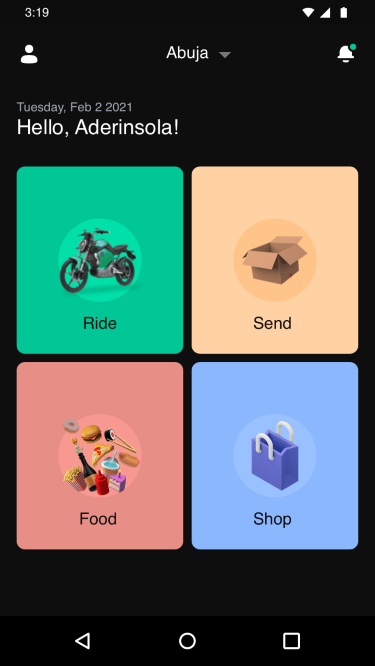
Gokada launched in 2018 as a ride-hailing company in Lagos, Nigeria. But in 2020, Gokada began offering logistics (Gsend) and food delivery services (GShop) after a ride-hailing ban by the Lagos State government affected its operations. Today, the company is combining all these services (which have operated independently in the past) into a single application.

“In September and October, we launched GShop which is the food delivery platform for Gokada. What we realized from our customers was that while they were using the Gsend and GShop separately, they came to us asking if we could put them together,” said Gokada CEO Nikhil Goel to TechCrunch. “So doing this is more like a transition from other things we were doing and making it easier for our customers to have all our services in one platform and create a super app.”

Gokada’s super app plans are coming off the back of an impressive year for the company despite a troubling first few months during the pandemic. As early as February, the company downsized and laid off more than half its staff after the ban on motorcycles in Lagos. It quickly pivoted to logistics and food delivery and hasn’t looked back.

This past year, Gokada has crossed over $100 million in annualized transaction value. It has also helped more than 30,000 merchants on its platform to execute over 1 million food delivery and e-commerce orders.

“Before Gokada ventured into ride-hailing in Lagos, people questioned us. When we entered the delivery space, it was the same question people asked. They said we didn’t have the experience. But today, if you look at it critically, we’ve changed this market in a different manner,” Goel said. 

Goel, who took over the reins at Gokada this March after founder Fahim Saleh tragically passed on, has been instrumental to the company’s impressive growth so far. Per information shared by Gokada, the company’s volume growth has increased 3x in the last six months while revenue increased 10x within the past year.

Gokada

Image Credits: Gokada

Before becoming CEO, Goel had three roles since joining the company in 2019 — VP of Rides, COO, and acting president. Previously, he also co-founded Indian edtech startup Classplus and worked as a general manager at Indian food delivery giant Zomato. His stint at Zomato and knowledge of the food-delivery and logistics space will be key to how Gokada pulls off its super app ambitions.

Although Gokada is only present in Lagos, the company is looking to launch its services across other cities including Abuja, Port Harcourt, Ibadan and Ogun. And not only will the super app allow Gokada customers in these cities to access food delivery, e-commerce (medicines and groceries among other supplies), and logistics, but they will be able to use ride-hailing services.

The company plans to start with neighbouring markets to Lagos — Ogun and Ibadan. In the latter, there’s already a ride-hailing platform in the form of SafeBoda. The company, which is present in Uganda and Nigeria, employs a super app model in the East African country but offers only ride-hailing services in Ibadan, the only Nigerian city where it operates.

For much of last year, SafeBoda has enjoyed dominance in the southwestern city but Gokada’s arrival, especially as it plans to offer other services, might threaten its commanding position.

“We started with its ride-hailing service in Lagos. We were mostly known as one of the pioneers of ride-hailing in Lagos before the ban. So far, we’ve not ventured outside Lagos, and the reason for that has been that we wanted to remain focused on our new business here. And it’s evident that when you move across Lagos, you will see our delivery bikes everywhere on the road. But ride-hailing will always stay with us wherever we go outside the city,” the CEO added. Gokada is in talks to secure operational licenses for ride-hailing but has already acquired a NIPOST licence to mitigate future risks on the regulatory front and allow them to operate courier logistics services across the country.

While services in a super app can differ from one platform to another, payments is the defining functionality that ties those offerings together. For now, Gokada only provides a subset of that which is a wallet feature and a debit card option to pay for these services. On why this is the case, Goel said: “Before many of these companies like Grab and Gojek got into payments, they were providing other services. The idea for a super app is to provide customers with different services under one umbrella to ease their lives. That’s what we’re doing but we’re open to a payments play in the future.”

Unlike other markets in Asia, Africa doesn’t have clear leaders in the super app race. Therefore, Gokada will join a growing list of platforms clamouring for supremacy in their respective markets, a spot OPay seemed to be gunning for before shutting down its non-fintech verticals last year to focus on its payment services. 


from eCommerce – TechCrunch https://ift.tt/3yUMH9A
via IFTTT

New Government – Labour Small Business Agenda

We’ve are all waking up to a new Government today, with the Labour party about to take control of the country and what should be top of your...