Keeping existing customers is far less expensive than finding new ones. Follow our guide to learn how successful stores build customer loyalty & expand reach.
Have you taken a good look at the current eCommerce strategies your brand is utilizing? Are those tactics driving significant results or are they keeping your brand just above the water?
There are various strategies for building, designing and marketing your online store. To help you reach more customers, drive more traffic and increase conversions, we're sharing 10 eCommerce strategies that will help you exceed your revenue goals.
Convert more visitors into customers and increase return on investment by implementing the following eCommerce strategies into your website and marketing plan:
Establish SMART goals
Create buyer personas
Create a content strategy framework
Establish a social media branding strategy
Take advantage of marketing tools
Have an optimized email marketing strategy
Use paid media to increase reach
Use paid search and SEO
Leverage on-site search
Optimize your store for mobile
Establish SMART Goals
When establishing goals for your company or organization, be sure they're SMART - Specific, Measurable, Attainable, Realistic and Timely. Following this framework helps to ensure that you set reasonable goals based on your circumstances and time.
For example, a common goal for eCommerce brands is to increase revenue. To make this goal SMART, think about how you're going to increase revenue. How will you measure results?
Try changing the goal to something like, "optimize our SEO strategy to increase organic revenue by 20% by December 31st." This clearly defines sets a timeline and allows for measurable results.
Create Buyer Personas
Buyer personas are great for segmenting your audience and customizing campaigns to cater to different customers' needs. Base your buyer personas off of your existing customers and their intentions with your brand.
Buyer personas take demographics into consideration; however, they go beyond just demographics and buyer profiles. Effective buyer personas involve individual behaviors, like how the customer uses the product, what they intend to do with it and what problem it solves for them.
Create A Content Strategy Framework
In addition to setting SMART goals and creating buyer personas, we encourage eCommerce brands to create a content strategy framework. Before creating and publishing content, conduct some keyword research to identify search volumes and competition. Then, determine topics that are relevant to your brand and optimize your SEO to rank in search results for those keywords.
Whether you sell B2B or B2C, ensure your brand voice remains consistent throughout all of your content − even if more than one person on your team posts on social media. All of your blogs and eBooks should be written with the same tone of voice to maintain a consistent brand image.
Don't be afraid to explore different content formats, too. There are so many benefits of content marketing, so take advantage of not only blogs and guides, but also infographics, videos, case studies, webinars and more.
Last, make sure the file formats throughout your site are best fit for your users. For example, a large .zip file is inappropriate for mobile shoppers and will contribute to slower page load times. Rather, use smaller file formats, like .png or .jpg, to increase load time and improve the user experience.
Establish A Social Media Branding Strategy
Increase reach and engage more users at every stage of the buyer's journey with a strong social media presence. Remember how we said to keep your brand voice and tone the same throughout all of your content? That holds true with social media, too; however, social media is a great outlet to converse with your audience on a more personal level.
Be sure to engage with comments (both positive and negative), answer all direct messages and make your audience feel like they're part of a larger community. A successful social media branding strategy prioritizes users, shows authenticity and remains engaged in a human-like way.
Take Advantage of Marketing Tools
To survive in the modern eCommerce landscape, many businesses benefit from leveraging marketing tools. There are so many tools available, so how do you know which is best for your business needs? We recommend doing some research before investing in a tool.
In the video below, Bethany shares some of the trusted marketing tools we use here at Groove.
For more details about each of the eCommerce marketing tools that Bethany discussed, check out this blog. More specifically, there are a variety of tools different business needs.
Want to improve your SEO strategy and drive more organic traffic to your website? Take advantage of any of these 18 SEO tools. Want to improve your social media strategy to engage more users and drive conversions? Check out the 4 social media marketing tools our team trusts.
Have An Optimized Email Marketing Strategy
Did you know that email marketing remains one of the highest-converting channels for eCommerce businesses? Email marketing is one of the most integral eCommerce strategies because it holds incredible potential for increasing conversions and return on investment.
It is projected that by 2021, the number of emails sent and received each day will reach 320 billion. Since building and scheduling emails can take a lot of effort, we recommend using automation to save yourself time.
Whether you want to automate sales emails or run special promotions for an upcoming holiday sale, use an email automation platform (like HubSpot) to create an automated workflow. Workflows let you send emails to active lists so that when people meet a specific criteria, they're enrolled to receive the automated emails you've created.
Creating a highly optimized email marketing strategy can be challenging at times, so be sure to always follow email marketing best practices.
Use Paid Media To Increase Reach
Paid media is an essential part of a successful advertising strategy, and implementing initiatives like Google Shopping and paid search really help to increase brand awareness and conversions.
We encourage eCommerce businesses to complement their SEO efforts with a strategic paid media approach to increase revenue. There is a ton of opportunity for online advertising, and we particularly find success with Google and Facebook ads.
There are a variety of ad formats available on different platforms, so we recommend doing some research to see which ad formats and social platforms best align with your company's goals. To help you determine the best advertising outlet for your business, take a look at this eCommerce Advertising Guide that covers Google, Gmail, Facebook, Instagram and Snapchat advertising.
Use Paid Search And SEO
Paid search and SEO are some of the best eCommerce strategies for increasing reach and driving relevant traffic to your site. Utilize paid search to target highly-specific segments of your audience. Take advantage of Google Text, Shopping and Display Ads so that your brand shows up in relevant search results.
One of the most effective forms of advertising is retargeting. Retargeting is when a brand displays an ad for something that a person previously expressed interest in. These types of ads are 76% more likely to get clicks than regular display ads, according to Connectio.
In addition to leveraging paid search, keeping up with SEO can also help to increase traffic, engagement and conversions. One of our clients, Final Draft, saw a 22% increase in organic revenue after we implemented technical SEO strategies and identified metadata errors, redirect opportunities, site errors and more.
Leverage On-Site Search
Visitors who interact with site search are 3 to 5 times more likely to purchase, and of those purchases, the average order value is 20 to 50% higher than those who don't use site search.
Site search helps customers navigate throughout a website easier and find the specific product(s) they're looking for. Without it, it could take many clicks for someone to find a specific product, and at that point, your best bet is to hope they don't abandon your site.
We encourage all of our clients to implement on-site search to drive conversions. Track your conversion rate and return on investment within your site's KPIs, and we're sure you'll be pleasantly surprised with the results.
Optimize Your Store For Mobile
In a 2019 survey conducted by Google, 59% of shoppers say that being able to shop on mobile is important when deciding which brand or retailer to buy from. Use these mobile eCommerce tips and website optimization strategies to engage and nurture users through the buyer's journey, improve the user experience and drive more online revenue:
Use sticky CTAs
Provide a one-page checkout
Consider the "thumb zone"
Make the mobile navigation simple
Use smart search
The prevalence of mobile shoppers is leading websites without a mobile-optimized design to fall behind and lose out on sales. When shoppers need to pinch and zoom to navigate a website, that website is likely to be abandoned, and the shopper will find somewhere else to make a purchase.
Conclusion
Though these eCommerce strategies are beneficial for different things, they all help online stores reach one final goal: more conversions. With over 13 years as a full-service eCommerce agency, the Groove Commerce team is available to assist you with building, designing and growing your online store. Just fill out the form below with any questions or concerns, and a member of our team will be in touch. Cheers!
from Groove Commerce Blog https://ift.tt/3n4YQTz via IFTTT
Launching an eCommerce business is easier now more than ever. This is, in many parts, thanks to the prevalence of affordable eCommerce platforms, tools, and resources.
But as your online business grows, you will encounter a new set of challenges. One of those obstacles is scaling and making your eCommerce store grow.
from 3dcart eCommerce Blog https://ift.tt/36mRSmV via IFTTT
Customer loyalty is the key to customer retention, meaning repeat customers for your business. The fundamental goal for an eCommerce shop is to attract customers, and ultimately keep them coming. This is certainly true for members of the popular forum, eCommerceFuel, who come together in one of the world’s largest eCommerce communities to share their knowledge and experience with each other.
With the competition being so stiff in the online marketplace, you need to ensure the loyalty of the customers you have.
How do you get the edge though? What will keep clients coming back time and again to your store?
Adapted from a traditional shop model, an eCommerce customer loyalty program is essential for customer retention.
Let’s take a look at what it is and how to implement a customer loyalty program for your eCommerce store.
What is a Customer Loyalty Program?
A study by Experian Data Quality shows that 75% of US companies have seen a return on their investment from customer loyalty programs. Well-executed loyalty programs are proven to provide value and useful customer data.
Even more telling, 63% of companies use customer retention to track success. The number of new sign-ups is also an indication of a loyalty program’s impact.
The concept of a rewards program followed, which thanked buyers for repeat business. It was quickly adopted by businesses across the world.
The practice has now spread to the world of eCommerce. Is your eCommerce business ready to join the future of rewards programs?
What is the Importance of Customer Rewards Programs?
Studies have shown that new customers don’t always equal increased sales.
Consumers like to feel valued. Customer loyalty programs go beyond marketing and recognize the role of the customer. Simply put, loyalty programs show you care.
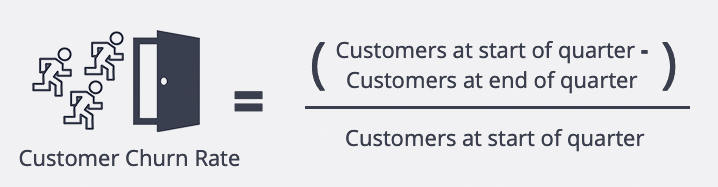
Customers who feel unvalued leave businesses and increase the churn rate (the rate of clients who decide to take their business elsewhere). An increased churn rate will drive up the cost of acquiring each customer and reduce your profit margin.
How Can Customer Loyalty Programs Impact Your Bottom Line?
According to Bain & Company and HBS, a loyalty program increases retention rates by 5% and increases profits by 25% to 95%.
Costs are higher at the beginning of the relationship and usually level off as profits from each loyal client increase.
CEO of eBay, Meg Whitman says that the company is spending less than $10 to acquire a new customer. Loyal clients use word-of-mouth to refer new customers and provide personal advocacy. eBay has found that referred customers cost considerably less than maintaining marketing efforts.
Loyal customers essentially take the role of marketers as well as help desk staff – and they do it all for free.
It’s clear that for eCommerce companies, long-term profits depend on superior customer loyalty. Savvy business owners understand that customer rewards programs play a major role in business success.
It may seem that you are losing out by not having a program in action, and want to jump right in. Before you do, note that smart owners also need to know what’s out there and make informed decisions.
Firstly, which loyalty program is best for your business?
What are the Different Types of Customer Loyalty Programs?
Points Programs
This is probably one of the most common types of customer loyalty programs and also the simplest to implement.
The gist of these loyalty programs is for the customer to earn points as they spend. They are typically used by shops that offer low-cost purchases.
Points are then redeemed for rewards such as:
Freebies
Discounts
Special goods
Discounts and coupons have proven to be the best tactic for driving loyalty. According to Expedia Affiliate Network, 61% of consumers actively use these two rewards regularly.
Free shipping is another incentive that can be based on the points that customers earn.
An excellent example of a point-based loyalty program is that of The North Face clothes brand. They offer a unique way of redeeming points and reaching their target market.
Their VIPeak program shows how you can use your loyalty program to create a connection between consumers and your brand.
Being a retailer of outdoor gear, the rewards include travel opportunities like adventure trips, group hikes, and even mountain climbing experiences.
Imagine being a buyer and lover of hiking equipment, then being gifted an amazing hiking trip?
Spend programs are easy to implement and maintain. Customers need to reach a certain amount of spend in a set time. Once reached, they receive store credit or a gift card.
It’s convenient for customers as they’re already spending money. For eCommerce stores, this equals more transactions per customer and better profit margins per transaction.
Tiered Programs
For tier-based programs, customers ‘climb the ladder’ as they spend more. They’re usually used for big-ticket items such as airline tickets. Consumers will increase their spending to reach a higher tier and gain more rewards.
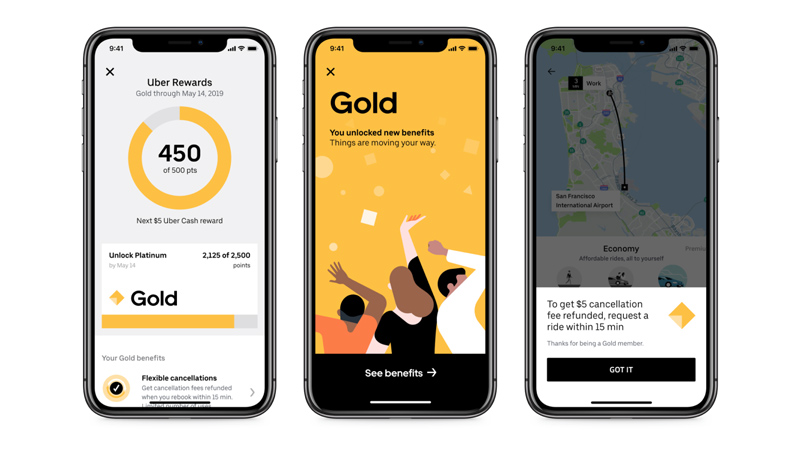
Uber is an example of a successful tiered program. It was launched to counter competition from other companies like Lyft and Grab.
Similar to airlines who target frequent fliers, Uber Rewards targets frequent riders.
Customers receive 500 points on entry which rewards them with $5 to use on a trip. To reach the next level (Gold) they need another 500 points. Rewards include free cancellation and faster customer service.
The levels increase up to Diamond which requires 7,500 points. Rewards are upgrades to Uber Black cars, free Uber Eats rides, and dedicated phone support.
The aim is to encourage clients to use the more expensive offering – in this case, Uber Black rides – to reach the Diamond level faster.
Also known as a VIP or Premium program, paid programs require customers to pay for membership.
By paying an annual or one-time fee, consumers receive exclusive rewards. Thanks to this exclusivity, these programs make brands seem more valuable in the eyes of the customer.
The advantage of paid programs for eCommerce owners is that you can actually save money. You receive membership fees to fund the benefits provided and may even have a surplus.
Members of a premium program are more likely to remain loyal as they don’t want to waste their money. It will also encourage increased repeat purchases as they try to recoup the cost of joining.
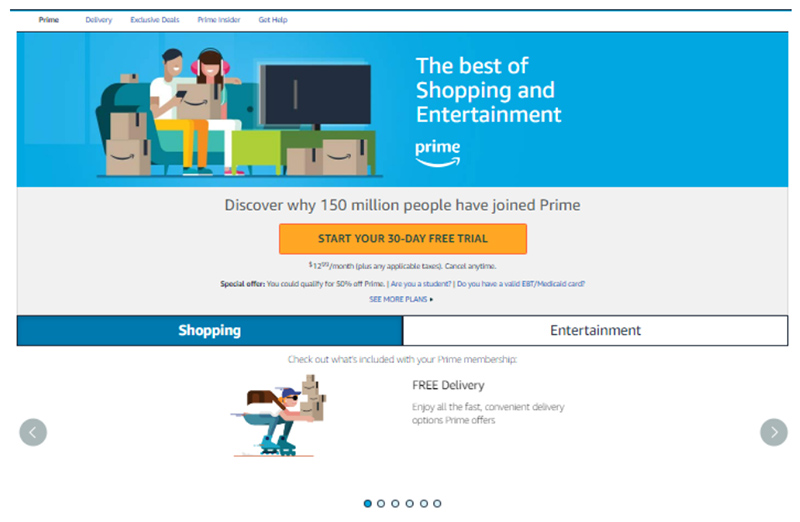
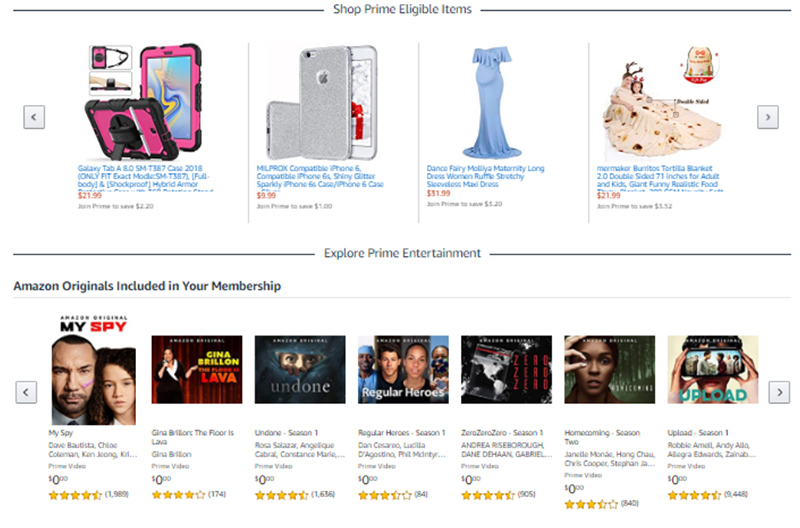
Amazon Prime is one example of a highly successful VIP program. For a monthly or annual fee, members get discounts, free shipping, access to free videos, and music.
The free entertainment woos Millennials who often spend thousands on subscriptions and purchases. More serious shoppers will love the free shipping if they are constantly ordering.
Take a leaf from Amazon’s book and give your customers a gift they really want, and not just generic offerings.
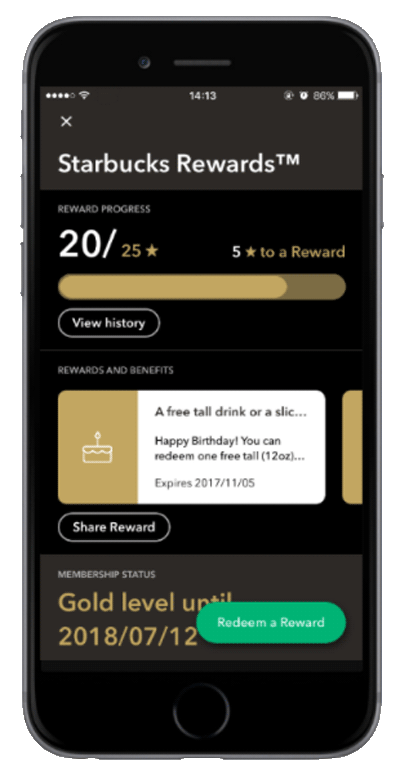
Starbucks was one of the first to include gamification in a customer rewards program.
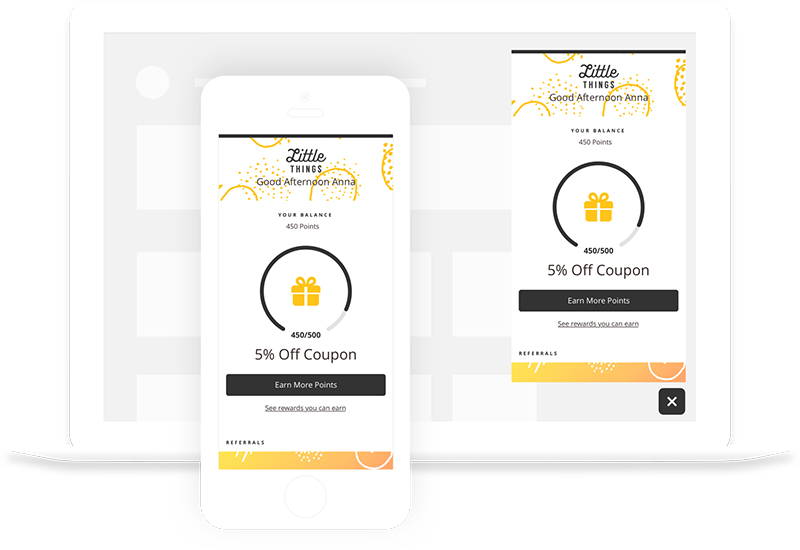
The My Starbucks Rewards program adds an aspect of fun to earn points. Customers are encouraged to play the game on the mobile app and earn stars. The stars earned allow them to redeem free cups of coffee as well as select merchandise.
An added advantage is the use of the app to market products directly to consumers. This combination of gaining loyalty and marketing offers the best of both worlds.
Create a strong ethical relationship with customers that is based on your values. If they feel part of a world-wide cause, they will be more inclined to become brand ambassadors.
Maybe you run an online garden shop. Your reward system could give a percentage of what a client spends to a climate-change organization. Have an online grocery store? Send money to Feed the Children or similar non-profit. The options are endless!
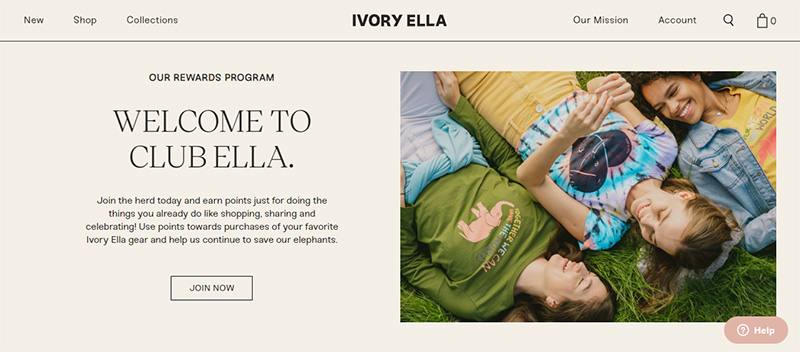
For example, Ivory Ella donates 10% of its profits to Save the Elephants.
Buyers can also earn discounts for making charitable donations. Who wouldn’t want to save elephants by shopping?
How Do You Measure the Effectiveness of Customer Loyalty Programs?
After launching your loyalty program, ensure you analyze your data to see if it has a positive impact on your eCommerce business. Although there are numerous metrics, sometimes, simplicity is key.
Here are the common metrics to use for your eCommerce business.
Customer Retention Rate
This is the most important metric because the main purpose of a loyalty program is to attract more repeat customers.
You need to decrease the churn rate, meaning the number of people buying from your shop should be more than those who move to the competition. Make sure to use a specified period and measure the number of customers you have retained.
To calculate your churn rate, the simplest formula is:
For example, if your business had 1,000 customers at the start of the period, and then 850 at the end of the period, your churn rate would look like this:
When you get a negative churn rate, it shows that more customers have made purchases. Great for your business, right? All businesses always want a negative churn rate.
Google Analytics
Google Analytics can show you how many website visitors convert into loyalty program members. You can see at what points most conversions happen, with triggers such as ads or newsletters. You can then improve the weaker triggers and adapt your loyalty strategy.
Net Promoter Score (NPS)
The Net Promoter Score shows how likely a customer is to recommend your business to others. It’s an indicator of business growth and measures customer experience on a scale of 0-10.
Conduct a survey of your customers, divided them into three categories.
Promoters (Score 9-10): Existing customers who are fiercely loyal. As loyalty program members, they’re likely to refer your business to others.
Passives (Score 7-8): Customers are impassive and can be swayed by competitors. You can work to engage them and turn them into promoters with your loyalty program.
Detractors (Score 0-6): These are customers who are not pleased with your brand or products. They are likely to spread negative word-of-mouth and can harm your brand.
To calculate your NPS, use the below formula:
Promoter % – Detractor % = NPS
An answer of -100 means all your customers are detractors. In the converse, +100 shows you have all promoters. You need to aim to achieve the highest possible number.
Steps to Create a Customer Loyalty Program
You want to create a program that not only attracts members but creates loyalty.
You could also combine a few different types according to your needs.
The steps you need to take to make your own programs are as follows:
1. Identify Your Needs
The major aim of your program is to target your top customers and keep them shopping with you. You will need to ask key questions to identify major factors, such as:
Why do you need a customer loyalty program?
What are the goals of the program?
Who are the key customers you are targeting?
What benefits do your customers gain from your products?
After answering these questions, choose the type of program you want to create based on the options outlined above.
2. Fine-Tune Necessary Details
After completing the basics, go into details of the program, such as the terms and conditions. Decide on the rewards you will be offering and how to communicate with consumers. As an eCommerce store, you may want to implement an app or use your website to communicate with members.
3. Launch a Beta Program
Test your program with a select few top customers. Launch a pilot loyalty program that will allow you to fix any issues and check the clients’ responses.
4. Implement a Complete Program
The three steps to implementing your loyalty program are:
Step 1: Create a report of your top customers according to the amount spent. You need to determine who qualifies for a reward based on points earned or money spent. This can be a quarterly or monthly report, depending on your specifications.
Step 2: Send a reward to your top customers and communicate their eligibility to claim the reward.
Step 3: Repeat this each month or quarter and take note of the trends. You will notice customers who have stopped shopping. Offer them discounts or shopping credits to ‘re-activate’ them into the loyalty program.
If you notice there are consistent customers shopping and claiming rewards, acknowledge them with a thank you piece of communication.
5. Focus on the Redemption Process
The process of redeeming a reward needs to be simple and communicated to customers. You want to encourage a high redemption rate otherwise there will be a high churn rate.
6. Communicate Progress to Members
Keep program members aware of their progress with regular updates. Let them know how close they are to receiving rewards and use examples of other members who have achieved the set goals.
7. Reduce Churn Rate After Redemption
Some members may leave your store after redeeming a prize. You need to give them an incentive to keep shopping.
Give discounts or upgrade their membership as encouragement to achieve the new goal.
Nothing makes customers feel more valued than being personally recognized and acknowledged.
How Do You Use Social Media as Part of Customer Loyalty Programs?
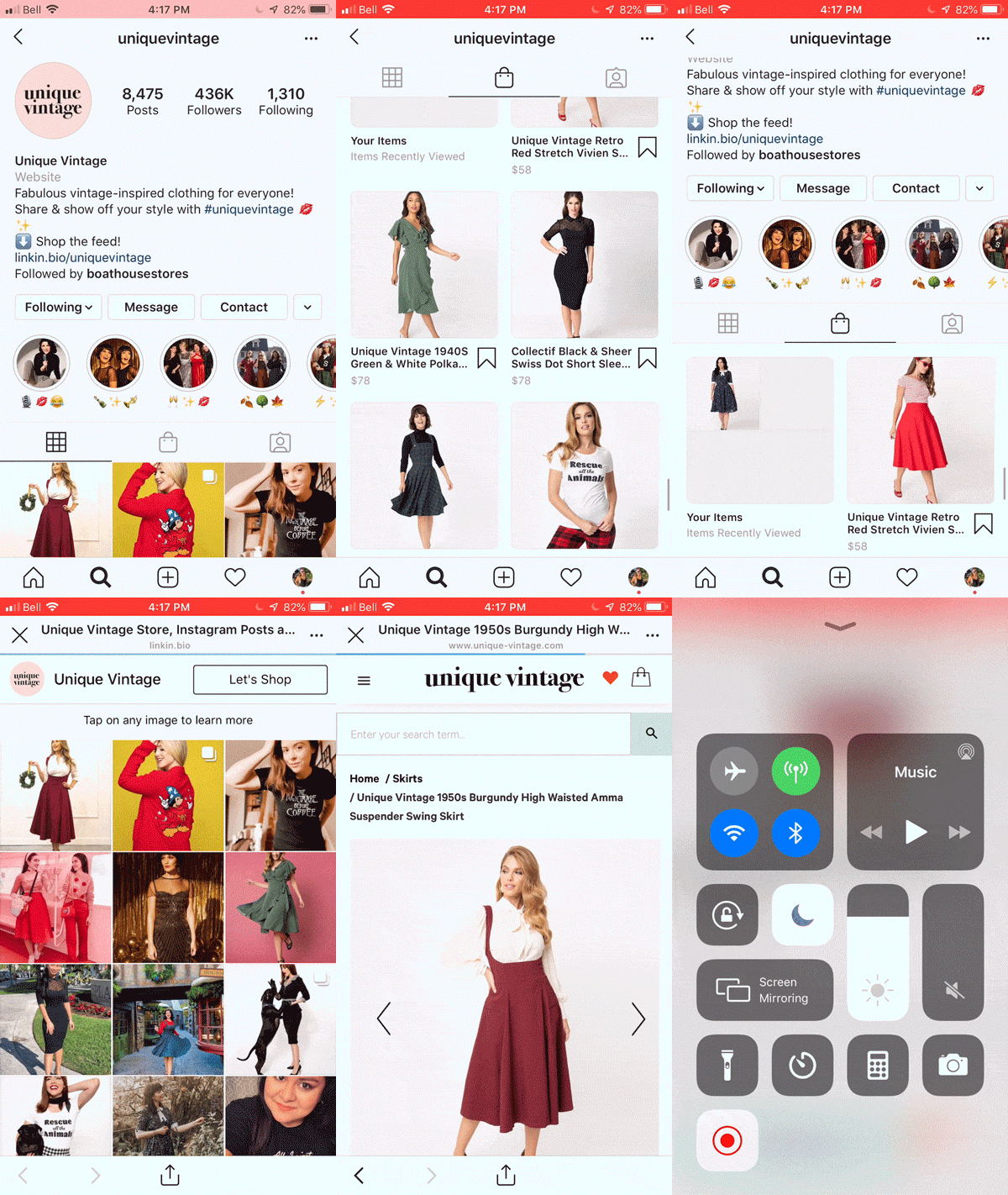
Most eCommerce stores have social media profiles (or they should). Customer loyalty programs are a great way to gain an audience if coordinated with your social media assets. Offer points and additional rewards for engagement like follows, shares, and likes.
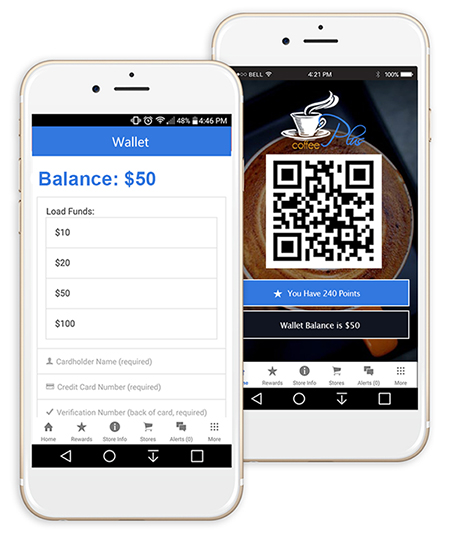
You could develop your own loyalty apps and customize them to your website. If you don’t have the infrastructure or budget, apps are available.
You could also see if you qualify to join eCommerceFuel and have an opportunity to apply for eCommerceFuel Capital. It’s a chance to access long-term funding and world-class mentorship.
Take a look at some of the top apps for your loyalty program.
Stamp Me Loyalty App
This award-winning app can be used by businesses of any size. They offer customized reward solutions as well as a digital stamp loyalty card on the phone. This allows you to manage your digital loyalty program, communicate directly with customers and increase retention rates.
TapMango provides tools to run your loyalty program and target loyal customers. They also offer tools such as SMS and email to encourage customers to keep returning to your store.
You can control the rewards customers earn and take advantage of the referral option. This customer loyalty program lets clients keep track of their points and discount deals with a mobile app.
Smile.io is a points-based loyalty program that also offers VIP-based programs. You can also turn loyal customers into advocates by promoting referrals and social sharing.
You can control how customers share referral links via either social media or email.
We hope this guide is useful in your quest to create a successful customer loyalty program. Don’t forget to ask other eCommerce owners for help and share your experience by participating in online communities. You’ll quickly find that there are many others who have gone before you and worked out what works and what doesn’t work so well.
Remember, loyal customers are the best kind. They equate to free and highly-effective marketing and can often be the best advocates for your business.
Unfortunately, Covid-19 is still among us, so there are rarely physical ecommerce events to attend. Still, there are several virtual ecommerce events in Europe you can attend. Let’s have a look.
from Ecommerce News https://ift.tt/2GrBoPs via IFTTT
Earlier this year in April, Google announced that Google Shopping would now be free to US merchants with the scope to expand this worldwide in the future. They have now announced that this will be available to merchants in Europe, Asia and Latin America by mid-October.
Google stated “Just as we don’t charge sites to be part of the Google Search index, listings for participating retailers are eligible to appear in these results at no cost to them. Paid listings will continue to appear in ad slots and will operate in the same way as Shopping ads do today.”
Merchants in the UK who wish to use this will need to head to theirMerchant Centreaccount and ensure that you’re opt-ed into the Surfaces on Google programme. This is the only way you’ll be able to show your products in relevant search results across Google Search, the Google Shopping tab and Google Images.
While the qualifying criteria for this are still unclear this further enhances Google’s offering and appeals to both sellers and consumers. And this does mean that online shop owners can now reach millions of people for free, changing the online advertising landscape.
Today, Thursday the 1st of October is Lengow Day 2020, one of the most multi-channel events of the ecommerce calendar and this year it’s all online so you don’t even have to leave your office to attend. Throughout the day you’ll find inspiring keynotes and round tables with major international ecommerce players and many topics to help inspire your strategy.
You can also schedule 1-1 video meetings with all the relevant players to innovate your business and that includes over 30 marketplaces, 4 shopping platforms, 5 technology partners and specialist from Lengow from China, France, Germany, Italy Spain and International specialists. You can request video meetings via each marketplace and solution provider’s virtual booth that you are interested in getting in touch with.
As well as some special offers from all of Lengow’s partners to assist your business, if you get lucky you might even score a personal prize in the Lengow Day 2020 contest?! If you’re creative enough you may win an iPad, AirPods or even a Nintendo Switch! Lengow know that if you’re working from home you might have kids around, so they even have pony colouring pages to keep youngsters occupied. You’ll also find the Lengow Day 2020 playlist to give you a sound track for the day along with all the other fun stuff in the Lengow Day Playground.
If you can’t attend in person today, don’t worry as all the content is available from today and will stay online for several months. Just make sure you pre-registered for the event. However, special offers and video meetings are only available on Lengow Day 2020 and that means today!
“Lengow is multi-channel by nature, so it makes perfect sense that the same should be true for our events. By bringing together speakers from the 4 corners of the globe and providing them with maximum exposure, Lengow Day is the culmination of what we’ve been orchestrating for our clients for several years now.” – Mickael Froger, CEO, Lengow
If you’ve not yet registered you can do so here and jump straight into the events from 10:00 CET
from Ecommerce – Tamebay https://ift.tt/2G8lqKC via IFTTT
 from Blog – WooCommerce https://ift.tt/3n9dNUM